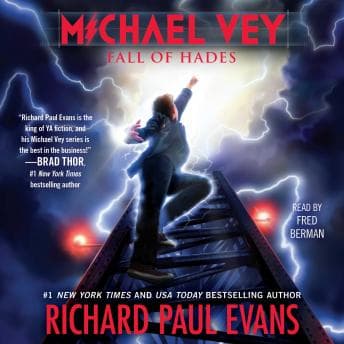

My nephew asked me to listen to this so we could talk about it at Thanksgiving. He's twelve. I'm forty-three. Somewhere in the middle of hour three, I realized I was genuinely invested in whether these electric teenagers would survive. I had to ask myself some hard questions about my life choices.
This is book six of a YA series. If you're coming in cold, you'll be lost. But if you've got a kid in your life who's into it—or you're secretly a twelve-year-old trapped in a middle-management body—it hits the KPIs. Fast-paced action, clear stakes, and a narrator who's been doing this long enough that he could probably voice these characters while filing his taxes.
Pacing Is Currency
Here's what Richard Paul Evans understands that most YA authors don't: pacing is currency. At 8 hours and 19 minutes, this asset moves. No bloat. No philosophical tangents about the nature of power that go nowhere. Michael and his crew need to flip Hatch's Electric Youth to their side, and Evans keeps that objective front and center.
I've sat through strategy sessions at Fortune 500 companies that had less narrative clarity than this book aimed at middle schoolers. There's a lesson here about keeping your audience engaged that half the business books in my library could learn from.
The violence is there—it's a war story, essentially—but it's handled with the kind of restraint that lets parents feel okay about their kids consuming it. Stakes without trauma. My parents would have approved. Well, they would have said "why are you wasting time with books about electric children," but that's a different conversation.
The ROI of Consistency
Fred Berman isn't trying to reinvent the wheel here. He's been voicing Michael Vey through five previous books, and by now the characters have settled into his vocal cords like muscle memory.
Is it the most dynamic narration in the industry? No. But that's not the point. When you're six books deep into a series, you don't want the narrator suddenly deciding to give your favorite character a different accent. Berman fits because he's been building that fit for years. It's like a consultant who's been on the same account for three years—they might not dazzle you with fresh insights, but they know where all the bodies are buried.
At 1.5x speed, it clips along nicely. I tried 2.0x—my usual—but some of the action sequences blurred. One of those rare cases where slowing down actually improved the ROI on my time.
Execution Over Innovation
I finished this on a Sunday morning, flipping pancakes while Jenny was still asleep. I was genuinely curious about whether the recruitment mission would work. That's not nothing.
I'm not the target audience. I know that. But there's value in a book that does exactly what it sets out to do, without pretension or padding. Evans wrote a book for kids who want action and a clear sense of good versus evil. He delivered. My nephew and I had that Thanksgiving conversation. He was thrilled I'd actually listened. I was surprised I'd actually enjoyed it. Jenny said I was being "suspiciously enthusiastic about a children's book." She's not wrong.
After eight years at McKinsey and another five watching startups implode, I've developed an appreciation for execution. Not innovation, not disruption—just solid, reliable execution. That's the same clarity I appreciated in Diary of a CEO, even if the execution there was messier. This book executes. It's not trying to change your life. It's trying to entertain you for eight hours while you do something else. Mission accomplished.
Who should listen: Existing fans of the series and parents looking for safe, high-stakes action for their pre-teens. Who should skip: Anyone coming in cold at book six expecting context—that's just bad strategy.