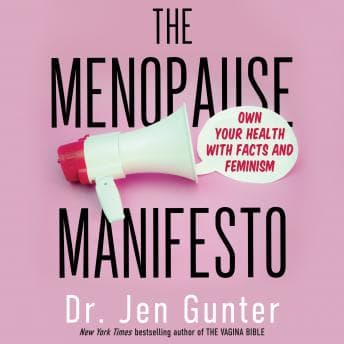

"Menopause is not a disease - it's a planned change, like puberty." That line hit me somewhere around mile two of my morning jog through Cambridge, and I actually stopped running for a second. Not because the idea is revolutionary - intellectually, I knew this. But hearing Dr. Jen Gunter say it with such matter-of-fact confidence, the way you'd explain gravity to someone who's been told their whole life that things fall because they're sinful? That reframing landed differently.
I found myself asking: why does a biological process that affects roughly half the human population still carry this much shame and confusion? And that question - the why behind the misinformation, the cultural silence, the medical neglect - is what makes this book more than a health guide. It's a case study in how patriarchal systems shape the stories women tell themselves about their own bodies.
The Psychology of Being Kept in the Dark
Dr. Gunter structures this book almost like a deprogramming manual, and I mean that as a compliment. She moves through the physiology - perimenopause, hot flashes, hormonal shifts, sleep disruption, bone density, cardiovascular changes - but she keeps circling back to a central thesis that my psychology brain couldn't stop chewing on: women have been systematically denied accurate information about menopause, and that information vacuum has been filled by shame, snake oil, and silence.
The research actually shows that when people lack a coherent narrative for what's happening to their bodies, anxiety fills the gap. Gunter clearly understands this. She doesn't just dump data - she contextualizes it historically. The sections on how menopause was pathologized in the 19th century, how women were essentially told their usefulness expired with their fertility, are genuinely enraging. She traces how that attitude mutated into the hormone replacement therapy panic of the early 2000s, where the Women's Health Initiative study results were misinterpreted and sensationalized, leaving an entire generation of women afraid of treatments that could've helped them.
That's not just medical history. That's narrative psychology. The stories we inherit about our bodies become the framework through which we interpret every symptom, every change. Gunter is trying to replace a bad story with a better one - one grounded in evidence. William James was doing something structurally similar in Varieties of Religious Experience - arguing that the interpretive frameworks we inherit shape what we're even capable of perceiving, which is a less comfortable idea than it sounds.
When the Author IS the Narrator (and It Works)
Okay, author-narrated audiobooks are a gamble. I've listened to plenty where the author clearly thought, "How hard can reading aloud be?" (Very. The answer is very.) But Gunter narrating her own book actually works here, and I think it's because her whole brand is being the friend-who-happens-to-be-a-gynecologist telling you things straight. The delivery is clinical when it needs to be - she's explaining estrogen receptor subtypes and bone remodeling with genuine precision - but there's this dry, almost exasperated humor running underneath. Like she cannot believe she has to explain this in 2021 because nobody bothered to before.
At 13 hours, this is not a light listen. I'll be honest - the chapters on specific screening protocols and medication options started to blur during one particularly long cooking session (I was making dal makhani, which requires attention, and suddenly Gunter was three subsections deep into bisphosphonates). Some of this material is inherently reference-book territory. You'll want to bookmark sections rather than absorb it linearly.
But here's the thing - Gunter's voice carries you through the dense patches. She has this ability to pivot from explaining the mechanism behind vasomotor symptoms to casually eviscerating the wellness industry's "hormone balancing" grift, and you don't get whiplash. It feels conversational. My therapist would have thoughts about how many women need a book to give them permission to advocate for their own medical care, but that's the reality Gunter is working with.
Who This Is Really For (and Who Might Struggle)
If you're in your 30s or 40s and menopause feels like this vague, distant thing nobody talks about - this is exactly when you should listen. Gunter makes a persuasive argument that menopause education should start a decade before it happens, the same way we (theoretically) prepare kids for puberty. If you're currently in perimenopause or menopause and drowning in conflicting advice from the internet, this will feel like someone turned the lights on.
If you want a quick, breezy overview? This isn't it. Thirteen hours is a commitment, and Gunter is thorough to a fault. She covers everything from vaginal dryness to the myth of "adrenal fatigue" to why your skin changes, and some listeners might want to skip around rather than go cover to cover. That's fine. This is built to be a reference as much as a narrative.
And if you're someone who gets annoyed by books that mix politics with science - look, Gunter is explicit about the feminist framework. She views the lack of menopause research as a gender equity issue. If that framing bothers you, this book will bother you. Psychologically, though? She's not wrong that the absence of information is itself a political act.
My Prescription (Pun Intended)
This is a fascinating case study in what happens when a clinician decides the best patient intervention is a book. Gunter isn't just explaining menopause - she's trying to restructure the entire narrative women carry about aging. Is it perfect? No. The pacing sags in the middle chapters, and some of the debunking sections feel repetitive if you've already read The Vagina Bible. But the core project here - replacing fear and misinformation with evidence and agency - is genuinely important work. I finished it feeling smarter and a little angry, which is pretty much the ideal outcome for nonfiction.