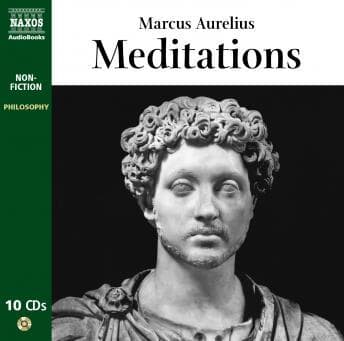

What does it mean when the most powerful man in the ancient world spends his private hours writing notes to himself about how to be less of a jerk?
I was making dal at 10 PM—the kind of elaborate cooking I do when my brain won't stop spinning—when Marcus Aurelius started talking about how everything that annoys you about other people is actually a mirror. Stirring lentils, getting called out by a dead Roman emperor. Just a regular Tuesday.
A Case Study in Self-Regulation (Two Thousand Years Before We Had a Name For It)
Here's what fascinates me as someone who studies how people construct their identities through narrative: Marcus Aurelius wasn't writing for publication. These are his private journals. His therapy sessions with himself. And yet they read like he's anticipating every cognitive behavioral technique we'd develop millennia later.
The protagonist—and yes, I'm treating an emperor like a character, fight me—exhibits classic cognitive reframing throughout. "Choose not to be harmed and you won't feel harmed." That's not toxic positivity. That's the foundation of modern resilience research. Raising Good Humans applies similar reframing techniques to parenting—turns out ancient emperors and modern toddlers both benefit from the same psychological tools. The man was doing his own exposure therapy for the anxiety of running an empire while plague ravaged his cities.
What makes this compelling isn't the philosophy itself. Stoicism has been explained better by modern interpreters. It's the intimacy of catching someone in the act of trying to be better. Marcus writes the same lessons to himself repeatedly—don't get angry, remember you'll die, other people's opinions don't define you. The repetition tells you everything. He struggled with these things. He needed reminding. Just like the rest of us.
Two Narrators, One Emperor, Slightly Different Men
This version uses both Jinananda and Nicolas Soames, and honestly? The dual narrator approach is an interesting choice for what's essentially one man's internal monologue. At just over five hours, it's digestible in chunks—I listened across three cooking sessions and one sleepless night (my therapist would have thoughts about why I can't sleep, but that's another review).
The pacing suits the material. These aren't arguments building to conclusions. They're fragments, observations, self-corrections. The narrators maintain a measured, contemplative tone that matches the text. Nothing flashy. Nothing trying to make ancient philosophy "exciting." Which is correct—Marcus wasn't writing entertainment. He was writing survival instructions for his own psyche.
I found myself wishing for slightly more variation in delivery during the more repetitive passages. When Marcus circles back to death for the fifteenth time, some tonal shift might help. But that's a minor complaint for what's fundamentally solid, respectful narration of difficult material.
The Psychology Behind the Stoicism
This tracks in ways that surprise me every time I return to it. Marcus's constant self-reminders about impermanence, about not controlling others, about focusing only on your own responses—this is attachment theory before Bowlby. This is locus of control before Rotter named it. The same principles show up in Inside of a Dog, actually—understanding that other beings (whether people or dogs) operate from their own internal logic, not ours, fundamentally changes how we respond to behavior.
But here's what the self-help crowd gets wrong when they excerpt Marcus for Instagram: this isn't optimism. It's not "good vibes only." The Meditations are fundamentally about accepting that life is hard, people are difficult, and you're going to die—and then doing your duty anyway. That's not inspirational. That's grim. That's also, in my professional opinion, more psychologically honest than most wellness content.
The author understands human nature in a way that makes me wonder what therapy would've looked like in ancient Rome. (Probably just... philosophy. Actually, maybe we should go back to that.)
Who This Works For (And Who Should Skip)
If you want a systematic introduction to Stoicism, read a modern book first. Ryan Holiday, maybe. The Meditations assume you already know the framework. They're not teaching—they're practicing.
But if you've ever journaled the same resolution to yourself seventeen times? If you've ever needed to hear "you can't control what other people do" from someone who actually had the power to control what other people did? If you're the kind of person who finds comfort in being reminded that a Roman emperor also couldn't sleep sometimes? This is your text.
Skip it if you need narrative momentum or clear takeaways. This isn't a book that builds anywhere—it circles.
Not for background listening. This requires attention. I'd recommend 1.25x speed if you're familiar with the material, but first-timers should let it breathe.
Closing the Case File
I keep asking: why does Marcus keep writing the same things? The research on habit formation suggests it takes far more repetition than we expect to internalize new patterns. Marcus knew this intuitively. His Meditations aren't a book—they're a practice log. Evidence of a man doing the work.
Five hours with a dead emperor's private thoughts. It's weird. It's ancient. It's somehow exactly what modern psychology keeps rediscovering.
My dal turned out great, by the way. Marcus would say that doesn't matter. He'd be right. And also wrong.