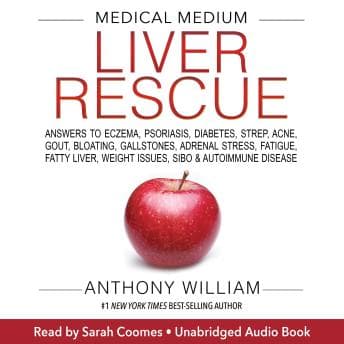

I was making dal makhani at 10 PM on a Tuesday — the kind of elaborate, hour-long cooking project I do when I need to feel productive but can't face my laptop — and I had this audiobook playing through my kitchen speaker. Twenty-five hours. That's the commitment here. And somewhere around hour three, standing over a pot of simmering lentils, I found myself asking: why does Anthony William attribute essentially every human ailment to the liver?
I mean every ailment. Eczema. Diabetes. Acne. Gout. SIBO. Autoimmune disease. Emotional struggles. Brain fog. Weight gain. If you stub your toe, I half-expected him to say your liver did that too.
When One Organ Becomes the Theory of Everything
Here's the thing about single-cause explanations for complex phenomena — the research actually shows they're psychologically seductive. We want the one answer. The skeleton key. It's the same cognitive pattern I see in conspiracy thinking, in pseudoscientific wellness culture, and honestly, in some of my own research when I'm too tired to sit with ambiguity. William's framework is essentially: your liver is under siege from modern life (toxins, viruses, heavy metals, stress), and if you rescue it, everything gets better. The liver as both victim and savior. Malcolm Gladwell does something structurally similar in David and Goliath — building an entire worldview around one reframed variable, which is why I find that book almost as psychologically interesting to dissect as it is to read.
As a psychology person, this is a fascinating case study in how health narratives gain traction. William positions himself as receiving information from a divine "Spirit" source — not from medical training, not from peer-reviewed research, not from clinical practice. And he states this openly. I'll give him credit for transparency there. But it means you're being asked to accept health protocols based entirely on claimed spiritual revelation, applied to serious conditions like diabetes and autoimmune disease. That's... a lot to ask.
What makes this book psychologically interesting — and I'm being genuine here — is how William constructs trust. He's compassionate. He validates suffering. He tells you the medical establishment has failed you, which, for many chronically ill people, feels true. The protagonist of this narrative isn't really the liver. It's you, the reader, who has been dismissed and misunderstood. That emotional architecture is powerful. My therapist would have thoughts about why that validation loop is so effective.
Sarah Coomes and the Marathon of Liver Facts
Twenty-five hours is a LOT of audiobook, especially for what is essentially a health reference guide. Sarah Coomes has a soothing, clear delivery that works well for the genre — she sounds like someone explaining something important to you patiently, which is exactly what you need when you're being told about your liver's "nine boxes" of functions for the fifth consecutive hour. She doesn't dramatize. She doesn't condescend. It's a steady, calm narration that makes the material feel accessible even when it's repetitive.
But here's where the format becomes a problem: this book reads like it should be a reference manual you flip through, not a linear listen. There are sections on dozens of specific conditions, each following a similar pattern — here's what's really happening (liver), here's what conventional medicine gets wrong, here's what to do. By hour twelve, I was doing the cognitive equivalent of skimming while chopping vegetables. At 1.25x speed, it became more manageable, but even then — you're looking at roughly 20 hours of listening. That's longer than most thriller series. For a book about one organ.
No sound effects, no music, no full cast — just Coomes reading William's prose, which is earnest and repetitive in the way self-help books often are. She handles it well. I just wished there was less of it.
The Pattern I Can't Ignore
Psychologically, this doesn't track for me in some fundamental ways. William lists conditions as diverse as strep throat, gallstones, adrenal fatigue, and psoriasis, and connects them all to liver overload. But these conditions have wildly different etiologies, different risk factors, different treatment responses. Collapsing them into one framework isn't just simplistic — it risks real harm if someone delays evidence-based treatment because they're drinking celery juice and doing liver cleanses.
I'm not dismissing every piece of dietary advice here. Eating more fruits and vegetables? Sure. Reducing processed food? Obviously. Hydrating? Groundbreaking stuff. But packaging common-sense nutrition advice inside claims about "undiscovered functions" of the liver, without any clinical evidence, without citations, without peer review — that's where I get off the bus.
Compare this to something like "How Not to Die" by Michael Greger, which makes aggressive dietary claims but at least anchors them in published studies you can go check. William's sourcing is: Spirit told me. And if you're okay with that epistemology, this book will feel revelatory. If you're not, you'll spend 25 hours increasingly frustrated.
My Clinical Notes
Listen, if you're someone dealing with chronic illness and you've felt dismissed by doctors — I get why this book appeals to you. That frustration is real and valid. But I'd recommend pairing it with skepticism and a conversation with an actual gastroenterologist. If you're a psychology nerd like me, it's genuinely interesting as a study in health narrative construction and the appeal of alternative medicine frameworks. As actual medical advice? I can't endorse it. The human mind has patterns, and one of them is wanting simple answers to complex suffering. This book knows that pattern intimately and uses it well.