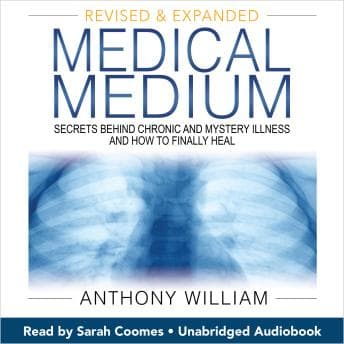

I need to be upfront about something before we get into this: I'm a software engineer. I debug distributed systems. I believe in evidence-based medicine, peer-reviewed studies, and the scientific method. So when I tell you I listened to nearly 22 hours of a guy who claims a spirit named "Spirit of Compassion" whispers medical secrets to him since age four—yeah, this was a weird commute experience.
I picked this up because a coworker swore it helped her chronic fatigue. She's brilliant—senior staff engineer, built half our monitoring infrastructure—and she was dead serious. So I figured, okay, let's see what this is about. Maybe there's something useful buried in here.
The ROI Calculation Gets Complicated
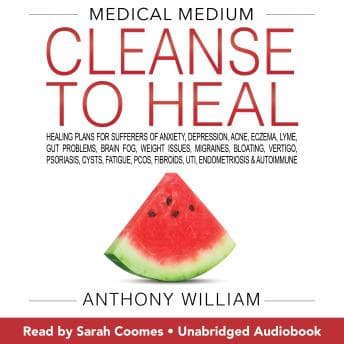
Here's the thing that kept me listening past hour three: Anthony William isn't stupid. The book is structured almost like a medical textbook—condition by condition breakdowns, symptom clusters, proposed mechanisms. He covers everything from Lyme disease to fibromyalgia to thyroid disorders. The organization is actually solid. Sarah Coomes narrates with a calm, measured delivery that makes it feel like you're listening to a wellness podcast rather than something more fringe.
But—and this is a massive but—the science doesn't hold up. At all. He claims the Epstein-Barr virus causes basically everything (thyroid issues, chronic fatigue, fibromyalgia, rheumatoid arthritis, the list goes on), and that "undiscovered strains" are responsible for conditions medical science hasn't figured out yet. Convenient, right? No way to verify something that hasn't been discovered.
I found myself doing the thing I do when reviewing legacy code: trying to trace the logic back to its source. Had a similar frustration with QBQ! The Question Behind the Question when it kept circling back to vague principles instead of concrete frameworks. And every time, the source is... Spirit told him. That's it. No citations, no studies, no mechanism beyond "this is what Spirit revealed."
When Celery Juice Meets Production Debugging
The dietary recommendations are where things get really specific. Heavy metal detox smoothies. Celery juice on an empty stomach every morning. Wild blueberries as a "brain food." He's got protocols for everything, and they're detailed enough that you could actually follow them.
Some of it is probably fine? Eating more fruits and vegetables, reducing processed foods, staying hydrated—that's not going to hurt anyone. But he also tells people to avoid eggs entirely ("food for pathogens"), claims supplements can replace medical treatment, and positions himself as knowing things doctors won't discover "for decades."
This is where my engineer brain starts throwing exceptions. If you can't test it, can't verify it, and the only source is divine revelation... that's not medicine. That's faith healing with a wellness rebrand.
Sarah Coomes: Steady at the Mic
Coomes does competent work here. At 22 hours, you need someone who won't grate on you, and she manages that. Her pacing is even, her tone warm without being preachy. But there's nothing distinctive about the performance—no moments where the delivery elevates the material. She reads recipes and symptom lists with the same energy as the spiritual origin story sections. Given the controversial content, maybe that's intentional? A more animated narrator might make the claims feel even more sensational.
I bumped it to 1.5x and it held together fine. At 1.75x (my usual for business books that could've been blog posts), some of the medical terminology got muddy.
Who Gets Value Here (And Who Should Hard Pass)
If you've been through the medical system, gotten no answers, and you're desperate for something—anything—that offers a framework and a plan, this book provides that. The placebo effect is real, and feeling like you have agency over your health has documented benefits. Some of the dietary changes might genuinely help people feel better, even if the proposed mechanisms are nonsense. Untroubled Mind takes a similar approach of offering wellness frameworks that might work for some people, though the underlying theory doesn't quite hold up to scrutiny.
But if you're looking for evidence-based health information, this isn't it. If you have a serious medical condition, please—please—don't replace your doctor's advice with celery juice protocols. Skeptics like me will spend the whole runtime mentally red-flagging claims.
Closing the Ticket: 2/5 Stars
I finished this in about 7 commutes, and by the end I felt like I'd attended a very long, very polished infomercial. The production quality is professional. The narrator is competent. The content is pseudoscience dressed up in medical language. My coworker still swears by it. We've agreed to disagree.
The PDF supplement has recipes and protocols if you want to try the dietary stuff. I'll stick with my regular doctor, thanks.