
Look, I was supposed to be debugging my procedural dungeon generator when I put this on. Seventeen hours later, I've made zero thesis progress and I've developed strong opinions about early 19th-century naval rigging. This is fine. Everything is fine.
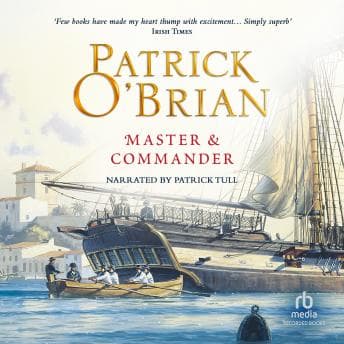
Patrick O'Brian's Master and Commander hit me like a broadside from a 32-pounder. I knew the movie - who doesn't love Russell Crowe being competent at things? - but the book is something else entirely. It's slower, denser, and way more concerned with the actual mechanics of sailing a ship than any Hollywood adaptation could be. And honestly? The info-dumps are chef's kiss. Yes, I said it. I love when an author clearly spent years researching something and then refuses to leave any of it out.
The Voice in My Head (And Why It Works)
Patrick Tull. This man. I want to find him and buy him a very nice drink. (I can't, because he passed away, but the sentiment stands.)
His voice is gravelly and rough, like he's been at sea himself for forty years and is telling you this story over rum in some Portsmouth tavern. There's nothing polished about it - and that's exactly right. Jack Aubrey shouldn't sound like he's narrating a BBC documentary. He should sound like a man who's spent his life shouting orders over cannon fire and Atlantic gales.
The character voices are where Tull really shines. His Stephen Maturin is distinctively Irish without tipping into caricature, which is harder than it sounds. (I've heard enough bad fantasy narrators butcher accents to know.) And the way he handles the period idiom - the "I have the honor to be, sir, your most obedient servant" stuff - sounds natural. Not like an actor reading old-timey dialogue, but like someone actually speaking that way because it's 1800 and that's just how people talked.
Now, fair warning: some folks find it hard to distinguish dialogue from narration at first. I can see that. Tull doesn't do the dramatic pause-and-shift that some narrators use. But honestly? After the first few chapters, my brain adjusted. It started to feel more like someone telling me a story than performing it, if that makes sense.
The Slow Burn That Absolutely Paid Off
This is not a fast book. Let me be clear about that. If you want constant action, if you need something happening every five minutes - this isn't for you. (But also, you're wrong, and you should expand your horizons.)
The pacing is deliberate. O'Brian takes his time establishing the Sophie, her crew, the relationship between Jack and Stephen. There are long stretches about navigation and supplies and the politics of the Mediterranean fleet. My D&D group would love this - it's the kind of world-building where you can tell the author has thought about everything. How do you feed 80 men at sea for months? What happens when you run low on gunpowder? How does prize money actually work?
And then the battles hit, and they hit hard. The final engagement with the Spanish frigate - the tiny Sophie against a ship that outguns her in every way - had me literally pausing my code compilation to just listen. Tull's delivery during the action sequences ramps up without ever feeling rushed. The tension builds because you've spent sixteen hours getting to know these characters and this ship, and now they might all die.
That's the payoff of a slow burn done right.
Who Should Listen (And Who Should Skip)
Okay, real talk. This is a 17-hour commitment. It's dense. The vocabulary is period-accurate, which means you'll hear words you've never encountered and nautical terms that won't make sense until you've absorbed them through context. (I still don't fully understand what a "larboard" is, but I'm pretty sure it's important.)
If you love historical fiction - like, actually love it, not just tolerate it - this is essential. If you've ever gotten lost in a fantasy world's appendices, reading about trade routes and political systems, you'll feel right at home. If you're the kind of person who reads Sanderson for the magic systems, O'Brian is doing the same thing with Napoleonic naval warfare. Though honestly, even It Ends With Us demands patience in its own way—different genre, same need to trust the author's pacing.
But if you get impatient with complexity? If you need a book to grab you in the first ten minutes or you're out? Skip this one. This is Sanderson-level world-building, and it demands the same kind of investment.
I listened during late-night coding sessions, during my commute, during the hours I was definitely supposed to be working on my thesis. (Don't tell Dr. Patel.) It's perfect for anything where you can give it sustained attention - not great for background listening, because you will miss things.
Yes, it's 17 hours. Yes, it's worth it. And yes, there are like twenty more books in this series.
My thesis is so screwed.