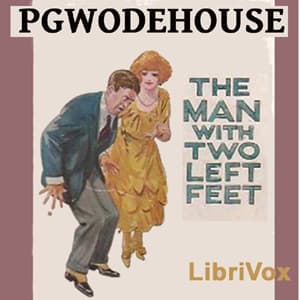

Look, I'll be honest with you - I almost skipped this one. The reviews kept saying "droll" and "slow," and after twenty years of teenagers telling me Dickens is "boring," I've developed a twitch around those words. But here's the thing about P.G. Wodehouse: the man understood that comedy lives in the pause. And Michael Yard? He gets that too.
I listened to most of this walking the lakefront with Denise, who kept asking why I was chuckling to myself like a lunatic. Hard to explain that a story about a man who literally cannot dance - I mean, the title story - was hitting different at 7 AM on a Tuesday. Wodehouse wrote this in 1917, and somehow it still works. The prose deserves to be savored, and Yard savors it.
Where Yard Really Shines
The dog stories. I need to talk about the dog stories. There are a couple pieces in here told from a dog's perspective, and Yard does something clever - he doesn't go cartoonish with it. The voice stays warm, stays grounded, but there's this earnest confusion underneath that's just... right. My students would hate this. I love it.
His character voices are solid throughout, though I'll admit some of the upper-class twits start to blend together after a while. (That's not entirely Yard's fault - Wodehouse was still figuring out his cast. Bertie Wooster shows up here for the first time, and honestly? He's barely recognizable. Jeeves gets maybe two lines. It's like watching a pilot episode where nobody's quite themselves yet.)
The pacing criticism I'd heard? I get it, but I think it's a feature, not a bug. This isn't a thriller. It's not supposed to race. If you're listening at 1.5x while doing CrossFit, you're going to miss the whole point. Wodehouse's sentences are built like little machines - every word placed just so - and Yard lets them breathe. At 1.0x, where God intended.
The Stories Themselves (A Mixed Bag, But Charming)
This is early Wodehouse, which means it's not peak Wodehouse. Let's be real for a second. Some of these stories are sweet rather than funny. A few are genuinely charming. And maybe two or three made me laugh out loud. That's a decent ratio for a collection from 1917.
The relationship stories feel very much of their time - lots of young men pining, lots of misunderstandings at garden parties. The sports pieces have aged better than you'd expect. And then there are the oddball entries that don't fit any category, which are honestly my favorites.
What Wodehouse was already doing brilliantly, even this early: building sentences that set you up for a payoff three clauses later. Hemingway talked about prose having dignity of movement from what's beneath the surface. I thought about this same idea while listening to The New Jim Crow - Alexander's prose has a different kind of precision, but that same sense of every word earning its place. Wodehouse is all surface, all sparkle, but there's craft underneath that sparkle. Yard understands this. He doesn't rush the setup. He trusts the landing.
Who This Is For (And Who Should Start Elsewhere)
If you're already a Wodehouse devotee, this is fascinating as an archaeological dig. Watching him develop his voice, seeing Jeeves and Bertie in embryonic form - it's worth the listen just for that. If you've never read Wodehouse before, honestly? Start with the Jeeves novels. Come back to this once you're hooked.
Some listeners found Yard too slow, too measured. If you need energy in your narration - if you listen while running or doing dishes and need something to keep you moving - this might frustrate you. But if you're the type who listens at bedtime, or during a quiet commute, or while pretending to pay attention at faculty meetings... this is perfect. Skip it if you want peak Wodehouse wit; save it for when you're ready to appreciate the origin story.
The production is clean, no weird audio issues, nothing to complain about technically.
Worth Pausing the Faculty Meeting For?
Not every story, no. But the best ones? Absolutely. Michael Yard brings a warmth to this material that feels genuine, not performed. He clearly loves the prose, and that love is contagious.
If you loved Jeeves and Wooster, this is its spiritual ancestor - rougher, sweeter, still finding its feet. And there's something lovely about that. Not everything needs to be a polished gem. Sometimes a book can just be... pleasant. Charming. Worth your time on a Tuesday morning walk.
Just don't speed it up. Trust me on this one.