
Ever wonder if your obsession with "optimizing" your life is just a fancy way of running away from yourself?
(Okay, that got dark fast. Blame the wine.)
Look, I picked this up because Viktor Frankl is basically the patron saint of resilience. My parents didn't read philosophy—they were too busy running a dry cleaning business in K-Town for 14 hours a day—but they lived Frankl's core thesis: suffering ceases to be suffering at the moment it finds a meaning. I usually stick to books that tell me how to scale revenue, but sometimes you need to scale your soul. Or whatever.
THE "WRONG BOOK" DISCLAIMER
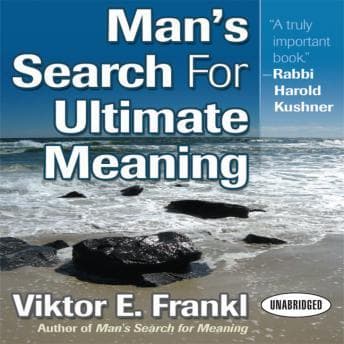
Let's get the due diligence out of the way immediately. If you clicked this thinking it's Frankl's famous memoir about the concentration camps (Man's Search for Meaning), stop. You are in the wrong meeting.
This is the sequel. The deep cut. The theoretical framework behind the memoir. Buying this instead of the first one is like buying the schematics for a Ferrari instead of driving it. Brilliant, but technical. It deals with "logotherapy" and the "unconscious God." It's not a narrative; it's a lecture.
If you're looking for the story, go buy the other one. If you're here for the psychology of why we need meaning to survive, stay seated.
GROVER GARDNER: THE VOICE OF AUTHORITY
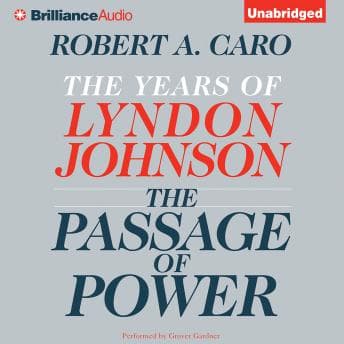
Grover Gardner narrates this. If you listen to as many biographies as I do, you know Grover. The man is an institution.
His voice is often described as "sandpaper and velvet," which sounds like a terrible interior design choice but works perfectly for audio. Gardner brings that same gravitas to Bury My Heart at Wounded Knee, where the weight of the material demands exactly this kind of unflinching delivery. He sounds like a tenured professor who has tenure and doesn't care if you pass or fail—he's just going to deliver the truth.
Some reviews say his voice is distracting. I don't get that. To me, he sounds like authority. He takes Frankl's dense, sometimes academic prose and gives it a rhythm that actually makes sense. He doesn't over-act. He just delivers.
THE ROI ON EXISTENTIALISM
Here's the thing about this book: It's short. 4 hours and 32 minutes.
In my world, that's usually a morning commute and a gym session at 2.0x speed. But—and it pains me to say this—I had to slow this down to 1.25x.
Frankl is talking about the "unconscious religiousness" of man. He's arguing that repressing your need for meaning causes neuroses. This isn't "manifest your destiny" fluff. It's heavy psychological theory.
(Jenny saw me pausing the track every ten minutes to stare at the wall and asked if the business was failing. I told her I was just contemplating the ultimate unconscious. She rolled her eyes and went back to her romance novel.)
Bottom line: This book respects your intelligence. It assumes you want to know the mechanism of meaning, not just the feeling of it. It explains why my parents could work those 14-hour days without cracking—they had a "why."
WHO'S THIS FOR (AND WHO SHOULD SKIP)
If you've already read Man's Search for Meaning and want to see the engine under the hood, this is a must-listen. If you haven't read the original, start there—don't try to be a hero. Skip this if you want narrative or inspiration; this is theory, not memoir.
CLOSING THE BOOKS
Is it dry? A little. It's a series of essays and lectures, not a thriller. But in a market flooded with 12-hour business books that could be blog posts, Frankl delivers pure signal, no noise.