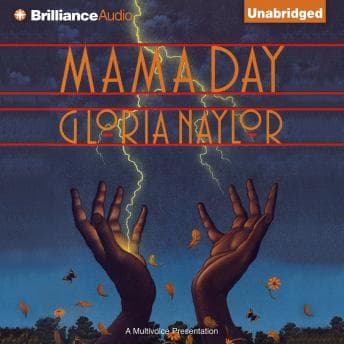

What happens when a novel deserves to be read aloud by angels but gets processed through what sounds like a malfunctioning airport announcement system?
I was grading sophomore essays on The Great Gatsby at 11:30 PM—the ones where every student claims the green light represents "hope" without explaining hope for what—when I decided to finally start Mama Day. I'd been putting it off for years, which is embarrassing to admit for someone who teaches American literature. Gloria Naylor's third novel is the kind of book we should be assigning alongside Beloved and Their Eyes Were Watching God. It's Southern Gothic meets magical realism meets a meditation on love that refuses to be simple. Hello, Summer plays in similar territory—Southern settings where the past won't stay buried and love gets complicated fast. The prose is gorgeous. The structure is ambitious. And this audiobook production nearly ruined all of it.
When Google Translate Tries to Channel Gullah Geechee
Let me be direct: the narration has serious problems. Multiple listeners describe it as robotic, skipping, almost like a text-to-speech program got confused. I kept checking my Bluetooth connection. I wasn't having technical difficulties—this is just how it sounds. For a novel so deeply rooted in the oral traditions of the Sea Islands, so dependent on voice and dialect and the rhythm of storytelling passed down through generations, this is a tragedy.
Naylor wrote Mama Day with multiple perspectives—Cocoa and George alternate chapters, with the island community itself serving as a kind of Greek chorus. The book demands narrators who understand that pause is punctuation. What it got was... well, I'm not entirely sure who these narrators are. They're uncredited, which is never a good sign. The production feels rushed, the character differentiation murky. By the time you're trying to keep track of Mama Day, Abigail, Dr. Buzzard, and the complicated family tree stretching back to Sapphira Wade, the narration has already lost you.
The Novel Underneath Deserves So Much Better
Here's what frustrates me: this is exactly the kind of book I live for. Naylor is doing something genuinely difficult—weaving together a contemporary love story (George and Cocoa's relationship is prickly and real in ways that feel earned) with generational trauma, with island folklore that isn't treated as quaint but as actual power. Mama Day herself is one of the great characters in American fiction. She's a healer, yes, but also stubborn, flawed, operating by a moral code that doesn't translate to the mainland.
The first few chapters do require patience. You're dropped into Willow Springs without a map, expected to learn the geography of a place that exists outside of Georgia and South Carolina, technically belonging to neither state. Naylor trusts her readers. The audiobook makes that trust harder to maintain because you're fighting the delivery while trying to absorb the world-building.
My students would hate this—not the book, but the experience of listening to it. They'd bail by hour two. And honestly? I can't blame them. I kept going because I knew what was underneath, because I'd read enough about Naylor to trust the destination. But if this were my introduction to her work, I might have given up.
For the Faithful and the Stubborn
Who should listen anyway? People who've read the print version and want it as background while doing other things. (Though even then, the audio glitches might pull you out.) Folks committed to experiencing Naylor's complete works in audio form and willing to suffer for it. Teachers like me who need to know what's available before recommending it to students. (I won't be recommending this version.)
Who should skip? Anyone new to Gloria Naylor. Anyone who wants to fall in love with Willow Springs the way it deserves. Anyone who believes—as I do—that great narration is performance art, and that a narrator's job is to serve the text, not fight against it.
The book itself? Four and a half stars, easy. This reminds me of what Toni Morrison said about language—that it's the thing that moves to the place where meaning may lie. Naylor's language moves. It breathes. It knows exactly what it's doing.
This audiobook production? It stumbles. It skips. It doesn't know what it has.
Read the Book, Skip This Recording
Find the print version. Borrow it from the library. Hunt it down used. Do whatever you need to do to experience Mama Day, because it's one of the great American novels about love, place, and the persistence of things we can't explain. But this particular audio production is a disservice to the material. Naylor wrote a symphony. What we got sounds like someone humming it from memory while distracted.
I finished it. I'm glad I did. But I kept thinking about what could have been—a full cast who understood the Gullah rhythms, who could make you feel the humidity of Willow Springs, who could differentiate between George's rational New York skepticism and the island's ancient certainties. That audiobook doesn't exist yet. Until it does, read the book.