
"Always love someone who will love you back."
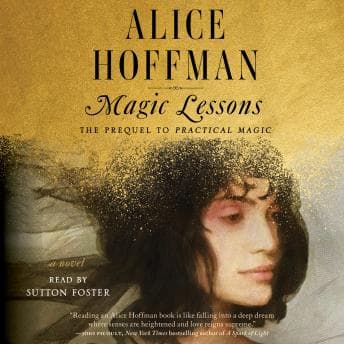
That line hit me somewhere around hour three, and I had to pause my IDE and just... sit with it. Which is not something I expected from what I thought was going to be a cozy witch prequel. I was deep in a late-night coding session - supposedly refactoring my procedural generation pipeline, actually procrastinating - and I'd put this on expecting pleasant background vibes. Warm magic, herbalism, maybe some cats. And yeah, there's all that. But Alice Hoffman sneaks a knife in between the lavender and the love potions.
The Magic System Is Folklore, Not Physics (And That's Okay, Actually)
Look, I'm a hard magic system guy. I like Sanderson's laws, I like rules, I like knowing exactly how much investiture it costs to push on a coin. So when I say Hoffman's "Nameless Arts" worked for me, understand the weight of that statement. There are no stat blocks here. No mana pools. The magic in Magic Lessons is hedgewitchery - herbal remedies, sympathetic connections, intuition passed from Hannah Owens to young Maria like a grandmother teaching you to cook without measuring cups. It's a soft magic system, but it's internally consistent, which is what matters. The rules exist, they're just never spelled out in an appendix. Maria's curse - the one she invokes in Salem after being abandoned by the man she followed across the ocean - follows a clear emotional logic. Love turns to grief turns to rage turns to a hex that echoes through centuries of Owens women. My D&D group would call this "wild magic with a wisdom modifier." The consequences are real even if the mechanics are vibes.
What surprised me is how much the 1600s setting functions as world-building in the fantasy sense. Hoffman doesn't just plop characters into colonial Massachusetts - she builds the paranoia from the ground up. The way neighbors watch Maria. The way knowledge of plants becomes evidence of witchcraft. The way being a woman who knows things is, itself, dangerous. That same slow-building societal menace - where the world itself becomes the antagonist before any single villain does - is something Burning Land pulls off in a completely different setting, and it hit me with similar unease. It's historical fiction wearing fantasy's clothes, and the Salem sections had this creeping dread that honestly reminded me more of Joe Abercrombie's political maneuvering than anything in the cozy fantasy aisle.
Sutton Foster Does Something Sneaky With Her Voice
So here's the thing about Sutton Foster's narration - she's a Broadway performer, Tony winner, and you can feel that training in how she handles the emotional peaks. But what impressed me more was the restraint. When Maria is abandoned as a baby in that snowy English field, Foster doesn't go for melodrama. She keeps it measured, almost clinical, and the horror of it lands harder because of that distance. Then later, when Maria is dealing with heartbreak in Salem, Foster lets the cracks show - her voice gets this slight tremor that feels earned rather than performed.
She differentiates characters well enough that I never lost track of who was speaking, which at 13+ hours is no small thing. Hannah Owens gets a warmer, lower register. Maria's voice ages convincingly across the timeline. The men in Maria's life each have distinct energy - though I'll say Foster is stronger with the women, which makes sense given the source material. She's not Steven Pacey - nobody is - but she brings a theatrical precision that suits Hoffman's prose style, which tends toward the lyrical and declarative.
Who This Hex Is For (And Who Should Dodge It)
If you need plot to move at a sprint, this will test you. Hoffman takes her time. There are passages about gardens and remedies and the color of the sky at specific hours that are beautiful in audio but would make an action-fantasy reader claw at their earbuds. The pacing is slow-burn in the truest sense - the curse that drives the entire Practical Magic universe doesn't even get invoked until well past the halfway mark.
But if you've ever played a druid or a nature cleric and wished someone would write a whole novel about what that life actually feels like - the loneliness of knowing things other people fear, the cost of loving when the world punishes you for being different - this is your book. It's also excellent if you've read Practical Magic or The Rules of Magic and want the origin story. Hoffman rewards longtime readers with callbacks that I'm told land beautifully, though I came in cold and still found the standalone story emotionally complete.
I wouldn't recommend this for background listening. The prose demands attention - Hoffman writes in this incantatory style where repeated phrases build meaning over chapters, and if you zone out you'll miss the architecture of it.
Rolling a Nat 20 on Emotional Damage
I finished this at 2 AM with my thesis document still open and untouched in the other tab. (Sorry, Dr. Patel.) It's not the kind of fantasy I usually reach for - no progression systems, no epic battles, no maps in the front matter. But the emotional progression is satisfying in a way I didn't expect. Fourth Wing leans hard into the progression systems I usually need, which made it interesting to notice I didn't miss them at all here - Hoffman earns her character arcs through grief instead of stat sheets. Maria Owens starts as an abandoned infant and ends as something ancient and formidable, and every loss along the way feeds into the woman she becomes. The curse isn't just a plot device - it's grief given teeth. And Sutton Foster carries all thirteen hours of it with the kind of steady, committed performance that makes you forget you're listening to one person in a recording booth.
I read this instead of writing my thesis. Worth it.