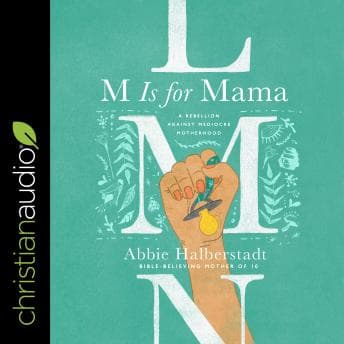

Okay, I need to talk about the word "mama." Because Abbie Halberstadt uses it approximately every forty-five seconds in this audiobook, and by hour two, I was chopping onions for dal and muttering "please just say 'mom' once" at my kitchen counter like a person who has lost all perspective. I get it — it's literally the title, it's her brand, it's the warm Southern-adjacent vibe she's cultivating. But the research on this checks out: some listeners find it grating, and I'm psychologically predisposed to notice repetitive linguistic patterns. So there's that.
But here's the thing I found myself asking: why does this book work for so many women despite that quirk? And the answer is actually interesting from a narrative psychology perspective.
The Psychology of Permission-Giving
What Halberstadt is really doing here — beneath the scripture references and the practical advice about meal planning and discipline — is constructing a permission structure. She's telling mothers they're allowed to aim higher without the guilt spiral that typically accompanies "you should be doing better" messaging. The protagonist exhibits classic secure attachment language: "You are worthy of the awesome responsibility God has given you." That's not accidental. That's someone who intuitively understands that shame-based motivation doesn't stick, but identity-based motivation does.
The research actually shows that when people internalize a role as part of their identity rather than a task they perform, they're more likely to sustain behavioral change. Halberstadt frames motherhood as a calling rather than a checklist, and whether or not you share her theological framework, the psychological scaffolding underneath it is sound. She's basically doing cognitive reframing in a Christian wrapper. Dale Carnegie was doing something structurally similar in How To Win Friends And Influence People — identity-first framing dressed up as practical advice, and people have been buying it for decades because the psychological scaffolding actually holds.
What makes her approach compelling is the specificity of her lived experience. This is a woman with ten children, including two sets of identical twins. TWO sets. When she talks about the chaos of getting everyone fed and educated and not feral, she's not theorizing. She's reporting from the field. That credibility carries enormous weight in a genre saturated with idealized Pinterest-board parenting advice.
Author-as-Narrator: The Authenticity Trade-Off
Halberstadt narrates her own book, and this is a fascinating case study in the author-narrated audiobook dilemma. She's not a professional voice actress. Her delivery is conversational rather than polished — she sounds like she's talking to you across a kitchen island, not performing at a lectern. The humor lands because it sounds natural, not rehearsed. There's a warmth in her voice when she describes the messy, exhausting, sometimes absurd reality of her household that a hired narrator simply couldn't replicate.
The trade-off? There's no vocal range to speak of. Every chapter sounds pretty much the same in terms of energy and cadence. For five hours, that's manageable — this isn't a twenty-hour epic where you need tonal variety to survive. But if you're the kind of listener who needs dynamic narration to stay engaged (guilty), you might find your attention drifting during the more advice-heavy middle sections.
I listened while making an elaborate biryani that nobody asked me to make at 9 PM on a Tuesday, and I'll admit I missed a few passages while wrestling with whole spices. But the structure is forgiving — each chapter is essentially self-contained, so you can dip back in without losing the thread.
Where It Doesn't Track For Me
Psychologically, there's one thing that doesn't quite track. The book positions worldly culture as offering mothers "little in the way of real help" and frames secular support — moms connecting to "celebrate surviving another day" — as settling for mediocrity. I found myself pushing back hard on this. The research on maternal mental health consistently shows that normalization of struggle — the exact "misery loves company" dynamic she's critiquing — is actually protective against postpartum depression and parental burnout. Survival mode isn't failure. Sometimes it's adaptive.
I think Halberstadt genuinely wants to encourage women, and her heart is clearly in it. But the binary framing of "biblical excellence" versus "worldly mediocrity" flattens a psychological reality that's much more complicated. Some mamas — sorry, some mothers — are surviving because surviving is the hardest and bravest thing they can do right now. My therapist would have thoughts about framing that as insufficient.
That said, if you're inside the worldview this book operates from, and you're looking for someone who makes high-investment parenting feel achievable rather than crushing? Halberstadt delivers. She's funny, she's direct, and she clearly practices what she preaches with those ten kids.
Who Gets the Most Out of This
Christian mothers who want practical encouragement grounded in scripture and delivered by someone who's genuinely been in the trenches. If you're not operating from a faith-based framework, most of the advice will feel disconnected from its motivational engine. And if repetitive terms of endearment make you twitch — well, you've been warned.
At five hours, it's a light commitment. Worth a listen during housework or errands if the premise speaks to you. Just maybe not at 1.5x speed — her conversational pacing already moves at a natural clip.