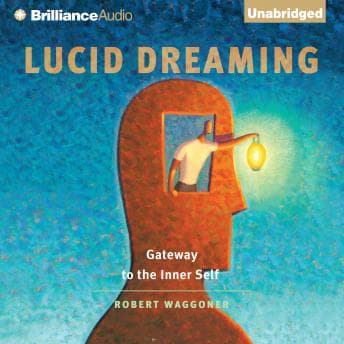

3 AM. Couldn't sleep. The irony of listening to a lucid dreaming book while battling insomnia wasn't lost on me. Jenny was out cold next to me—she can sleep through anything, it's infuriating—and I'm lying there in the dark wondering if Robert Waggoner is about to change my life or waste 12 hours of it.
Bottom line: This is not a beginner's book. If you've never had a lucid dream, you'll spend the first four hours feeling like you walked into an advanced calculus lecture having skipped Algebra I. But if you've already experienced conscious dreaming and want to understand what's actually happening in your brain? This is the real deal.
The McKinsey Consultant Meets the Dream Shaman
Here's what surprised me—Waggoner approaches this with genuine intellectual rigor. He's not some crystal-waving mystic. The guy is President-Elect of the International Association for the Study of Dreams, and it shows. His five-stage framework for lucid dreaming progression actually makes sense. Stage one: realizing you're dreaming. Stage five: interacting with what he calls the "Inner Self" or dream observer. Most business books I review have less structured thinking than this.
But here's where my consulting brain started twitching. The content is dense. Really dense. Waggoner piles anecdote on top of theory on top of personal experience without much structural signposting. I found myself rewinding sections multiple times—and I was at 1.5x, not my usual 2.0x. At 12 hours and 45 minutes, this book asks for commitment. The kind of commitment my parents put into their dry cleaning business. Except instead of pressing shirts, you're pressing into your own subconscious.
The practical application pieces are scattered throughout rather than consolidated. If you're looking for a "do this, then this, then this" instructional guide, skip to LaBerge's work instead. QBQ! The Question Behind the Question takes the opposite approach—it's all actionable frameworks, no wandering. Waggoner is more interested in describing the territory than giving you turn-by-turn directions.
Mel Foster: Steady Hands, Flat Peaks
Listener reviews on this one are split down the middle, and I get why. Foster's delivery is... consistent. Some call that "engaging and professional." Others call it "monotone." I'm somewhere in the middle. For dense psychological content like this, Foster's steady pacing actually helps. You're not fighting a dramatic narrator while trying to absorb complex concepts about dream consciousness.
But—and this is significant—there are stretches where Waggoner describes genuinely wild dream experiences. Flying through fractal landscapes. Conversations with dream figures who reveal unexpected truths. Foster reads these with the same energy as the theoretical sections. It's like having someone describe skydiving in the same tone they'd use for reading insurance documents. The content is fascinating; the delivery doesn't match.
I've seen this pattern in corporate training audiobooks. Safe, competent, forgettable. Foster isn't bad—he's just not adding anything to the experience.
Who Gets Value Here (And Who Doesn't)
This book is for people who've already had lucid dreams and want to go deeper. If you've experienced that moment of "wait, I'm dreaming" and want to understand what to do next, Waggoner delivers genuine insight. His framework for asking the dream itself questions—literally speaking to the dream environment and receiving answers—is something I haven't encountered elsewhere. The philosophical depth here reminded me of Early Greek Philosophy and Other Essays—both explore consciousness and reality in ways that demand real intellectual engagement.
Skip this if you've never had a lucid dream and want step-by-step techniques to induce one. You'll get frustrated. Also skip if you need clean, structured content for background listening. This demands focus. I tried switching to housework mode during hour six and had to restart the entire chapter.
The sweet spot? Someone with 10+ lucid dream experiences who's hit a plateau. Someone curious about the psychological and quasi-spiritual dimensions of conscious dreaming. Someone who doesn't need their hand held.
The Dry Cleaner's Son Verdict
My parents never read self-help books. They were too busy working. But I think my dad would've appreciated Waggoner's approach—here's a guy who spent 40 years actually doing the thing, documenting it, and now sharing what he learned. It's not theoretical. It's field research from inside his own mind.
Is it worth 12 hours and 45 minutes? For the right listener, absolutely. For the wrong one, you'll bail by hour three. I finished it. I took notes. I'm genuinely curious to try some of his techniques.
Jenny would say I'm being generous with that 3.5 rating given my complaints about structure. Jenny is right. But the substance underneath the messy organization is legitimately valuable. This is what separates a practitioner's book from a content marketer's book—Waggoner has actually done the work. The other 7 hours of padding? That's just how he thinks. Nonlinear. Dream-like, appropriately enough.
Wait for a sale unless you're already deep into lucid dreaming practice. Then it's worth full price.