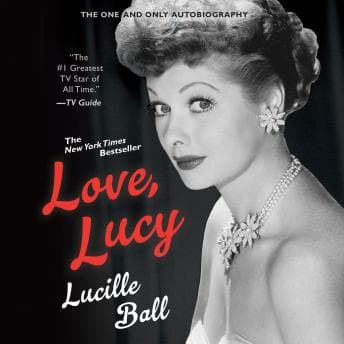

"I was not a born funny person. I was a born serious person who learned to be funny."
That line hit me somewhere around hour two, and I had to pause my work because - okay, let me back up. I was deep into a logo redesign for a local bakery, 11 PM, third cup of chamomile tea going cold on my desk, Diego curled up on my lap like a furry anchor. And Lucy just casually drops this line about herself, and suddenly I'm not thinking about typefaces anymore. I'm thinking about my abuela, who everyone said was the funniest woman in the neighborhood but who carried this quiet heaviness that only I seemed to notice. Some people's humor is armor. Lucy knew that about herself.
This book felt like sitting in a kitchen with someone's grandmother while she tells you the real story - not the polished one, not the Hollywood one.
The Daughter Becomes the Mother (And It's Eerie)
So here's the thing that makes this audiobook special in a way the print version literally cannot be: Lucie Arnaz narrating her mother's words. Think about that for a second. Lucy's own daughter, reading Lucy's own manuscript, and sounding so much like her that by hour three I genuinely forgot it wasn't Lucille Ball herself speaking. There's this quality in Lucie's voice - this bright, slightly brassy warmth - that is pure Lucy Ricardo energy. But then she'll shift into Desi's Cuban accent and it's not an impression. It's muscle memory. It's a daughter who grew up hearing that voice at the dinner table, in arguments, in lullabies. The way she rolls Desi's Rs and softens his vowels feels inherited, not rehearsed.
I kept catching myself smiling at moments that weren't even jokes - just the way Lucie would land on a word the way her mother would have. The comedic timing is genetic, apparently.
Small-Town Girl With Big-Screen Ambition (And So Many Bruises)
Lucy's story before the fame? It's rougher than I expected. Jamestown, New York. A girl who wasn't considered pretty enough, wasn't considered talented enough, kept getting sent home from drama school. She talks about those early years in Hollywood with this mixture of self-deprecation and steel that just - my heart. MY HEART. That same gutted-open feeling of watching someone claw toward something they were told wasn't meant for them — I felt it just as hard reading H Is for Hawk, which is ostensibly about grief and falconry but is really about a woman insisting on her own strange path. She was a B-movie actress for years. Years! Getting bit parts and being told she wasn't funny, wasn't leading-lady material. And she writes about it without bitterness, which somehow makes it hit harder.
The Desi chapters, though. That's where I lost it. She writes about falling for him with this breathless, almost teenage intensity, and you can feel how massive that love was. But she's also honest about the drinking, the affairs, the fights. She doesn't dramatize it or play victim. She just... tells you. And Lucie reading these passages about her own parents' marriage falling apart - there's a tremor in her delivery sometimes, barely there, that tells you she's not just narrating. She's remembering.
I ugly-cried around the section about the divorce. Not dramatic sobbing, just this slow leak of tears while Diego headbutted my chin like, "are you okay?" No, Diego. I am not okay. This woman built an empire with the love of her life and then had to watch it dissolve.
What Lucy Doesn't Say
Here's what surprised me: this isn't a tell-all. Lucy is strategic about what she shares. The later years get condensed. Gary Morton, her second husband, gets a sweet but brief treatment - "heartfelt happy ending" is the official line, and she sticks to it. You can feel the places where she chose not to go deeper, and honestly? I respect that. She wrote this at the height of her career, and there's a generation-specific dignity to how she handles the hard parts. My abuela was the same way - she'd tell you about the pain but she'd wrap it up neatly, like a gift she was giving you that she didn't want to burden you with.
Abuela would have loved this one. She watched I Love Lucy reruns religiously. She would have pressed her hand to her chest during the Desi sections and said, "Ay, mija, that's how love is. Beautiful and terrible."
Who This Is For (And Who Might Shrug)
If you love old Hollywood, if you grew up watching Lucy and Desi, if you're a woman who's ever had to be twice as tough to get half the credit - this is your book. It's only seven hours, which feels right. Lucy doesn't waste your time. She tells her story, she makes you laugh, she makes you ache, she gets out.
If you're looking for deep industry gossip or a warts-and-all exposé, this isn't that. Lucy is generous with her memories but protective of certain truths. Some listeners might want more. I think she gave us exactly what she wanted to give.
Also - pair this with Desi Arnaz's memoir for the full picture. I'm adding that to my queue immediately because I need his side of the kitchen-table conversations.
This One Stays on the Shelf
This is a rainy Sunday book. It's warm milk and honey. It's your grandmother telling you about the man she loved before your grandfather, the one who taught her to dance. Seven hours at 1.0x, no speed adjustments needed - Lucy's timing deserves the full beat. Lucie Arnaz didn't just narrate her mother's book. She channeled her. And that makes this audiobook something the printed page can't quite touch.




![Steve Jobs [unabridged audiobook] audiobook cover](/_next/image?url=https%3A%2F%2Fcovers.audiobooks.com%2Fimages%2Fcovers%2Ffull%2F9788499923406.jpg&w=1920&q=75)