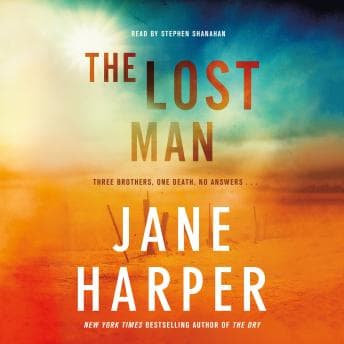

What happens to a family when the landscape itself becomes the thing that kills you?
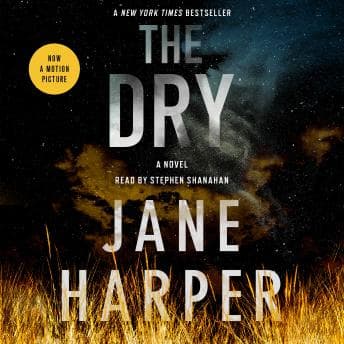
I was making dal makhani at 10 PM — the kind of elaborate, three-hour project you undertake when your brain won't shut off — when Shanahan's flat, no-nonsense Australian voice described Cameron Bright's body lying in the dust beside a lonely stockman's grave. And I just... stopped stirring. Stood there with a wooden spoon suspended over the pot like some kind of culinary statue while Jane Harper methodically dismantled every assumption I'd built about this family.
The Outback Is the Therapist's Couch Nobody Asked For
Here's what Harper understands that so many mystery writers don't: isolation doesn't just create opportunity for crime. It creates the psychology of crime. The Bright brothers live three hours apart by car. Three hours. Their nearest neighbor is their own sibling, and they still can't manage to be honest with each other. The protagonist, Nathan, exhibits classic avoidance patterns — a man who's been exiled from his own community for reasons the book parcels out with agonizing patience, and who has internalized that exile so completely he barely pushes back against it.
I found myself asking: why does Nathan really accept his own ostracism so willingly? Harper knows the answer from page one, but she makes you sit with the discomfort of not knowing. The research actually shows that people in prolonged isolation develop rigid self-narratives — they become the story others tell about them. Nathan is living proof of that psychological principle, and watching him slowly, painfully question his own story is where this book earns its keep.
Cameron's wife, Ilse, is equally fascinating. She's stuck on this cattle station in the middle of nowhere, raising daughters, managing grief, and the book quietly asks whether her devotion to Cameron was love or a different kind of captivity. My therapist would have thoughts about this character — specifically about how she performs composure while everything underneath is corroding.
Shanahan Makes You Taste the Dust
Some listeners complain about Shanahan's heavy Aussie accent. I get it — it took me maybe twenty minutes to fully calibrate. But here's the thing: that accent IS the story. His voice carries the same dry, sunbaked quality as the landscape Harper's describing. When he voices Nathan, there's this gentle weariness, like a man who's been carrying something too heavy for too long. When he shifts to Bub — the youngest brother, the anxious one — there's a subtle tightening, a higher register that communicates a person who's spent his whole life being underestimated.
The pacing is slow. I won't pretend otherwise. This is an 11-hour audiobook that doesn't deliver its real gut-punch until roughly the last two hours, and there are stretches in the middle where you're just... existing in the outback with these people, feeling the heat, absorbing the silences between conversations that should be happening but aren't. Shanahan handles those silences beautifully. He doesn't rush to fill dead air. He lets the weight of unsaid things do its work.
But — and this matters — if you need a body count or plot twists every chapter, psychologically this doesn't track as your kind of book. Harper's playing a longer game. She's building a case study in family dysfunction, and the mystery is almost secondary to the question of what these people have done to each other over decades of proximity and distance.
Why Families Are the Best Crime Scenes
This is a fascinating case study in how secrets metastasize in closed systems. The Bright family homestead functions like a pressure cooker — everyone knows something, nobody's talking, and the heat (literal, psychological) keeps rising. Harper layers revelations about domestic abuse, community complicity, and the particular cruelty of rural gossip in ways that feel earned rather than manipulative. Innocent Victims works the same territory — community silence, domestic rot, and the way people protect stories that should be dismantled — and it hit me with a similar kind of quiet dread.
What makes this story genuinely compelling is that the final reveals don't come from some clever detective work. They come from people finally being too tired to keep lying. That's psychologically accurate in a way that most thrillers never bother to be. People don't confess because they get caught. They confess because maintaining the lie becomes more exhausting than the truth.
The ending rearranged several things I thought I'd understood about Nathan, and I found myself rewinding a section while my dal quietly burned on the stove. (It was fine. Mostly.)
Who Should Brave the Heat
If you loved Tana French's brand of atmospheric, psychology-heavy mystery — the kind where the whodunit matters less than the why-dunit — this is absolutely your book. If you're a fast-paced thriller person who needs action beats every fifteen minutes, you will be miserable. This is a dedicated-listening audiobook. Don't put it on while doing dishes; you'll miss the quiet moments where Harper buries critical details.
My Case Notes
Jane Harper wrote a mystery that functions like a family therapy session nobody wanted to attend. Shanahan narrates it like he's lived in that dust his whole life. It's slow, it's bleak, and it's one of the most psychologically honest crime novels I've listened to in a long time. The kind of book that makes you look at your own family group chat differently.