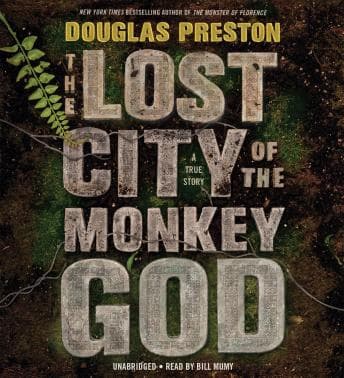

Let me cut to the chase: I finished this one during a 12-hour drive to a client site in Houston, and I nearly missed my exit twice. That's the kind of book this is.
Douglas Preston does something rare here—he writes an adventure book that actually delivers on the adventure. No padding, no filler chapters about his feelings. Just a team of scientists, a classified military technology, and a lost city that everyone thought was legend. The kind of mission brief that would've had my intelligence guys drooling back in the day.
The Real Deal on Jungle Ops
Here's what got me: Preston doesn't romanticize the jungle. He describes it exactly like I remember Central American terrain from training exercises—the mud that swallows your boots, the insects that treat you like a buffet, the constant wet that seeps into everything. When the team encounters fer-de-lance snakes and deals with quickmud, it reads authentic. Not Hollywood authentic. Real authentic.
The lidar technology angle fascinated me. Using classified military tech to map terrain under triple-canopy jungle? That's the kind of creative problem-solving I respect. Preston explains it clearly without dumbing it down or getting lost in technical jargon. You understand exactly why this was a game-changer for archaeology.
But the book takes a hard left turn in the final third that I didn't see coming. The disease element—and I won't spoil the specifics—transforms this from an adventure story into something darker. Something that made me think about the price we pay for pushing into places that maybe don't want us there. The indigenous warnings about the city weren't just superstition. That hit different. Bury My Heart at Wounded Knee left me with that same uncomfortable recognition—that indigenous knowledge gets dismissed as myth until it's too late.
Bill Mumy Behind the Mic
Now, Bill Mumy. (Yes, the kid from Lost in Space—I had to look that up.) He's got a pleasant voice and his pacing is solid. When the team is slogging through the jungle or encountering wildlife, he ramps up the intensity appropriately. Keeps you engaged during the long stretches.
Here's my issue, though: the Spanish and Mesoamerican pronunciation. I spent enough time working with Honduran military counterparts to know when someone's butchering the language, and Mumy does exactly that. Every time he hits a place name or indigenous term, it pulled me out of the story. For a book set entirely in Honduras about an ancient Mesoamerican civilization, that's a significant problem.
Not a dealbreaker—Ranger stayed awake through the whole thing, which is his seal of approval—but it's noticeable. If you're fluent in Spanish or have spent time in Central America, you'll wince occasionally.
Team Dynamics and Preston's Approach
Preston's writing style works for audiobook consumption. Accessible, direct, keeps moving forward. He doesn't get lost in academic tangents or pad chapters with unnecessary backstory. When he does dive into history—the conquistadors, Theodore Morde's mysterious 1940 expedition—it serves the narrative rather than derailing it.
The team dynamics reminded me of working with mixed civilian-military groups. Scientists who don't understand operational security. Archaeologists who want to document everything while the security guys are watching the treeline. Preston captures that tension without making anyone the villain.
One thing worth mentioning: there's some colorful language throughout, mostly from team members under stress. (Imagine that—people curse when they're hip-deep in mud with venomous snakes nearby.) If you're listening with kids in the car, save this one for solo drives.
Mission Debrief
This is genuine adventure nonfiction that doesn't insult your intelligence. Preston was there. He contracted the disease. He's not writing from a comfortable office imagining what the jungle might be like.
The pronunciation issues with Mumy are real but manageable. I'd recommend listening at 1.25x—it smooths out some of his breathlessness during the more intense passages and gets you through the Spanish stumbles faster.
Who's this for: If you're into archaeology, exploration, or just want a true story that reads like a thriller, this delivers. Skip it if you need a tightly structured academic treatise or can't handle some linguistic rough edges—grab the print version instead.
Ranger approved this one. He even lifted his head during the jaguar encounter, which is high praise from a dog who's heard everything.