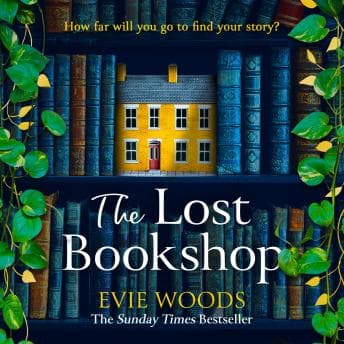

Everyone keeps calling this book "magical" and "enchanting" and listen - I get it. I do. But here's the thing nobody's saying: this book is really about three people who've been letting other people write their stories for them. And as the eldest Filipina daughter who was supposed to be a doctor but became a nurse instead? That hit different.
I picked this up because I needed something lighter after a brutal stretch of nights. Four traumas in one shift, two of them pediatric. Carlos found me sitting in the driveway at 7 AM, engine off, just... not ready to go inside yet. So I restarted the audiobook from where I'd left off the night before and let Dublin wash over me for another twenty minutes before I went in to make pancakes. Sometimes you need a book that reminds you the world has softness in it.
Three Narrators, Three Timelines, and Nobody Steps on Each Other's Toes
The triple narrator setup here actually works, and I don't say that lightly. Avena Mansergh-Wallace handles Opaline's historical timeline with this quiet intensity - you can feel the constraints of her era pressing in on every sentence. Olivia Mace gives Martha this bruised but stubborn energy that I recognized immediately. I've had patients like Martha, women who flinch when you move too fast but who show up every single day anyway. And Nick Biadon as Henry brings a warmth that grounds the whole thing - he's the listener's anchor when the magical realism gets a little floaty.
The three voices never bleed into each other, which matters when you're switching between timelines. I never had that confused "wait, who's talking now?" moment that kills multi-narrator audiobooks. At 12 hours, it's the right length too - long enough to earn the emotional payoff, short enough that it doesn't overstay its welcome. Mostly.
Books About Books Shouldn't Work This Well (But Also, That Ending)
Okay, here's where I get honest. The first 80% of this audiobook? Wonderful. Evie Woods does something smart - she uses the lost bookshop not as a gimmick but as a mirror. Each character finds what they need in those shelves, and the Brontë manuscript thread gives the historical timeline real stakes. Opaline's story in particular had me gripping my steering wheel because I could feel the walls closing in on her options as a woman in that era.
Martha's domestic abuse storyline is handled with care. As someone who's done intake on more DV patients than I can count, I was watching for the false notes. They didn't come. Her fear is specific and physical - the way she monitors doorways, the way she second-guesses her own perceptions. Woods gets the psychology right. Before I Go to Sleep does something similarly precise with that same terrifying fog of a woman doubting her own mind - and I yelled at my dashboard considerably more during that one. The medical details are accurate. Finally. (Well, the psychological ones anyway. This isn't that kind of book.)
But that ending. I need to talk about the ending.
It's rushed. After all that careful, patient build-up across three timelines, the resolution happens so fast it gave me emotional whiplash. Like spending eleven hours in a slow, beautiful climb and then base-jumping off the summit. There's an epilogue, sure, but it felt like Woods ran out of pages (or in our case, recording time) and just... wrapped it up. Carlos asked why I was making that face when I came inside. I told him the book ghosted me in the last chapter.
Who This Is Actually For (And Who Should Keep Scrolling)
If you love books about books - and I mean genuinely love the idea that stories have physical, almost mystical power - this is yours. If you need a decompression listen after hard days. If you're someone who's ever felt like a side character in your own life and needed a story that says "no, actually, your story matters too." My mom would love this (she still thinks I should've been a doctor), because it's got that multi-generational weight of women making impossible choices.
But if you need tight, satisfying endings? If magical realism makes you impatient? If you're the type who wants the plot mechanics to hold up under scrutiny? You might finish this one feeling a little cheated. The magic is real in this story's world, and if you can't just go with that, the last few chapters will frustrate you.
Night Shift Prescription
Perfect for that post-shift decompression. I mean it. This book is warm milk and a blanket after a bad night. The narration is gentle without being sleepy, the pacing is steady enough for a tired brain, and the emotional core is real enough to make you feel something without destroying you. I didn't yell at my dashboard once - which is either a compliment or a sign that there's no medical content for me to argue with.
Worth the credit? Almost. That ending keeps it from being a full yes. But I'm glad I listened. Some books are imperfect and still exactly what you needed. This was mine on a Tuesday morning in the driveway, not ready to go inside yet.