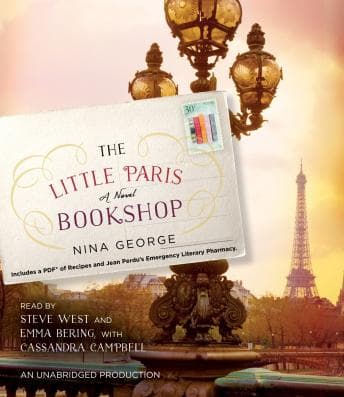

Everyone describes this book as a "charming love letter to literature." I describe it as a fascinating, frustrating case study in pathological avoidance strategies.
Look, I get the appeal. Truly. As someone who analyzes narratives for a living, the idea of a "literary apothecary"—a man who prescribes specific novels to treat emotional ailments—is basically catnip to me. It's a beautiful concept. But let's be real for a second: Jean Perdu isn't just a romantic hero; he's a man who hasn't opened a letter from his lost love for twenty-one years.
Twenty. One. Years.
(My mother would have steamed that envelope open over a pot of chai within twenty-one seconds, but that's a different cultural neurosis entirely.)
When Grief Becomes a Lifestyle
The premise is simple: Perdu runs a floating book barge on the Seine. He can heal everyone but himself. Classic healer complex. When he finally decides to pull up the anchor and travel south—dragging a blocked writer and a lovelorn chef with him—it's supposed to be a journey of healing. And it is. Eventually.
But psychologically? This man is a mess. Nina George clearly understands the mechanics of repression, because Perdu is maddeningly good at it. I spent the first third of the audiobook wanting to shake him. The narrative suggests this is romantic longing; my research brain screams that it's maladaptive behavior.
That said, the way George writes about books is... seductive. She treats literature as medicine, which is scientifically valid (bibliotherapy is a real thing, look it up). Pineapple Street uses a similar approach to emotional healing, though it swaps French barges for Manhattan brownstones and replaces bibliotherapy with family dysfunction. There are moments where Perdu describes a book's ability to soften the soul that made me pause my chopping—I was making a very complicated biryani while listening—and just nod.
A Lullaby on the Seine (For Better or Worse)
Let's talk about the voice in my ear. Steve West does the heavy lifting here, with Emma Bering and Cassandra Campbell chipping in.
West has one of those voices that sounds like expensive velvet. It's incredibly soothing. Maybe too soothing? Cassandra Campbell's work on Where the Crawdads Sing had the opposite effect on me—her pacing kept me locked in even during the slower marsh descriptions. I listen to audiobooks to keep my brain engaged while I'm doing rote tasks, but West's performance is so gentle, so quiet, that I found myself zoning out. It's not boring, exactly—it's just very... sedative. If you have insomnia, this audiobook might be your cure.
However—and this is a big however—the accents.
(Why do narrators do this?)
The attempt at French accents felt a bit caricature-ish to me. It wasn't Pink Panther bad, but it wasn't great. And the female voices, particularly when voiced by the male narrator, leaned into that breathless, slightly whiny register that makes my teeth itch. It detracts from the emotional weight when the characters sound like they're in a melodrama rather than a literary novel.
The Barge Moves at Barge Speed
Here's where the "perfect is boring" rule applies. This book is imperfect because it drags. It meanders. It floats down the river at the speed of an actual unmotorized barge.
If you're used to thrillers or plot-driven fiction—like my beloved Agatha Christie novels where people actually do things—this might drive you up a wall. There's a lot of eating, a lot of drinking wine, and a lot of staring at water while thinking about feelings.
But.
There's a section in the middle where the prose just clicks. The descriptions of the French countryside, the food, and the specific ache of lost time... it works. It really works. I found myself forgiving the slow pace because the atmosphere was so thick. It felt less like reading a story and more like sitting in a therapy session where the therapist just lets you cry for an hour.
Priya's Prescription
So, would I recommend this?
It depends on your diagnosis.
Skip it if you need a plot that moves, or if you get annoyed by characters who refuse to solve their own problems for decades. You'll just be angry.
Listen if you want to feel understood in your sadness, or if you believe that stories are the only thing that make sense of this chaotic world (which, let's face it, they are). Just maybe speed it up to 1.25x.
(My therapist would probably say I need to learn to sit with the slowness. She's probably right. I'm still speeding it up.)