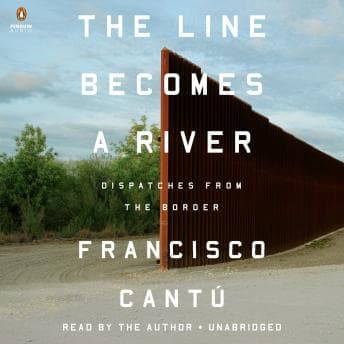

What happens to a person who enforces a system they know is breaking people - including themselves?
I finished this one sitting in my driveway at 8:15 AM, engine off, still in scrubs, breakfast for the kids completely forgotten. Carlos texted me twice. I didn't move until the last chapter ended. And then I sat there for another ten minutes staring at the steering wheel because I didn't know what to do with what I'd just heard.
The Weight of Being Complicit in Something Bigger Than You
Look, I know something about working inside a system that chews people up. Fifteen years in a Level 1 trauma center - I've held the hands of people the system failed. I've charted injuries I knew would lead nowhere good. So when Francisco Cantú describes dragging water jugs into the desert sun and slashing them open, knowing people will die of thirst without them, and then going home and having nightmares about wolves and blood - I felt that in my sternum. That specific guilt of being the hands that do what the institution demands.
The book is structured in three parts, and the shift between them is what got me. Part one is Cantú as a green Border Patrol agent, learning to track human footprints, finding bodies in the desert, processing people into detention with a kind of clinical detachment that - as someone who's actually worked a code - I recognized immediately. That's how you survive. You compartmentalize. You focus on procedure. And then one day you can't anymore.
Part two is him trying to be a civilian again, working in a coffee shop, going to graduate school, and the border following him anyway. The dreams don't stop. The desert doesn't leave. And part three - when his friend José tries to cross back after visiting his dying mother in Mexico and gets swallowed by the immigration system - that's where the book ripped me open. Because suddenly the abstract becomes a person with a name, a family, a mother who is dying, and Cantú has to watch the machine he used to operate grind someone he loves.
Cantú Reading His Own Story - Honest Assessment
Here's where I need to be straight with you. Cantú narrates this himself, and there's a real split in how people feel about it. Some listeners find his delivery plodding, halting, like he's reading from a distance - a lifetime away from the trauma, as one reviewer put it.
I actually think that flatness IS the story. When he describes finding a body in the desert, his voice doesn't crack or dramatize. It's steady. Controlled. And if you've ever listened to a trauma nurse give report at shift change - "42-year-old male, GSW to the abdomen, BP 80 over palp" - you know that clinical steadiness doesn't mean absence of feeling. It means the feeling is so big you've built a wall around it to function.
But I won't pretend it makes for easy listening. This is not a book that grabs you by the collar. At 6 and a half hours, it's short, but it demands your full attention. His pacing is deliberate. Sometimes too deliberate. There were moments in part two where I felt myself drifting, where the academic reflections on border theory pulled me out of the visceral human story. I bumped the speed to 1.25x during those stretches and it helped.
The moments where his narration works best are the quiet ones - when he's describing his mother's voice, or translating José's wife's desperate phone calls. There's a tremor there. Barely perceptible. But real.
Who This Is For (And Who Should Hit Skip)
If you want a fast-paced border thriller with clear heroes and villains, this is not it. This is not how the border works. Trust me - I treat patients from both sides of that line, and nothing about it is simple. I Know Why the Caged Bird Sings lives in that same uncomfortable territory - a story where the systems around a person are so clearly broken, yet the person inside them still has to find a way to breathe and survive and keep their humanity intact.
This book is for people who can sit with discomfort. Who want to understand what it costs a person to enforce something they're not sure is right. Filipina-American families like mine know something about borders and crossing and what you leave behind - my lola's stories about coming to the States have that same ache in them, that same silence around the hard parts.
It's also for anyone who's worked inside a broken system and stayed too long and left too late and still carries it. You'll recognize yourself.
Not ideal for casual listening. Not for workouts. Not for background noise while you're cooking adobo for five kids and a husband. This one needs a quiet car and an empty road.
Night Shift Prescription
Carlos asked why I was crying in the car. I blamed allergies. But honestly? This book made me think about every patient I've ever discharged knowing they'd walk out into a system that doesn't care about them. Cantú's guilt is specific to the border, but the feeling is universal to anyone who's been the human face of an inhuman process.
Not a perfect audiobook. The narration will test your patience in spots. But the story underneath is one that'll sit in your chest for days. My mom would love this - she still thinks I should've been a doctor, but she'd understand every word of what Cantú is carrying.








![Steve Jobs [unabridged audiobook] audiobook cover](/_next/image?url=https%3A%2F%2Fcovers.audiobooks.com%2Fimages%2Fcovers%2Ffull%2F9788499923406.jpg&w=1920&q=75)