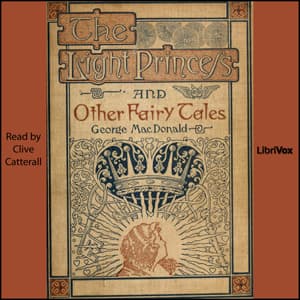

So I'm sitting on my apartment floor at like 1 AM, sorting my board game collection by weight class (yes, I have a system, no, I will not explain it), and I figured I'd throw on something short while I organized. Three and a half hours? Perfect. That's barely a warm-up by my usual standards — I normally don't blink at anything under 20 hours. But George MacDonald's The Light Princess and Other Fairy Tales caught my eye because, look, this is the guy who basically loaded the creative cannon that Tolkien and Lewis fired. You don't just skip the granddaddy.
And I'm genuinely glad I didn't.
The OG Fantasy Grandpa Hits Different
Here's what surprised me: MacDonald writes fairy tales the way a good DM runs a one-shot. The setup is clean, the worldbuilding is efficient, and the rules are weird but internally consistent. Take "The Light Princess" — a baby gets cursed so gravity doesn't affect her. She just... floats. But MacDonald doesn't stop at the physical gimmick. The princess also has no gravity of character. No seriousness. She laughs at everything, can't cry, treats danger like a joke. The curse is a pun, basically, and MacDonald commits to both sides of it with this gleeful, almost mischievous energy. The magic system is chef's kiss — not because it's complex, but because the rules create real stakes. The only way to break the curse is to make her cry, and the story earns that moment honestly.
"The Giant's Heart" is the D&D one-shot of the collection. Two kids wander into Giantland, discover a child-eating giant, and have to figure out how to kill something whose heart is literally hidden somewhere else. My D&D group would love this — it's basically a puzzle encounter wrapped in a fairy tale. MacDonald apparently left listeners on tenterhooks with the ending of this one, and yeah, he does. It's tense in a way I didn't expect from something written in the 1860s.
Then there's "The Golden Key," which is... different. A boy finds a key with no lock. He meets a girl. They search for the land from where shadows fall. It's the most allegorical of the three, the most dreamlike, and honestly? The ending is going to frustrate some people. It frustrated me a little. It's less "satisfying conclusion" and more "the journey was the point." Which — fine, George, I respect the artistic choice, but I'm a guy who likes his progression systems to have a clear endgame.
Clive Catterall and the Neil Gaiman Energy
Someone compared Catterall's narration to Neil Gaiman's, and I can see it — there's this quality of child-like joy in how he reads, like he's genuinely delighted to be telling you this story. It's not Steven Pacey-level character differentiation (Steven Pacey walked so other narrators could run, and I will die on that hill), but that's not really what this collection needs. This is a single narrator doing soothing, lively storytelling, and Catterall nails that register. His reading of the witty bits in "The Light Princess" apparently had people laughing out loud, and I can confirm — the double meanings around the gravity curse land perfectly in audio because Catterall leans into the wordplay without overselling it.
He doesn't do wildly distinct voices for every character, but for three fairy tales totaling three and a half hours, that's not a dealbreaker. What he does is maintain this warm, slightly conspiratorial tone — like a really good uncle telling you a bedtime story who also happens to find the story genuinely funny.
Who Gets the Golden Key (And Who Should Keep Walking)
If you're a Tolkien or Lewis fan who's never gone back to read their acknowledged inspiration, this is your on-ramp. It's short, it's accessible, and you'll start seeing the DNA everywhere — the moral weight of fairy tales, the way magic operates on symbolic logic, the idea that stories for children don't have to be simple. If you're a parent looking for something to listen to with your kids, "The Light Princess" and "The Giant's Heart" are gold. (Maybe preview "The Giant's Heart" first — there's some violence and the giant literally eats children, so, you know, use your judgment.)
If you need epic scope, complex magic systems, or 40-hour commitments — this isn't that. And if you need every story to stick the landing with a clean resolution, "The Golden Key" might bug you.
But at 3.5 hours? I read this instead of writing my thesis, and I'd do it again. It's the kind of listen that reminds you why you fell in love with fantasy in the first place — before the systems got complex and the series got long. Sometimes you just need a good fairy tale told well. Though I'll admit, the "quiet, grounded storytelling that sneaks up on you" energy reminded me of what I found in White Noise — completely different subject matter, but that same quality of a narrator who seems genuinely at peace with the chaos they're describing.
Roll for Nostalgia — You Pass
MacDonald was building the foundation before any of us knew what the building would look like. This little collection is a peek at the blueprints, and Catterall reads them with genuine warmth. It won't change your life, but it'll make your 1 AM board game sorting session feel a little more magical. And honestly? That's enough.