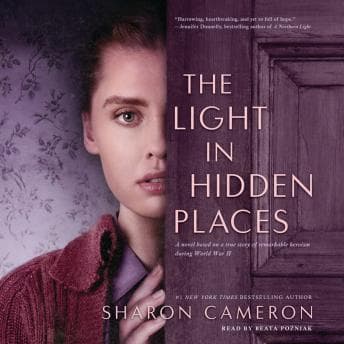

I was grading a stack of sophomore essays on The Diary of Anne Frank - the usual mix of heartfelt responses and painfully obvious SparkNotes summaries - when I started this one. Seemed fitting. By hour three, I'd stopped grading entirely. The red pen sat untouched while Stefania Podgórska's story unfolded in my headphones.
Look, I teach teenagers. I know what they're capable of - mostly procrastination and creative excuses. But Stefania was sixteen when she started hiding Jews in her attic. Sixteen. With a six-year-old sister to care for. In Nazi-occupied Poland. My students complain about having to read 200 pages over a month. This girl hid thirteen people from death while Nazi officers lived in her house.
(Yes, I'm going to use this in class. No, I won't apologize for the guilt trip.)
A Polish Voice Telling a Polish Story
Beata Poźniak's narration is going to divide listeners, and I want to be honest about that upfront. Her Polish accent is genuine - she was born in Poland - and it grounds the story in a way that an American narrator simply couldn't. When she voices Stefania's terror, her desperation, her impossible choices, you feel like you're hearing testimony rather than performance.
But here's the thing: she reads slowly. Really slowly. The kind of pacing that my students would call "boring" before they'd given it ten minutes. I listened at 1.0x because - and I know I sound ancient saying this - the author chose those words. Sharon Cameron spent years researching Stefania's real story, conducting interviews, getting the details right. Poźniak's deliberate cadence honors that work.
That said, I get why some listeners bounce off it. If you're used to thrillers narrated at a clip, this will feel glacial. The dramatic pauses can veer into theatrical territory. One reviewer I saw said they "couldn't stand" the acting style, and I understand that reaction even if I don't share it.
My advice? Give it an hour. If the pacing still isn't working, try 1.25x. But give it a real chance first.
When the Textbook Disappears
Sharon Cameron does something I wish more historical fiction authors would attempt: she makes you forget you're reading history. This isn't a textbook with characters. It's a girl falling in love with a Jewish boy named Izio, making a secret betrothal, watching her world collapse when the Germans arrive.
The grocery store where Stefania works. The ghetto the Diamant family is forced into. The knock at the door when Max appears, having jumped from a train bound for a death camp. Cameron builds these moments with the patience of someone who knows the real weight of what she's describing.
This reminds me of what Elie Wiesel said about bearing witness - that the stories must be told, but they must be told carefully. Cameron's first-person narration puts you inside Stefania's head, inside her fear, inside her impossible bravery. And Poźniak captures something essential about that mindset: the youth of it. This was a teenager making life-and-death decisions, and you hear that youth in the voice.
The section where Nazi officers requisition Stefania's house - moving in downstairs while thirteen Jews hide in the attic above - is almost unbearable. I actually paused grading papers (okay, I'd already paused) and just sat there. The tension doesn't come from action sequences or chase scenes. It comes from the quiet terror of every creaking floorboard, every cough that might be heard. That same kind of slow-building dread permeates Daughter of the Morning Star, though in a completely different context.
The Question My Students Always Ask
They want to know why we keep teaching Holocaust literature. "We get it," they say. "It was bad." And every year I struggle to explain that "getting it" intellectually isn't the same as understanding it humanly.
This audiobook does what I try to do in my classroom: it makes history personal. Stefania wasn't a saint or a superhero. She was a teenager who made a choice, then another choice, then kept making choices when any sane person would have stopped. The audio format - hearing her voice, her fear, her determination - creates an intimacy that reading on a page sometimes can't match.
The bonus conversation with Cameron and Poźniak at the end is worth your time. It's the kind of behind-the-scenes context that helps you understand why this story was told this way.
Who This Is (and Isn't) For
If you care about history, yes. If you want your kids to understand courage, yes. If you need fast-paced entertainment for your commute, maybe try the print version instead - you can control your own pace. Skip this if slow, deliberate narration makes you reach for the 2x button within five minutes.
But if you're willing to slow down, to let the story breathe, to sit with the discomfort of what humans have done to each other and what humans have risked to stop it? This is why we still read the classics. And this is why some stories deserve to become classics.
(Principal Martinez, if you're reading this: I finished grading those essays eventually. The Faulkner podcast can wait.)