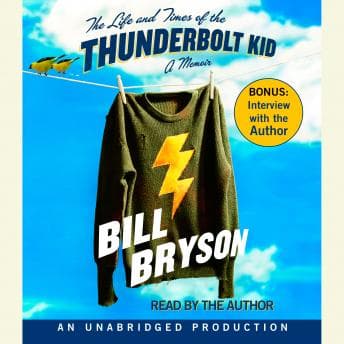

Look, I'll admit it - when Linda handed me this audiobook and said "You need to laugh more," I was skeptical. Bill Bryson? The travel guy? I figured I'd give it twenty minutes on my drive to a client meeting in San Antonio and then switch back to my usual fare of geopolitical analysis.
Seven and a half hours later, I'd finished the whole thing and nearly missed my exit twice.
The Debrief on 1950s America
Here's what got me: Bryson isn't just telling jokes about growing up in Des Moines. He's painting a picture of an America that existed before everything got complicated. And I mean that in the best possible way. The atomic tests, the Cold War paranoia, the absolute insanity of 1950s advertising - it's all there, and it's all hilarious.
But underneath the humor, there's genuine historical observation. Bryson talks about how kids had actual freedom back then. Not the supervised, scheduled, helicopter-parented childhood of today. Kids wandered. They got into trouble. They survived things that would give modern parents heart attacks. As someone who's spent considerable time in environments where situational awareness was literally life or death, I found myself weirdly nostalgic for an era where a six-year-old could disappear for eight hours and nobody called the police.
The stuff about nuclear testing and the casual way Americans accepted radiation exposure? Genuinely disturbing when you think about it. Bryson makes it funny, but there's a dark edge there that I appreciated. The government wasn't exactly straight with people. (Shocking, I know.)
Why Bryson Reading Bryson Just Works
Let me cut to the chase on the narration: having the author read his own memoir is usually a gamble. Some authors have no business behind a microphone. Bryson? He's got this warm, slightly bemused delivery that sounds exactly like a guy telling stories at a backyard barbecue. No theatrical nonsense. No over-the-top character voices. Just a man sharing memories with perfect comedic timing.
I listened at my usual 1.25x and it held up fine. His pacing is already pretty good - not too slow, not rushed. There were moments where I actually slowed it back down because I didn't want to miss the setup to a punchline. That almost never happens.
The dry wit is real. Bryson will describe something absolutely ridiculous - like the time he nearly killed his friend with a bow and arrow - and deliver it with such casual understatement that it takes a second to register. Then you're laughing so hard you have to pull over. (This happened. Ranger looked at me like I'd lost my mind.)
Where It Lost Me (Briefly)
I'll be honest - there are stretches where the nostalgia gets a bit thick. If you didn't grow up in that era, some of the references might not land. I'm a Vietnam-era kid myself, so the 1950s are slightly before my time, but close enough that I recognized the cultural DNA.
Fair warning: some of the humor wouldn't fly today. Bryson's not malicious about it, but there are observations about race and gender that are very much of their time. I didn't find it offensive - it's clearly a product of describing that era honestly - but I know some folks might bristle.
And yeah, if you need constant action and plot momentum, this isn't your book. It's a memoir. Things meander. Bryson goes off on tangents about the history of motels or the decline of downtown department stores. I found those tangents fascinating, but I can see how someone looking for a thriller might zone out. Promised Land scratches that same itch for historical tangents wrapped in personal narrative—different era, same kind of thoughtful meandering.
Who's This For (And Who Should Stand Down)
If you want a fast-paced narrative with high stakes, look elsewhere. But if you want to spend eight hours with a genuinely funny, intelligent observer of American life - and you've got patience for tangents - this delivers. Skip it if 1950s Americana holds zero appeal or if dated humor is a dealbreaker for you.
Ranger's Verdict
I've recommended it to three clients already. One of them, a former Marine who runs executive protection for a tech CEO, texted me: "Bryson's bit about the school desk nuclear drills had me dying. We did the same stupid thing in the 60s."
That's the thing about this book. It's funny, but it's also a time capsule. Bryson captures something real about mid-century America - the optimism, the absurdity, the genuine dangers nobody talked about. And he does it while making you snort-laugh in traffic.
Ranger approved this one. Linda says I've been in a better mood all week. Maybe she was onto something.