
"They marched off as boys, and they came back—those who made it—as soldiers."
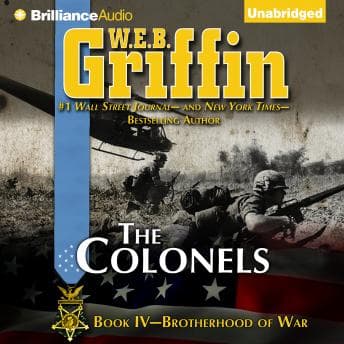
That line from the book's own description hit me somewhere around hour three, walking the lakefront with Denise on a Saturday morning cold enough to make my ears burn. She asked me why I'd gone quiet. I told her I was thinking about a fictional lieutenant named Craig Lowell who'd just done something monumentally stupid at an officer function, and how Griffin wrote it with such casual precision that I could feel the social temperature in the room drop. She told me to put my hood up.
Sometimes the books that stick with you are the ones nobody thought to canonize.
Griffin Wrote Military Fiction the Way Hemingway Wrote War
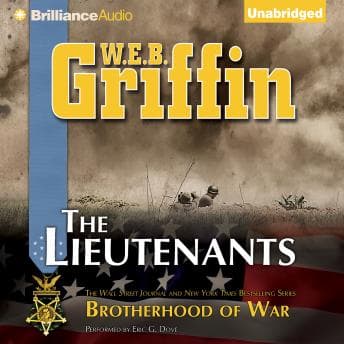
Let me be clear about what W.E.B. Griffin is doing here: The Lieutenants is not a war novel in the way most people mean when they say "war novel." It's a career novel. A bureaucracy novel. A novel about young men who survive combat only to discover that the peacetime Army is its own kind of battlefield, fought with paperwork and protocol and the particular cruelty of desk officers who resent anyone with combat ribbons.
Courage under fire is the expected subject for a war novel—Griffin is more interested in what happens when the pressure shifts from bullets to promotion boards. The North Africa and European corridor sequences are vivid enough, sure. But Griffin's real gift is in the quieter brutality: Lowell navigating officer functions like a man defusing social landmines, the institutional friction between those who fought and those who filed. Griffin understood that the military doesn't just forge soldiers in combat. It reshapes them in garrison, in peacetime, in the slow grind of a career that demands your identity.
The pacing complaint is valid—I've seen listeners call it "dreadful and meandering," and I get it. There are stretches where Griffin lingers on administrative detail the way Michener lingers on geological formations. But here's what I think those listeners are missing: the meandering IS the point. Griffin is building a world where institutional inertia is the antagonist. If you want action every chapter, this isn't your book. If you want to understand what it felt like to build a career in the postwar Army—the politics, the compromises, the way men who'd seen real horror had to smile through cocktail parties—it rewards a patient listener.
Teenagers would stage a walkout by chapter four. I've graded enough essays to know when a book is actually teaching something.
Eric G. Dove and the Problem of Pronunciation
Dove has an Earphones Award, and you can hear why. His vocal range is genuinely impressive—he shifts between characters with enough distinction that I rarely lost track of who was speaking during the longer dialogue scenes, which is no small thing in a book with this many military men who could easily blur together.
But—and this is a real but—there are mispronunciations. Military acronyms, specifically. If you've served or if you're the kind of military history reader who knows the difference between how "SHAEF" should sound versus how a civilian might guess at it, this will itch. It itched me, and I've never worn a uniform. I just spend enough time around veterans in the faculty lounge to know when something's off. Dove doesn't butcher anything badly enough to ruin the experience, but for a book so deeply embedded in military culture, getting those details right matters. Dove's pacing within scenes is generally excellent, with a real feel for where a beat belongs—but the acronym issue is like a musician playing a beautiful piece with one string slightly out of tune. You hear it every time.
At 1.0x speed (because I'm ancient, remember), the 13 hours and 47 minutes felt appropriately weighted. I wouldn't speed this one up. Griffin's sentences have a rhythm to them—workmanlike but deliberate—and rushing them strips the texture.
Who Gets Assigned This One
If you loved James Jones's From Here to Eternity, this is its spiritual successor—less literary pyrotechnics, more procedural authenticity. If you're here for the Brotherhood of War series and want to know if book one earns your investment: yes, with patience. The finale genuinely landed for me. I was grading papers at 11 PM when it hit, and I had to set down my red pen and just sit with it.
If you need tight plotting and constant momentum, skip this. If slow-burn character work and institutional politics bore you, this will feel like homework. (And not the good kind. The kind my students try to get ChatGPT to do.)
But if you want a book that treats military life as something worth examining in full—the boredom, the camaraderie, the absurdity, the grief—Griffin wrote it with the authority of someone who lived it.
The Report Card
Not a perfect audiobook. The pronunciation issues are real, and the pacing demands commitment. But the ending almost made me cry over a stack of sophomore essays, and any book that can do that while Principal Martinez's budget email sits unread in my inbox has earned something. Worth the credit if you're the right listener. You probably already know if you are.