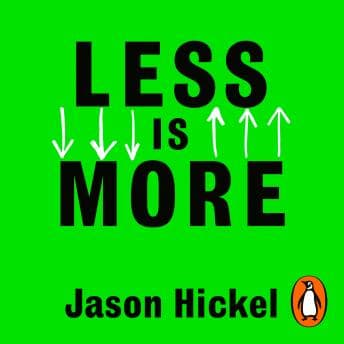

Look, I need to rant for a second. I spent three years at a FAANG company optimizing systems to scale infinitely, and then this book comes along and tells me that infinite scaling is literally destroying the planet. Cool. Cool cool cool. Thanks for the 3AM existential crisis, Jason Hickel.
I started this on a Monday commute after a brutal on-call weekend where I'd been debugging a service that processes like a billion requests a day. And here's Hickel explaining how GDP growth is basically a Ponzi scheme we've been running against the Earth's resources since the 1500s. The timing was... something.
The Part Where My Brain Short-Circuited
Bottom Line: Worth your commute if you want your entire worldview productively demolished.
Hickel's core thesis is basically this: capitalism requires infinite growth, but we live on a finite planet. That's not a bug, it's a fatal exception. He traces how we went from seeing nature as something we're part of to something we extract from—and he does it with the receipts. Like, actual historical receipts about colonialism, enclosure movements, and how we literally invented the concept of "nature" as separate from humans to justify exploiting it.
The audiobook has two narrators—Ben Crystal and Clifford Samuel—and honestly? It works. Crystal handles the historical deep-dives with this measured, almost documentary quality, while Samuel brings energy to the more forward-looking sections. The switch-off keeps your brain engaged during the denser economic theory parts. I listened at 1.5x and it held up fine, though I'd drop to 1.25x for the chapters on ecological economics if you're not already familiar with concepts like externalities and throughput.
Systems Thinking, But For Civilization
What got me—and I mean really got me—is how Hickel frames the problem as a design flaw, not a moral failing. We built an economic operating system that requires exponential resource consumption to avoid crashing. That's not sustainable. That's technical debt at planetary scale.
He's not just doom-scrolling through climate stats, though. The second half is solutions-focused: universal basic services, job guarantees, reducing working hours, capping resource use. Some of it sounds utopian until he points out that we already have the technology and resources—we just allocate them toward growth instead of wellbeing. The ROI on this audiobook is basically a complete mental model for why "green growth" is an oxymoron and what the alternative actually looks like.
I will say—and this is where some listeners might bounce—Hickel is unapologetically anti-capitalist. If you're looking for market-based solutions or tech-optimism about how AI will save us, this ain't it. He explicitly argues that degrowth is incompatible with capitalism as currently structured. That's either refreshing or infuriating depending on where you're coming from.
Two Narrators, Zero Zoning Out
Two narrators for a nonfiction book is a gamble. Sometimes it feels disjointed. Here it actually helps break up what could've been a dense nine-hour lecture. Neither narrator is doing "characters" obviously—this isn't fiction—but the tonal variety keeps you from zoning out during the commute.
No Ray Porter, but I didn't miss him. The production is clean, no weird audio artifacts or background noise. Just two guys calmly explaining why everything you thought you knew about economics might be wrong.
Who Should (And Shouldn't) Spend Their Credit
Perfect for: train, gym, long walks where you want to think. Skip for: background listening. This requires actual brain engagement.
If you work in tech and have ever wondered why we're optimizing systems that might be making things worse—this is your book. If you've read anything about climate change and felt like the proposed solutions were just shuffling deck chairs—this is your book. If you genuinely believe that innovation and markets will solve everything without structural change, maybe skip this one, or read it as a challenge to your priors.
I finished this in about four commutes and immediately texted Kevin a bunch of stats about how much of global GDP is just... waste. He responded with "are you okay?" which is fair. Braving the Wilderness hit me the same way—that moment when a book makes you question everything you thought was solid ground.
Closing the Loop
Could've been a blog post? Absolutely not. This is dense, researched, and actually earns its nine hours. Hickel's an economic anthropologist, not a pop-science grifter, and it shows. The historical sections on colonialism and enclosure could honestly be their own book.
My one complaint: sometimes the solutions section feels a bit hand-wavy about political implementation. Like, yes, universal basic services sound great, but how do we get from here to there when the current system is designed to resist exactly these changes? He acknowledges this but doesn't fully solve it. Maybe that's a feature, not a bug—the book is about the "what" and "why," not a political playbook.
But honestly? I'd rather have a book that's honest about the scale of the problem than one that pretends incremental changes will save us. This one doesn't flinch.







![Steve Jobs [unabridged audiobook] audiobook cover](/_next/image?url=https%3A%2F%2Fcovers.audiobooks.com%2Fimages%2Fcovers%2Ffull%2F9788499923406.jpg&w=1920&q=75)