
Italian-language Caraval hit different at 1 AM on my couch, hearing aids out, reading captions in a language I only half-know.
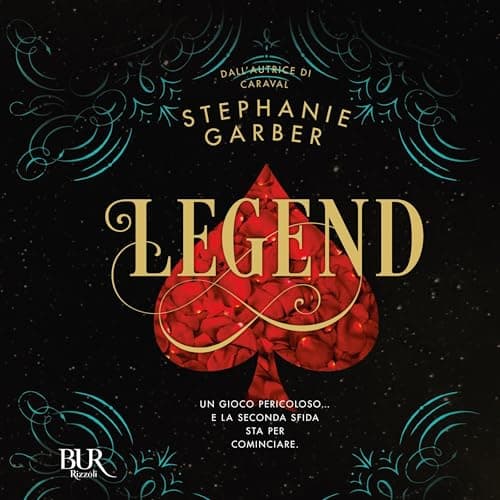
Let me explain. I picked up the Italian edition of Legend — Stephanie Garber's second Caraval book — partly as an accessibility experiment and partly because I've been consulting with a European publisher on multilingual audiobook standards. I wanted to hear how Francesca Pittatore handled the translation, how the emotional architecture of the story survived the jump from English to Italian, and whether the caption sync (I use Audible's text feature religiously) held up across 12 and a half hours of fantasy narration in a Romance language.
The answer is... complicated.
Tella's Voice in Another Tongue
Here's what I can tell you with confidence: Garber's story — Donatella Dragna chasing her mother's trail, bargaining with criminals, trying to unmask the identity of Legend himself — is structurally built for audio. The Caraval world is sensory overload by design: colors, textures, magical transformations, emotional manipulation baked into the game itself. That should be a narrator's playground.
Pittatore has a warm, medium-register Italian voice that handles the descriptive passages with genuine care. There's a musicality to Italian that English narrators can only dream about, and in quieter moments — Tella processing a betrayal, or the ache of her mother's absence — Pittatore lets the language breathe. Clarity over speed, always, and she mostly gets that right. The pacing in the first third sits in a comfortable groove, not rushing the worldbuilding for listeners who might be coming in from the first book.
But here's where I have to be honest about the gaps in what I can assess. I found zero listener reviews specific to Pittatore's performance. No one praising her character differentiation, no one complaining about it. This is a fresh release with almost no listener feedback trail, which means I'm working from my own ears — ears that are, let's be real, better tuned to English-language narration and its conventions.
Where the Performance Stays Flat When It Should Spike
What I can hear clearly: the emotional dynamic range feels narrower than this story demands. Caraval's whole deal is that nothing is what it seems — trust gets weaponized, love is a game mechanic, and every scene should carry at least two emotional layers. Tella's desperate pact with a mysterious criminal? That needed tension ratcheting with every exchange. The "inquietante erede al trono" — the unsettling heir — should sound genuinely dangerous, not just male-voiced. Missed opportunity for tone shift here. Multiple times.
I synced the Italian text alongside the audio, and the caption timing was mostly clean — a few lag points in chapter transitions, but nothing that broke immersion. (For my fellow hard-of-hearing listeners trying this in Italian: the text sync is functional, not perfect. You can follow along, but you'll notice drifts of 2-3 seconds in dialogue-heavy passages.)
The single-narrator format works for intimacy but creates a specific challenge: when Tella, Legend, Jacks, and Scarlett are all filtered through one voice without strong differentiation, the romantic tension and the threat tension start blending together in ways that flatten the stakes. I ran into a similar collapse of vocal contrast in Tempted: A House of Night Novel, where a crowded cast of supernatural characters needed sharper differentiation than the narrator could sustain across a long runtime. In English-language Caraval audiobooks, I've heard narrators create distinct vocal signatures for each character — here, the distinctions feel more like shading than contrast.
An Accessibility Experiment Worth Noting
As a hard-of-hearing listener, this hit different because it forced me to lean on different processing pathways. I couldn't rely on my usual English-language intuition for catching emotional subtext in the voice. Instead, I was reading the Italian text, hearing the narration as almost a musical accompaniment, and piecing together meaning from both channels simultaneously. It was genuinely interesting — the emotional layers come through even without sound in some passages, because Garber's prose (even translated by Maria Concetta Scotto di Santillo) carries its weight on the page.
But that speaks to the writing surviving translation, not to the audiobook production elevating it. Accessibility done right would mean a narrator who performs the emotional architecture so clearly that even a listener with partial comprehension can feel the stakes shift. Pittatore gets partway there. Not all the way.
Who Should Listen (And Who Should Skip)
If you're an Italian-speaking Caraval fan, this is your only audio option, and it's a decent one. If you're using it for language learning or bilingual listening, the text sync makes it workable. Skip this if you're chasing the kind of narration that transforms a YA fantasy into a full sensory experience — the kind where a narrator actually performs, not just reads — you'll find this edition serviceable rather than electric.
I'm rating conservatively because I genuinely can't find corroborating listener data, and my Italian comprehension introduces bias I want to be transparent about. What I heard was competent, warm, and occasionally lovely — but rarely surprising.
Bottom Line: Caption Sync
I'll keep watching for more Italian-language audiobook productions at this level. The infrastructure is there. The translation reads well. The narrator has skill. What's missing is the kind of bold performance choice that makes you forget you're listening to a book and start believing you're inside the Caraval. Maybe that's a direction thing, not a talent thing. Either way — I noticed.