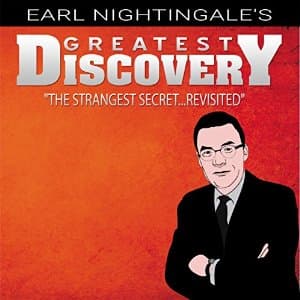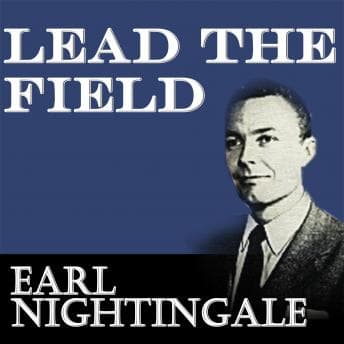

Earl Nightingale's voice sounds like it was engineered in a lab to make you trust him.
I was chopping onions for a dal that was going to take way too long for a Wednesday night, and I put this on expecting background noise — three hours and forty-four minutes of motivational platitudes I could half-listen to while my pressure cooker did its thing. What I got instead was something that made me set down my knife and just... stand there in my kitchen, thinking about goal-setting theory like it was 1960 and nobody had written a counterargument yet.
The Psychology of Why This Still Works (And Why It Shouldn't)
Here's the thing about Lead the Field that I found myself asking: why does a program recorded decades ago, with zero awareness of modern behavioral psychology, still land? The research actually shows that Nightingale was essentially articulating what we'd later formalize as self-determination theory and expectancy-value theory — the idea that your mental orientation toward a goal shapes your capacity to achieve it. He didn't have the jargon, but he had the instinct. His famous line about "we become what we think about" is basically Bandura's self-efficacy concept dressed up in a radio broadcaster's baritone.
And that baritone. Nightingale narrates his own work, and his delivery is this specific mid-century American authority voice — think Walter Cronkite meets your favorite uncle who actually made it. There's a gravity to it. He doesn't rush, he doesn't perform. He just... talks to you. Like you're sitting across from him and he's genuinely concerned about whether you're going to waste your potential. It's weirdly effective. My therapist would have thoughts about why I respond to authoritative male voices telling me I can do better, but let's not go there.
The flip side? He promotes his other Nightingale-Conant products in a way that feels like a late-night infomercial dropped into the middle of genuine wisdom. It's jarring — you're having this real moment of introspection about what you want from your career, and then suddenly it's "and for more on this topic, order our..." I literally said "come on, Earl" out loud to my empty kitchen.
Where the Framework Gets Thin
Psychologically, some of this doesn't track by modern standards, and I want to be honest about that. Nightingale operates from a worldview where mindset is almost entirely deterministic — think the right thoughts, get the right results. There's no acknowledgment of systemic barriers, cognitive biases that resist simple reframing, or the fact that willpower is a depletable resource (Baumeister's ego depletion model, which itself has been contested, but still). The protagonist of this self-help narrative — the listener, essentially — exhibits classic internal locus of control, and Nightingale never questions whether that framing might be incomplete.
But here's where I give him credit: the simplicity is the feature, not the bug. At under four hours, this isn't trying to be a comprehensive psychology textbook. It's a set of principles delivered with absolute conviction by a man who genuinely believed them. And there's something to be said for that. The research on motivational interviewing shows that belief in the messenger matters as much as the message itself, and Nightingale — a WWII Marine turned radio star who built an empire from spoken word — is about as credible a messenger as you'll find for "your attitude determines your altitude."
The pacing is slow by 2024 standards. Genuinely slow. I'd recommend bumping it to 1.25x unless you're specifically trying to meditate on each principle. At normal speed, certain sections feel like he's waiting for the studio audience to absorb the point, except there's no studio audience. It's just you, standing in your kitchen with onion tears on your face, waiting for the next idea.
Who Gets the Most From This (And Who Will Be Bored)
If you're new to personal development or you've never encountered these foundational ideas — goal clarity, attitude as a competitive advantage, the relationship between service and reward — this is genuinely valuable. It's the source material that a thousand Instagram motivational accounts have been paraphrasing without credit. The question of how statistics and framing get weaponized in exactly this kind of "foundational wisdom" pipeline is something I kept thinking about while reading How To Lie With Statistics — a useful companion if you want to stress-test any motivational framework that presents correlation as destiny.
If you've already read Covey, Dweck, Clear, and Duckworth? You'll recognize every concept here, just in its earlier, less evidence-based form. You might still enjoy the delivery — Nightingale's voice has a warmth that modern self-help audiobooks, with their professionally trained narrators, sometimes lack. But you won't learn anything new.
If you have zero patience for dated gender references and a "pull yourself up" philosophy that doesn't account for structural inequality — and I understand if you don't — this will irritate you.
My Case Notes
I didn't become a millionaire after listening to this. (Shocking, I know.) But I did finish my dal, and I did sit down afterward and write out three specific goals for my next research paper in a way I haven't done in months. Nightingale would probably call that progress. I'd call it the placebo effect of a really good voice telling you that you matter. Either way — the dal was excellent, and I went to bed thinking instead of doom-scrolling. That counts for something.