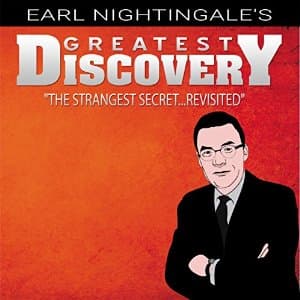

I was chopping onions for a chana masala last Tuesday night — the kind of elaborate, spice-heavy cooking I do when my brain needs something to do besides spiral about unfinished research — and I put this on because it's under three hours. Quick commitment. Low risk. I figured if Earl Nightingale's Greatest Discovery was bad, at least I'd have dinner.
It wasn't bad. But it made me feel things I wasn't expecting, and not all of them comfortable.
The Psychology of a Man Who Believed Thinking Was Everything
Here's the thing about Nightingale. He came up in the 1950s, a self-made radio personality who essentially invented the personal development genre before it had a name. The original "Strangest Secret" recording earned a Gold Record — the first spoken-word recording to ever do that. So when I say this man had cultural weight, I mean it. He was the podcast before podcasts existed.
This book — and it IS the man himself narrating, which matters enormously — revisits his core thesis: we become what we think about. That's it. That's the strangest secret. You're sitting there going, "That's it?" And yeah, from a 2024 lens, it sounds almost comically simple. But Nightingale builds his case with the slow, deliberate authority of someone who genuinely believes he's handing you the keys to the universe. And psychologically? He's not entirely wrong.
The research actually shows that self-concept and goal-directed thinking DO predict outcomes — not in some magical "manifest your destiny" way, but through attention allocation, behavioral consistency, and what psychologists call self-efficacy beliefs. Nightingale didn't have the academic vocabulary for it, but he was circling something real. The protagonist of this book — and make no mistake, Nightingale IS the protagonist — exhibits classic conviction bias. He's so certain of his framework that the certainty itself becomes persuasive. It's a fascinating case study in how charisma substitutes for evidence.
What 2 Hours and 45 Minutes With a Dead Man's Voice Actually Feels Like
Nightingale's voice is... old radio. There's no other way to describe it. That mid-century American broadcast tone — measured, warm, paternal, with the kind of enunciation that doesn't exist anymore. No vocal fry, no ironic detachment. He sounds like he's telling you something important while sitting in a leather armchair, and he expects you to sit up straight while you listen.
At under three hours, this is essentially a long lecture. There's no music, no sound effects, no production tricks. Just a man talking. And honestly? For what this is, that works. You're not here for entertainment. You're here for the distilled philosophy of someone who spent decades thinking about how humans sabotage themselves.
But — and this is where my psychology brain gets twitchy — the framework is relentlessly individualistic. Nightingale's worldview has almost zero room for systemic barriers, mental health challenges, neurodivergence, or plain bad luck. If you're not succeeding, it's because you're not thinking correctly. My therapist would have thoughts about this character. Specifically, she'd probably note how this kind of thinking can become a trap: if success is purely a function of mindset, then failure becomes a moral indictment. That's not just incomplete psychology — it's potentially harmful. The psychological damage of frameworks that treat mindset as the only variable reminded me of the eerie determinism Brian Weiss explores in Same Soul, Many Bodies — a completely different belief system, but with that same quietly unsettling implication that where you end up is somehow always deserved.
I found myself asking: why does Nightingale never acknowledge the people who think correctly and still lose? Because acknowledging them would collapse the entire premise. And he's too smart not to know that, which makes the omission feel deliberate rather than naive.
Who This Is Actually For (And Who Should Run)
If you're someone who's never encountered personal development ideas before — if you've genuinely never been asked to examine your own thought patterns and their relationship to your behavior — this could hit you like a freight train. I can see why it changed lives in 1957. The core message (pay attention to what you pay attention to) is sound, even if the packaging is oversimplified.
But if you've read any modern psychology, cognitive behavioral therapy literature, or even a decent pop-science book about habit formation, you already have a more sophisticated version of what Nightingale is selling. Compare this to something like James Clear's work on habits or Carol Dweck's mindset research, and you'll feel the gap between motivational philosophy and actual behavioral science.
This is a historical document. Listen to it the way you'd visit a museum — with respect for what it was, and clear eyes about what it isn't.
The Case File, Closed
I finished it before the chana masala was done. Which tells you something about the length, and maybe something about how slowly I cook. Nightingale's conviction is genuinely magnetic, even when the ideas feel dated. But I can't rate a book on charisma alone — psychologically, this doesn't track as a complete framework for human potential. It's a fascinating artifact from the dawn of self-help, narrated by the man who started it all, and it deserves to be heard once. Once.