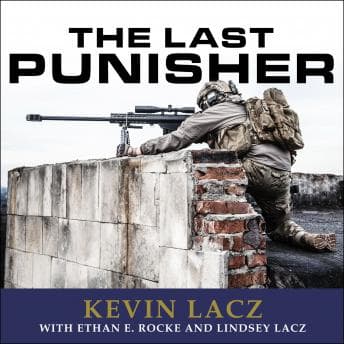

My dad got his draft notice for the Korean military in 1971. He doesn't talk about it much. Two sentences, maybe three, across my entire childhood. So when a combat memoir actually makes me slow down from 2.0x to 1.5x because I don't want to miss anything - that tells you something.
The ROI on 8 Hours and 54 Minutes of Ramadi
Bottom line: Kevin Lacz wrote the book Chris Kyle's American Sniper couldn't fully be - the ground-level, no-mythology, this-is-what-it-actually-smelled-like version of the 2006 Battle of Ramadi. And I mean that as high praise for both books. Where Kyle gave us the broad strokes of a legendary career, Lacz zooms into one deployment with SEAL Team Three's Task Unit Bruiser and stays there. The minute-by-minute mission breakdowns are where this book earns its keep. You get rooftop overwatch positions, breaching sequences, the specific calculus of clearing a room when you know there's a guy with an AK behind the door. It's not Hollywood choreography - it's the ugly, repetitive, terrifying grind of urban warfare where your biggest enemy is often just exhaustion.
What surprised me - and I wasn't expecting surprises from another Iraq War memoir in 2024 - is how Lacz handles the relationships. The bonds with guys like Marc Lee (first SEAL killed in Iraq) and Mike Monsoor (who threw himself on a grenade to save his teammates) aren't presented as hagiography. They're presented as the way you remember a coworker you'd die for. There's a specificity to it - the dark humor between ops, the trash talk, the quiet moments where nobody's saying anything because there's nothing to say. My parents never went to war, but they had that same unspoken partnership language running their shop. Fourteen hours a day with someone, words become redundant.
The wry humor is real, by the way. It's not forced comic relief. It's the gallows humor of people operating under insane pressure, and Lacz lets it breathe naturally between the combat sequences.
Timothy Phillips Earns His Paycheck
Phillips narrates this clean and straight. No theatrics, no attempt to do "operator voice" or fake military cadence. He reads it like a smart man reading another smart man's account of serious events, and that restraint is exactly right. His emotional delivery in the combat scenes hits because he's not overselling it - when the action ramps up, his pacing tightens naturally without going full action-movie. For a single-narrator production with no sound effects or music, it works. You're in Lacz's head, not watching a documentary.
Only knock: with this many operators mentioned by name and callsign, there are moments where you lose track of who's who. That's partly the source material - Lacz name-drops a lot of teammates - and partly the limitation of one voice actor handling a book that could've benefited from occasional chapter markers or cast distinctions. Not a dealbreaker, but at 2.0x I had to rewind twice during a particularly chaotic firefight sequence to figure out who was where.
Who This Is Actually For (And Who Should Skip It)
If you've read American Sniper and wondered what it looked like from the other scope - this is your book. If you're a business leader who's never been shot at but likes to use military metaphors in your quarterly reviews (I've seen you, I've been you, stop it) - this will either cure you of that habit or give you actual context for it. The leadership lessons are there, but Lacz doesn't package them with a bow. You have to extract them yourself, which I respect.
If you're looking for political analysis of the Iraq War, this isn't it. Lacz is a doer, not a policy debater. He went where he was sent, executed at an elite level, and lost friends doing it. The book reflects that operator mindset.
I listened to most of this on a red-eye flight back from a client in Austin, couldn't sleep anyway, and honestly didn't want to. At 3 AM somewhere over New Mexico with the cabin dark and everybody else knocked out, the Ramadi nighttime ops chapters hit different. Probably too different. Jenny's going to notice the bags under my eyes.
The Consulting Engagement Is Over. Here's Your Deliverable.
This is a 4-star listen that does what most business books can't: it respects your time by only telling you things the author actually lived. No frameworks, no models, no "actionable takeaways" slide deck. Just a guy who was there, telling you what happened, with enough self-awareness to know what it cost him and enough pride to know it mattered. That same commitment to unvarnished truth-telling shows up in Nurse: Inside Denmark's Most Sensational Criminal Trial, where the author lets the facts speak without editorial hand-holding. The key takeaway is worth the listen. In this case, the takeaway is that real teams aren't built in offsites - they're built when the stakes are life and death and you choose to show up anyway. My parents knew that. Lacz knows that. Most people writing LinkedIn posts about "team culture" do not.