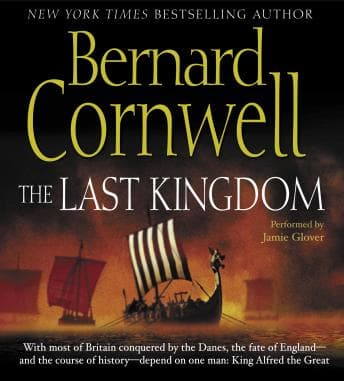

"My name is Uhtred. I am the son of Uhtred, who was the son of Uhtred."
That opening line hit me at 2 AM while I was supposedly debugging a procedural terrain generator for my thesis. Spoiler: the terrain generator did not get debugged. Uhtred got my full attention instead.
Here's the thing about The Last Kingdom - I came in expecting a historical version of a D&D campaign journal, and honestly? That's pretty much what I got, and I mean that as the highest compliment. Uhtred is basically a fighter/rogue multiclass who keeps failing his Wisdom saves, getting captured, switching allegiances, and stumbling into increasingly dangerous situations because he cannot stop mouthing off to authority figures. My D&D group would love this. I've played with this exact character archetype. Multiple times.
A Viking Raid on Your To-Be-Read Pile
Bernard Cornwell does something here that I deeply respect: he picks a fascinating historical period - the 9th century Danish invasion of Anglo-Saxon England - and instead of giving you a textbook, he gives you a loudmouthed, arrogant, deeply human narrator who grew up straddling two cultures. Uhtred is raised Danish after being captured as a boy, and the tension of his identity crisis drives everything. He loves the Danes. He respects their ferocity, their gods, their directness. But he's English by blood, and his ancestral fortress of Bebbanburg sits up on the Northumbrian coast like a splinter in his brain he can't stop picking at.
The world-building here is grounded rather than fantastical - no magic systems to geek out over - but Cornwell constructs 9th century England with the kind of lived-in detail that makes you smell the mead halls and hear shield bosses cracking against each other. The closest thing I've encountered to that same texture of myth made physical is Mythos, where Stephen Fry does something similarly grounded with gods who feel less like cosmic forces and more like difficult relatives you can't stop thinking about. The shield wall sequences are visceral and claustrophobic. You feel the press of bodies, the mud, the panic. It's not Sanderson-level world-building in the systematic sense, but it's the kind where every detail about how people eat, pray, fight, and insult each other feels earned through research rather than invented.
And Alfred. Oh, Alfred. Cornwell's version of Alfred the Great is this sickly, pious, politically brilliant man who Uhtred absolutely cannot stand - and the friction between them is the engine of the entire series. Uhtred sees a weak king praying when he should be fighting. The reader sees a guy playing 4D chess while everyone else is playing checkers. It's a fantastic dynamic.
Jamie Glover and the Abridged Problem
So here's where I have to be honest about something that genuinely bothers me: this is an abridged audiobook. Five and a half hours. The full novel is significantly longer, and you can feel the cuts. Scenes transition a little too quickly. Character relationships that should breathe get compressed. Uhtred's growth from terrified boy to cocky teenager to conflicted young warrior happens at a pace that sometimes feels like someone hit the fast-forward button on his childhood.
Jamie Glover does solid work with what he's given. He narrates in first person as Uhtred, and there's this quality to his reading where you get both the young man living the events and the older man looking back with hard-won wisdom. His battle narration has good energy - not over-the-top theatrical, but urgent enough that the shield wall scenes land. Character voices are distinct enough to track, though nothing here reaches Steven Pacey territory. (Steven Pacey walked so other narrators could run, and I will keep saying this until the heat death of the universe.)
Glover's biggest strength is clarity. In a story with Old English names, Danish names, and place names that look like someone headbutted a keyboard, he keeps everything intelligible. No moments where I had to rewind because I couldn't parse who was talking or what location was being referenced.
But - and this is a real but - I kept wishing for the unabridged version. At 5.5 hours, this feels like the highlight reel of a story that deserves the full treatment. If you're going to commit to a 13-book series, you want the uncut experience.
Who Should Enlist in the Shield Wall (And Who Should Stay Home)
If you love historical fiction with a strong first-person voice, this is your jam. If you've watched the Netflix show and want the source material, start here - though know the audiobook condenses things the show expanded. If you're a fantasy reader looking for something with similar energy but real history instead of invented lore, Uhtred scratches that same itch as a good grimdark protagonist. He's basically Logen Ninefingers if Logen were English and slightly more literate.
If you need magic systems, elves, or stat blocks (and yes, I will defend LitRPG with my dying breath, but that's a different conversation), this obviously isn't that. And if the phrase "then there was another battle" makes you glaze over, fair warning - Cornwell loves his combat sequences. Some listeners find them repetitive. I found them atmospheric, but your mileage may vary.
The abridged format is the real sticking point. For a casual listen while doing chores? Totally works at this length. For a deep dive into the series? Hunt down the unabridged if you can.
Roll for Initiative on This One, But Maybe Check the Edition First
I read - well, listened to - this instead of writing my thesis, and I don't regret it. Cornwell writes action and political maneuvering with equal skill, Uhtred is the kind of unreliable narrator who makes you grin even when he's being an idiot, and the historical period is genuinely fascinating. But the abridged format holds this back from greatness. It's like someone handed me a really good campaign module but told me to run it in a single session instead of four. The bones are excellent. I just want more meat on them.