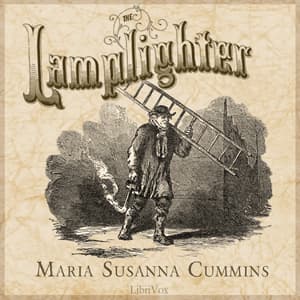

Okay, confession time: I started this audiobook during Sophie's nap and finished it approximately seventeen nap times later. Which, for a 17-hour classic novel about an orphan girl in 19th-century America, is actually pretty impressive time management if I do say so myself.
Look, I wasn't expecting to get emotionally invested in a book from 1854. I grabbed it because it was free on LibriVox and I'd run out of my usual romance holds at the library. But here's the thing—this book was apparently the second-bestselling novel of its time, right after Uncle Tom's Cabin. So clearly our great-great-grandmothers knew what they were doing.
The Story That Survived 47 Pauses
Gertrude starts life in the worst possible situation—abused, neglected, basically thrown out like garbage by this horrible woman named Nan Grant. The only person who shows her any kindness is Truman Flint, the lamplighter who walks the streets lighting lamps every evening. When Nan literally throws Gertrude out, Truman takes her in. From there, it's this slow, beautiful journey of a girl learning what love and family actually look like.
I won't lie—the middle sections drag. There were times I was folding laundry at 1.0x speed and my mind wandered to whether I'd remembered to sign Emma's permission slip. But every time I thought about abandoning it, something would happen that pulled me back in. The relationship between Gertrude and the blind woman who becomes her mentor? Made me cry in the school pickup line. The waiting game with Willie Sullivan, the boy she loves who disappears for six years? I was yelling at my steering wheel like it was a reality TV finale.
Bridget Gaige's Voice in My Head
So here's where I have to be honest. Bridget Gaige's narration is... fine. It's clear. It's steady. She doesn't stumble over the old-fashioned language, which is genuinely impressive because some of these sentences go on forever. But—and this is a big but—she doesn't really differentiate between characters much. Everyone kind of sounds the same.
For a book this long, that can be a problem. There were moments that should have hit harder emotionally, and the narration just... stayed level. I had the opposite experience with Age of Innocence—the narrator brought so much emotional nuance to another slow-burn period piece that I was completely wrecked. It's like when you're reading a bedtime story to your kids and you're too tired to do the voices. Perfectly understandable, but you lose something.
That said? For a free audiobook, the production quality is solid. No weird background noise, no volume jumps that wake up sleeping toddlers. I've paid actual money for audiobooks with worse audio quality.
Why This Book Got to Me (Despite Everything)
Here's what I wasn't expecting: this book is basically about a girl who spends her whole life taking care of everyone else and never asking for anything for herself. And as someone who hasn't peed alone in approximately five years, that hit different.
Gertrude grows up, becomes this admired and loved person, but the question hanging over everything is—will she ever get to be happy for herself? Not for others? Just... for her? I found myself thinking about that during my 45 minutes of car-in-garage time more than once.
The romance with Willie is slow. Like, glacially slow. Six years of separation slow. But honestly? After reading so many books where characters fall in love in three days, there was something refreshing about a love story that takes its time. Beach Read does that thing where the tension builds slowly too, though with way more banter and way fewer years of separation. Even if I was muttering "just get together already" under my breath.
A Note for the Emotionally Fragile
Heads up: the beginning has some rough child abuse content. It's not graphic by modern standards, but it's there. Nan Grant is genuinely cruel and it's uncomfortable. Also lots of emotional distress around orphanhood and being unwanted. If you're in a fragile emotional state (hello, postpartum hormones), maybe save this for a more stable week.
My Naptime Verdict
Honestly? Probably wouldn't listen again. It's long, the narration is just okay, and I've got a library hold list that's out of control. But I'm glad I listened to it once. There's something about these old sentimental novels that modern books don't quite capture—this earnest belief that kindness matters, that good people can change lives, that love (eventually) wins.
Perfect for: moms who want something calm for naptime listening, anyone curious about what women were reading 170 years ago, people who don't mind slow pacing if the emotional payoff is worth it.
Skip if: you need action, you want a dynamic narrator, or you're not in the mood for 19th-century writing style (lots of "thees" and "thous" and sentences that require actual concentration).
Pro tip: I bumped it up to 1.25x around hour 8 and never looked back. Made the middle sections much more bearable.