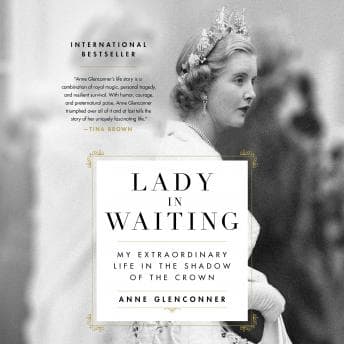

"The greatest disappointment."
That's what Anne Glenconner's father called her—his firstborn child—because she had the audacity to be born female and therefore couldn't inherit his massive estate. I was driving home from a brutal night shift, the kind where you lose a patient and there's nothing you could've done differently, and this ninety-something aristocrat just casually drops that bomb in the first hour. I almost missed my exit.
Carlos asked why I looked so wrecked when I walked in. I blamed the shift. But honestly? It was partly this book.
The Crown, But Make It Real
If you've watched The Crown and thought "I wonder what actually happened"—here's your answer, straight from someone who was literally in the room. Anne Glenconner was Princess Margaret's lady-in-waiting for decades, and she helped the actors on the show get their portrayals right. So when she describes Margaret's final months, the decline of a woman who was never allowed to be queen but had all the expectations anyway, you're getting the real story.
And it's heartbreaking.
But here's the thing that got me—Anne doesn't make it about the tragedy. She tells you her son died, then her other son died, then her third son was in a coma for six months after a motorcycle accident and she nursed him back. She tells you her husband was unfaithful and volatile and left his fortune to a servant. She tells you all of this in the same tone she'd use to describe afternoon tea. That restraint, that refusal to collapse under grief, reminded me of the emotional control in Sing, Unburied, Sing—different worlds, same survival mechanism. That extreme upper-class Received Pronunciation, the kind of accent that makes "devastating" sound like "mildly inconvenient," somehow makes it hit harder.
As someone who's actually worked with families receiving the worst news of their lives, I know that voice. That's the voice of someone who's learned to survive by not falling apart.
Not a Professional Narrator, and That's the Point
Look, Anne Glenconner is not a trained narrator. Her pacing is... leisurely. Very leisurely. There are tangents about people you've never heard of and will never hear of again. Around hour three, she goes on about some party in Mustique with Mick Jagger and David Bowie, and I genuinely wasn't sure if it was relevant or just a flex.
It was both. It was definitely both.
But here's why I'm still recommending this: when she reads her own words about holding her dying friend's hand, about watching Princess Margaret become a shadow of herself, about her own sons—you can hear her voice catch. Just slightly. That RP accent cracks for half a second, and you remember this isn't a performance. This is a woman in her nineties, in a recording booth, reliving her life.
No actor could give you that.
The Medical Details Are... Present
Okay, this isn't a medical thriller, so I can't yell at my dashboard about incorrect defibrillator usage. But when Anne describes nursing her son back from a six-month coma, she's matter-of-fact in a way that tells me she actually did it. She doesn't romanticize it. She doesn't make it a triumph of maternal love conquering all odds. She just... did what needed to be done.
Night shift approved. That's how we survive.
Who This Is For (And Who Should Skip)
This is not background listening. You will miss things. The story jumps around—childhood to coronation to Caribbean island to tragedy to White House visit—and if you're not paying attention, you'll be lost. Skip it if you need tight structure or can't handle meandering aristocratic tangents.
But if you want nine hours with a woman who's seen everything, lost almost everything, and somehow still has her sense of humor? If you want the real story behind the royal family, told by someone who actually lived it? If you need something for that post-shift decompression that'll make you feel like your problems are... manageable?
This is it.
My mom would love this. She still thinks I should've been a doctor, but she also loves anything about the British royal family. I'm sending her my Audible login.
Clocking Out
Carlos asked why I was crying in the car. I blamed allergies. But we both knew.