
"Non pregare mai gli dèi che sono in ascolto dopo il tramonto."
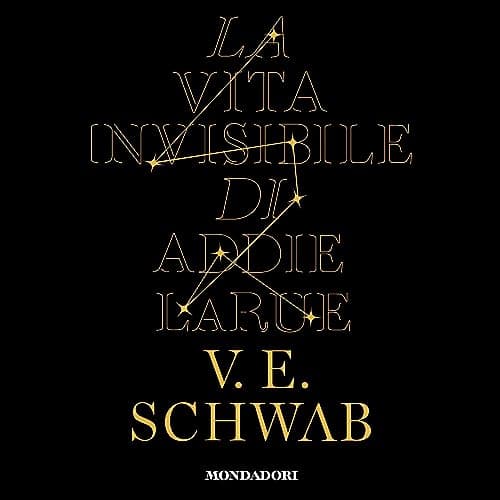
That line hit me somewhere around hour two, crammed into a corner seat on the A train at midnight after a twelve-hour shift. The carriage was almost empty - just me, a guy sleeping across three seats, and Addie LaRue whispering through my earbuds about the worst deal anyone's ever made with a god.
As someone who's actually run a code, who's watched people bargain with God at 3AM in the ICU - "just give me more time, just a little more" - Addie's pact with Luc hit different. She asks for more life. She gets it. And the cost is that no one will ever remember her. Three hundred years of walking through history, leaving no trace. Every conversation resets. Every relationship erased the moment she leaves the room. That's not immortality. That's solitary confinement with better scenery. Ceremony sits in that same territory—a protagonist trapped between worlds, belonging to neither, carrying a weight that no one around them can see or name.
The Dua Nobody Should Make
Schwab understands something about loneliness that most fantasy authors skip right past. This isn't the sexy vampire kind of eternal life. Addie can't sign her name. Can't keep a journal - the words vanish. Can't hold a job or a home. She exists in the margins of history, influencing art and culture as a ghost muse, and there's something devastating about watching her figure out how to survive century after century without a single person knowing she's there.
The structure alternates between 1714 France and modern-day New York, and honestly? The France sections drag in places. There's a stretch involving her travels through Italy that felt like Schwab was writing a travel blog instead of a novel - every freckle on Addie's face mentioned twice, every cobblestone described. I get it, she's been alive for three centuries, but I don't need the full itinerary. I bumped my speed to 1.5x during those chapters and didn't miss a thing.
But then Henry shows up in a Brooklyn bookstore and remembers her name. And the book becomes something else entirely.
When Someone Finally Says Your Name
The Henry chapters wrecked me. Not in a dramatic, crying-on-the-subway way (okay, maybe a little). But in the quiet way that real grief works - the way you realize someone's pain isn't about the dramatic moments but the accumulation of small ones. Henry has his own deal, his own curse, and watching these two broken people try to build something real when both of them are living on borrowed, poisoned time - that's where Schwab earns every one of those sixteen hours.
And Luc. Listen. Luc is the devil. Literally. But Schwab writes him with this unsettling tenderness that made me uncomfortable in the best way. He's not just evil for evil's sake. He's possessive, patient, and genuinely fascinated by Addie in a way that feels more dangerous than any outright cruelty. Their dynamic across centuries is the backbone of this book, and it's the thing I keep thinking about weeks later.
Chiara Leoncini's narration carries the emotional weight well - her delivery during the final chapters, when everything converges and Addie makes her last move, had genuine ache to it. She handles the shifts between centuries without confusion, and her Luc has this low, almost amused quality that works perfectly for a deity who's been playing the long game. I wished she'd pushed harder on differentiating some of the secondary characters in the modern timeline - Henry and his friends blurred together vocally at times - but for a solo narrator handling three hundred years of story, she did solid work.
Faith Isn't a Flaw - It's Fuel
Here's what got me, though. The real thing. Addie's story is about what happens when you trade your soul for time - and three centuries later, she's still fighting to keep it. Not her literal soul (well, also that), but her sense of self. Her refusal to let Luc win. Her insistence that she matters even when the universe is structurally designed to erase her.
My mom would be proud of this book. Not because it's Islamic or religious in any traditional sense, but because it takes seriously the idea that a soul is worth fighting for. That giving up isn't strength. That endurance - real, grinding, lonely endurance - is its own form of worship.
The ending broke me and rebuilt me in the same breath. I won't spoil it, but Addie's final play is so perfectly, painfully clever that I actually stopped on the platform at 168th Street and just stood there for a minute, letting people push past me, processing.
Between shifts and salah - this kept me going. Sixteen hours is a commitment, and there are stretches where the pacing tests your patience. But when this book lands, it lands like a diagnosis you weren't ready for. The kind that changes everything.
The Prescription
Pick this up if you want a book that treats immortality as a curse worth examining, not a power fantasy. If you love slow-burn character studies where the emotional payoff justifies the patience - this is yours. Skip it if you need things to move fast or if lyrical prose that lingers on setting details wears you out; Schwab takes her time, and some of that time is spent on details that don't earn their keep. But the gut-punch in the final hours? Worth the slow stretches. The medical details aren't the point here, but the emotional accuracy is.