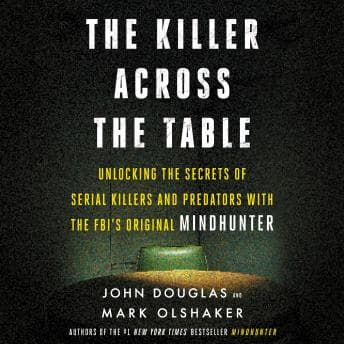

I usually tell my students that context is everything. You can't understand Gatsby without understanding the Jazz Age, and honestly, you can't understand this audiobook without acknowledging the weird, meta-layer of having Jonathan Groff narrate it.
Most people think audiobooks are a passive experience—something to numb the brain while doing dishes. This one is an active interrogation. I was listening on a Sunday night, trying to grade a stack of sophomore essays on Lord of the Flies while the Chicago wind rattled my drafty apartment windows. Golding wrote about fictional savagery; Douglas writes about the real thing. Short and Tragic Life of Robert Peace also blurs that line between individual tragedy and systemic violence in ways that stuck with me for weeks. And having Groff—who plays the fictionalized Douglas on Netflix's Mindhunter—read the real Douglas's words? It creates this fascinating hall of mirrors effect that you just don't get with print.
The Voice of Clinical Detachment
Groff's delivery is terrifyingly precise. He doesn't do the "spooky voice" that lesser narrators put on for true crime. He reads the details of child murders and interrogation strategies with a calm, detached intonation that is infinitely scarier than a dramatic performance. It's the voice of a man who has stared into the abyss so long he's bored by it. When he details the specific "signatures" of the four killers profiled here—like the way Joseph McGowan manipulated the family of his victim—Groff keeps his tone even. He lets the horror sit there, naked. As an English teacher, I appreciate that restraint. He trusts the text. He knows the pause is as important as the word.
Psychology (and Ego) 101
Douglas breaks down his interrogation techniques—how he uses silence, false empathy, and ego-stroking to get confessions. As a teacher, I found myself taking mental notes. Not for murder investigations, obviously. But the psychology of getting a sullen teenager to admit they didn't read the homework isn't totally different from getting a predator to admit their motive. Douglas explains how he mirrors the suspect's language to build rapport, a tactic I might actually try at the next parent-teacher conference.
That said, the man has an ego the size of Lake Michigan. Douglas writes like a guy who knows he invented the game, and he's not afraid to remind you. There were moments where his self-congratulatory tone grated on me—he reminds me of every Superintendent I've ever had who thinks they have all the answers. But unlike my Superintendent, Douglas actually catches monsters. You tolerate the arrogance because the competence is undeniable.
The "Fanboy" Incident
The only part that made me physically wince was the exclusive interview at the end. The dynamic shifts instantly. Groff stops being the cool, detached narrator and turns into an excited actor meeting his hero. It's a bit like watching a student try to be cool in front of the principal. It breaks the spell. The reverence is a little too thick, and it feels less like a forensic discussion and more like a DVD extra.
Who's Getting an A, Who's Getting Detention
If you're fascinated by criminal psychology and can stomach unflinching descriptions of predatory violence, this is essential listening. The Groff-as-Douglas meta-layer makes it uniquely suited to audio. Skip it if you need your true crime softened with dramatic flair, or if authorial ego is a dealbreaker—Douglas doesn't do humble.
Class Dismissed
Ignore the interview. The book itself is a clinic in behavioral analysis, delivered by the actor who made that analysis famous. It kept me up way past my bedtime, and my essays on Lord of the Flies are going to be graded very harshly tomorrow.