
"Suppose you're the driver of a runaway trolley car..."
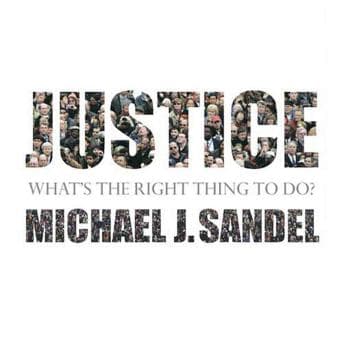
Michael Sandel starts with the classics. The trolley problem. The cabin boy on the lifeboat (is it okay to eat him if everyone else is starving?). And honestly—yikes. I was listening to this during my morning jog along the Charles River, and I probably looked insane, muttering "well, obviously not" and then thirty seconds later going "wait, but technically..." to myself.
Look, I usually analyze fictional characters. I look at why a protagonist in a thriller decides to hide the body instead of calling the police. But Sandel flips the script. He treats us like the test subjects. It's the same kind of self-examination I found in Bhagavad Gita: Treatise of Self-help—that uncomfortable mirror held up to your own reasoning.
The Harvard Experience (Without the Tuition)
Sandel narrates this himself, and it works. It really works. He's got that patient, rhythmic cadence of a professor who has explained these concepts to nineteen-year-olds for three decades. He doesn't just read; he teaches.
(And let's be real, his voice is way more soothing than the tuition bill for his actual course.)
It's not a performance in the dramatic sense—he's not doing voices for Immanuel Kant or John Stuart Mill—but he's engaging. He sounds like the smartest guy in the room who genuinely wants you to understand why you think killing is wrong. Or right. Depending on the day.
That said, if you're used to high-octane thrillers or true crime podcasts where the narrator is screaming for attention, this might feel a little slow. I cranked it up to 1.25x speed about an hour in. Keeps the energy up without losing the philosophical nuance.
When Logic Breaks Your Brain
Here's the thing about human psychology: we love to think we're consistent. We're not. We're messy.
Sandel exposes that messiness with surgical precision. He takes a concept like "freedom" or "virtue" and twists it until you realize your definition makes zero sense.
- He dismantles Utilitarianism (the greatest good for the greatest number) until you feel like a monster for supporting it.
- Then he pivots to Libertarianism and makes you question if you actually own yourself.
It's frustrating. It's annoying. I loved it.
My therapist says I seek out intellectual challenges to avoid emotional ones (she's usually right), and this book is the ultimate distraction. It forces you to construct a mental framework for justice and then immediately kicks the legs out from under it.
Who This Is (and Isn't) For
Perfect for philosophy-curious listeners who want to feel smarter without wading through dense academic texts. Skip it if you need definitive answers or can't stand a professor's measured pacing—even at 1.25x speed, this rewards patience over adrenaline.
Go Argue With Your Kitchen
This isn't a book that gives you answers. If you want a checklist for "How To Be Good," go buy a different self-help book. Sandel leaves you with more questions than you started with.
But that's the point. The human mind has patterns, sure, but morality? Morality is a constant negotiation.
I finished this while making dinner (dal, spicy enough to make me cry, just how I like it), and I found myself arguing with the empty kitchen about the moral limits of markets. "Maa, you can't just buy everything," I whispered to nobody.
If a book can make you argue with your imaginary mother about Aristotle, it's doing something right.