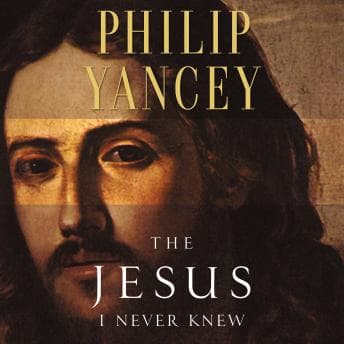

Okay so I'm not the person you'd expect to review this book. My typical queue is hard sci-fi and business books I can rage-listen to at 1.75x. But Kevin's mom gave him a copy for Christmas (physical, which — does she even know us?), and after he mentioned it was "actually good," I grabbed the audiobook for a long solo weekend while he was at a wedding in Portland.
TL;DR: Worth your commute if you're even mildly curious about the historical Jesus, regardless of your church background. Yancey approaches the subject like a journalist, not a pastor. But the audio production has a genuinely annoying flaw that almost made me bail.
The Debugger's Approach to the Gospels
Yancey does something I deeply respect as an engineer: he treats his own assumptions as bugs. The whole premise is basically "what if everything I absorbed about Jesus from Sunday school flannel boards and Hollywood movies was a lossy compression of the original?" And then he goes back to primary sources.
He pulls from historians, theologians, and — this is what kept me hooked — secular cultural critics. The way he cross-references how different centuries and cultures have projected their own values onto the same historical figure reminded me of how every team interprets the same incident postmortem differently depending on their priors. Same data, wildly different root cause analysis. The closest secular parallel I can think of is Ballad of Songbirds and Snakes — Collins runs the exact same maneuver with Coriolanus Snow, where your prior read of the character is specifically the thing being dismantled.
The book moves chronologically through Jesus's life — birth, teachings, miracles, death, resurrection — but Yancey keeps interrupting himself with these "wait, but did you actually read what the text says?" moments. He'll take a parable I'd heard a hundred times growing up in my grandmother's Presbyterian church in Seattle and flip it so the comfortable reading becomes deeply uncomfortable. The Beatitudes section hit different at midnight on a Saturday, I'll say that much.
Bill Richards Does the Heavy Lifting (When You Can Hear Him)
Richards has a warm, measured delivery that works well for this kind of material — steady enough that you don't lose the thread of Yancey's arguments, expressive enough that the emotional passages don't flatline. He's no Ray Porter (who is?), but he's solid for nonfiction narration. Kept me engaged through nearly 10 hours, which for a religion book is saying something.
BUT. Every single chapter opens with music that plays OVER Richards's voice. Not before it. Not as a brief intro. Over it. Like someone in the production booth thought "you know what this audiobook needs? Background score to set the mood" and then forgot to duck the audio levels. The first time it happened I thought my Spotify had somehow started playing underneath Audible. By chapter three I was genuinely irritated. By chapter eight I'd trained myself to skip forward about 30 seconds at each chapter break.
It's not Richards's fault, and it's not a dealbreaker if you know it's coming. But it's the kind of production choice that makes you wonder if anyone actually QA'd the final mix. Software engineer brain: this feels like a bug that got shipped because nobody filed the ticket.
Who Should Queue This Up (And Who Shouldn't)
If you grew up in any flavor of Christianity and have that weird mix of familiarity and distance from the source material — where you know all the stories but haven't really interrogated them since you were 12 — this book is basically a code review of your childhood faith. Yancey doesn't preach. He investigates. And he's honest about his own doubts, which I respect enormously.
If you're coming at this with zero religious background, it still works as a historical and cultural deep dive, though some sections assume a baseline familiarity with Gospel narratives that might leave you Googling.
Skip if you want devotional comfort food. This isn't that. Yancey asks hard questions and doesn't always land on tidy answers.
So Is It Worth the Commute Hours?
The ROI on this audiobook is... complicated. The content is genuinely excellent — probably the most intellectually honest religious book I've listened to. Yancey writes like a journalist who happens to have faith, not a preacher who happens to write, and that distinction makes all the difference. At 9 hours 41 minutes, it's about 4 commutes at my usual 1.5x, and I didn't zone out once during actual narration.
But the audio production issues are real enough that I'd say wait for a sale or grab it through your library app. The content deserves a solid 4. The production drags the listening experience down. If they ever remaster this with clean chapter transitions, bump it up a full point.
I finished it Sunday night, texted Kevin "tell your mom thanks," and then immediately queued up a Murderbot book as a palate cleanser. But I've been turning some of Yancey's arguments over in my head all week — which is more than I can say for the last three business books I listened to combined.