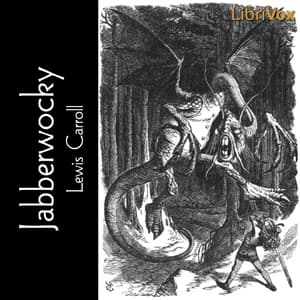

Thirty-four people reading the same poem is either a brilliant experiment or a hostage situation. After 56 minutes with LibriVox's Jabberwocky collection, I'm still not entirely sure which.
Let me set the scene. It's a Saturday morning, Denise is at her sister's, and I'm making eggs while cycling through what I thought would be a quick Carroll listen before tackling a stack of sophomore essays on The Great Gatsby. Fifty-six minutes later, the eggs were cold and I'd heard "Twas brillig, and the slithy toves" so many times that the nonsense words started making actual sense. Which, if you think about it, might be exactly what Carroll intended.
What Happens When You Hand One Poem to Thirty-Four Strangers
Here's the thing my students never believe when I tell them: interpretation IS meaning. I spend entire class periods trying to convince sixteen-year-olds that how you read a line changes what the line says. This audiobook is basically my entire pedagogical philosophy compressed into under an hour.
You get thirty-four readings of the same seven stanzas, and no two sound alike. Some readers treat it like a bedtime story - gentle, lilting, the Jabberwock more fairy tale than nightmare. Others go full dramatic performance, giving the "vorpal blade" real menace, real weight. Claire Cornelia's reading stood out to me specifically because she sounds like she's having genuine fun with it, leaning into the absurdity rather than trying to dignify it. There's at least one reading with sound effects and background music, which - look, I'm a purist about these things, but hearing someone layer atmosphere over Carroll's invented words actually made them feel more like a real language from a real place.
And then there are the readings that are just... flat. Someone reading it the way my students read Shakespeare aloud when they haven't done the homework. Monotone. Every line the same cadence. "He took his vorpal sword in hand" delivered with the same energy as a grocery list. The narrator understands that pause is punctuation - or at least, some of these narrators do. Others apparently missed that memo.
The Accidental Masterclass in Close Reading
I kept catching myself doing something I haven't done in years: genuinely listening to familiar words like I'd never heard them before. When you hear "galumphing" pronounced three different ways in fifteen minutes, you start asking yourself what that word actually sounds like in your own head. Have I been saying "frabjous" wrong my entire teaching career? (Probably. My students would love that.)
This is where the project gets weirdly valuable. It's not an audiobook in any traditional sense. It's more like an audio essay on the nature of reading itself. Each volunteer brings their accent, their rhythm, their understanding of where the humor lives and where the darkness creeps in. Some treat the final stanza - the repeat of the opening - as triumphant return. Others read it as eerie circularity, like nothing was learned, nothing changed. Same words. Completely different poems.
Let's talk about what Carroll is really saying - or rather, what these thirty-four readers think he's saying. Because that's the revelation. Jabberwocky is often dismissed as pure nonsense, a party trick with language. But listen to someone read it like a genuine hero's quest, voice dropping low for the Jubjub bird, rising for the kill, and suddenly it's Beowulf in miniature. Listen to someone else read it like a joke, and it's Monty Python avant la lettre. The poem contains all of these readings simultaneously. That layering of meaning - the way a single text can hold a hero's quest and a punchline at the same time - is something I noticed in a completely different context when I reviewed Sword Song, where the narrator's choices kept reframing whether the whole thing was tragedy or dark adventure. This collection just makes that visible. Audible. Whatever.
Who This Is Actually For (And Who Should Run)
If you're an English teacher - and I recognize this is a niche audience roughly the size of my podcast listenership - this is genuinely useful. I'm already planning to play three or four of these recordings back-to-back for my juniors when we hit the poetry unit. Nothing teaches interpretation better than hearing the same text performed radically differently.
If you're a casual listener looking for a pleasant audiobook experience, this will bewilder you. It's repetitive by design. By the fifteenth reading you'll either be hypnotized or reaching for the skip button. There's no story arc, no narrative progression, just the same 28 lines refracted through different human voices.
My students would hate this. I love it.
But I love it the way I love a well-designed lesson plan - for what it teaches, not for how it entertains. The audio quality varies wildly because these are volunteer recordings from 2007, and some sound like they were captured in a bathroom. That's the LibriVox trade-off: free access, inconsistent production. You get what you pay for, and sometimes what you get is surprising.
Worth Pausing the Eggs For
This isn't an audiobook you recommend to people. It's an audiobook you describe at a dinner party and watch their faces. Fifty-six minutes of the same Victorian nonsense poem read thirty-four times by strangers on the internet, and somehow it made me think harder about language than most novels I've listened to this year. Carroll chose those words - invented them, actually - and thirty-four people chose to speak them aloud. That's either beautiful or insane. I'm comfortable with both.