
I was making dal makhani—the real kind, the one that takes three hours because my mother would disown me otherwise—when I started this audiobook. And honestly? There's something fitting about listening to a book on anxious attachment while obsessively stirring a pot and wondering if I'm doing it wrong.
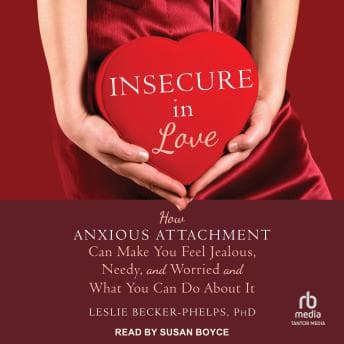
Leslie Becker-Phelps gets it. She really gets it. Research shows that anxious attachment patterns form early, often before we have language to describe them, and she explains this without making you feel like a broken specimen under a microscope. That's harder than it sounds. Most self-help books in this space either treat you like a patient or a project. This one treats you like a person who developed some pretty logical responses to early experiences that just... aren't serving you anymore.
Why This Book Feels Like Therapy Without the Copay
The core concept here—compassionate self-awareness—is basically what my therapist has been trying to get me to understand for two years, but Becker-Phelps explains it in a way that actually clicked. It's not about beating yourself up for being "clingy" or "needy." (Ugh, those words. Can we retire them?) It's about noticing the thought, understanding where it came from, and responding to yourself the way you'd respond to a friend.
The anxiously attached person she describes throughout the book? I kept asking myself: why does this sound so familiar? The hypervigilance about your partner's mood. The constant scanning for signs of rejection. The way a delayed text response can spiral into a full existential crisis. (Don't tell my students I said that.)
She doesn't just describe the problem. She gives you actual tools. Exercises. Ways to catch yourself mid-spiral. And unlike some self-help books that feel like they were written by someone who read about human emotions in a textbook, Becker-Phelps writes like someone who's sat across from hundreds of people working through this stuff.
Susan Boyce Behind the Mic
Susan Boyce's narration is clear and steady—exactly what you want for a book like this. You're not here for dramatic performance. You're here to absorb information that might be uncomfortable, and she delivers it in a way that feels supportive rather than clinical.
Some reviewers mentioned her accent being "a bit pronounced," but I didn't find it distracting. The pacing works well for the content—slow enough to process, not so slow that you zone out. I listened at 1.25x during my morning jogs through Cambridge and it held up fine.
At just over six hours, it's a manageable length. I appreciated that. Some psychology books pad themselves with repetitive examples until you want to scream. This one says what it needs to say and respects your time.
The Limitations (Because Nothing's Perfect)
Here's the thing—if you don't identify with anxious attachment, this book will feel like it's not for you. Because it's not. Becker-Phelps is laser-focused on one attachment style, which is both a strength and a limitation. If you're avoidantly attached, or if your partner is the anxious one and you're trying to understand them, you'll get some insight but not the full picture.
Some reviewers found the content "too simplistic." I'd push back on that. Psychologically, the concepts are sound and well-researched. But if you've already done deep work on attachment theory—read Levine and Heller's Attached, worked with a therapist who specializes in this—you might not find much new here. It's an excellent entry point, not an advanced course.
Fair warning: this is a book that asks you to do the work. There are exercises throughout. If you're looking for passive listening, you won't get the full benefit. I found myself pausing to actually think about my responses, which is either a sign of good writing or my own neurotic tendencies. Probably both.
Who This Is (and Isn't) For
If you've ever been called "too much" in a relationship—or worse, if you've called yourself that—this book is worth your time. Skip it if you've already done serious attachment work with a therapist or if you're looking for insight into avoidant patterns instead. It's not going to fix everything. (My therapist would have thoughts about anyone who promises that.) But it offers a framework for understanding why you do what you do, and more importantly, how to respond to yourself with kindness instead of criticism.
That same principle—understanding patterns to change them—is what makes Atomic Habits so effective, though James Clear applies it to behavior change rather than attachment.
The Dal Is Done, and So Am I
I finished the last chapter while the dal was finally done. Three hours of cooking, six hours of listening spread across a week. Both required patience. Both were worth it.
If you want to go deeper after this, pick up Attached by Levine and Heller or Hold Me Tight by Sue Johnson. They complement each other well. But start here. Start with compassion.