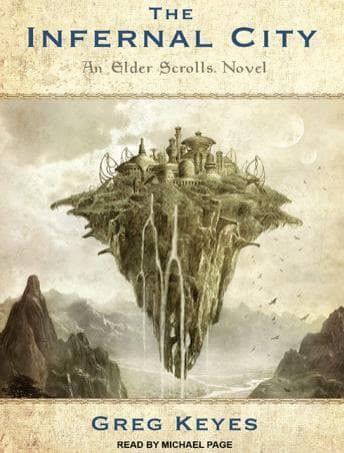

Look, I need to rant for a second. I have spent probably 3,000 hours in Tamriel across various Elder Scrolls games. I've read every in-game book in Morrowind. I've argued about the Dwemer disappearance on Reddit at 2 AM when I should've been working on my thesis. So when I tell you that The Infernal City scratches a very specific itch while also leaving you slightly itchy in places you can't reach - you should trust me on this.
I was reorganizing my board game shelf (read: procrastinating) when I threw this on, figuring 8.5 hours was a nice compact listen compared to the 45-hour Stormlight behemoths I usually mainline. And honestly? For the first couple hours, I was fully locked in.
Umbriel Is Basically a Floating Dungeon Crawl and I'm Here for It
The premise is genuinely cool. A floating city called Umbriel drifts over Tamriel, and everything beneath its shadow dies - then rises as undead. That's a premise that would make any DM jealous. My D&D group would love this as a campaign hook. Greg Keyes does something smart here: he splits the narrative between Annaig, who's trapped inside Umbriel navigating its bizarre kitchen-hierarchy (yes, kitchen hierarchy - the city's social structure revolves around alchemical cooking, which is weird and fascinating), and Prince Attrebus on the ground trying to figure out how to stop it.
The Umbriel sections are where the book shines. Annaig's world inside the city feels genuinely alien - she's essentially a slave-alchemist brewing concoctions for creatures that are nothing like what you'd expect from an Elder Scrolls story. There's a sump - this fetid biological pit at the bottom of the city - that Keyes describes with enough visceral detail that I could practically smell it while shelving my copy of Gloomhaven. The world-building inside Umbriel is legitimately inventive, pulling from Elder Scrolls lore while creating something that feels distinct.
But here's where the consensus complaints are earned: the Attrebus chapters on the ground can drag. There's a lot of political maneuvering and dialogue that reads like someone padded a quest log into novel form. I don't mind info-dumps - if you don't like info-dumps, this isn't for you (but you're wrong) - but the ground-level plot meanders in a way the Umbriel sections don't. It's like two different books stitched together, and one of them needed a tighter edit.
Michael Page Does the Heavy Lifting
Michael Page is a pro and it shows. His read is warm and controlled - he doesn't try to do a different voice for every Argonian and Dunmer, but he differentiates enough that you always know who's speaking. His Annaig has this quiet determination to it, while Attrebus gets a slightly more earnest, almost naive quality that fits the character's arc as a prince who's never really had to prove himself. The pacing of his delivery actually helps smooth over some of the slower dialogue sections - he keeps enough energy in the read that you don't completely zone out during the political bits.
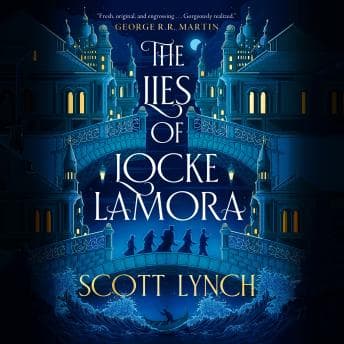
Is it Steven Pacey-level? No. Steven Pacey walked so other narrators could run, and Page is running at a solid clip here. Clean production, no weird audio artifacts, professional all the way through. He's the same voice behind Lies of Locke Lamora, and that book made me trust him with weird fantasy worlds even before this one. For an 8.5-hour listen, he's consistent from start to finish.
The Elder Scrolls Tax
Here's the thing nobody wants to say: this book charges an Elder Scrolls tax. If you've never played the games, you're going to be lost on references to the Oblivion Crisis, the significance of the Imperial City, why it matters that there are Hist trees involved. Keyes doesn't hold your hand with the lore - he assumes you know what a Bosmer is, what soul gems do, why Argonians have a connection to the Hist. For fans, that's great. It feels like the book respects your investment in the universe. For newcomers? You'll be doing a lot of UESP wiki lookups.
And I'll be honest - it ends on a cliffhanger that's basically "buy the next book." Which, fine, that's how series work. But the resolution feels abrupt, like the story was one longer novel chopped in half.
Roll for Initiative on Your Credit
If you're an Elder Scrolls fan who wants more Tamriel between game releases, this delivers. The magic system stuff with Umbriel's alchemy is chef's kiss - genuinely creative and unlike anything in the games. That same problem-solving survival energy is all over The Martian, just with fewer undead and more potato math. The progression is satisfying when it focuses on Annaig's survival arc. But if you're coming in cold with no attachment to the franchise, or if slow-burn political fantasy dialogue makes you reach for the skip button, you might want to catch this on a sale or through your library app. I read this instead of writing my thesis, and I don't regret it - but I also wouldn't put it in the same tier as standalone fantasy that earns its world from scratch. Solid B-tier franchise fiction elevated by a narrator who knows exactly what he's doing.