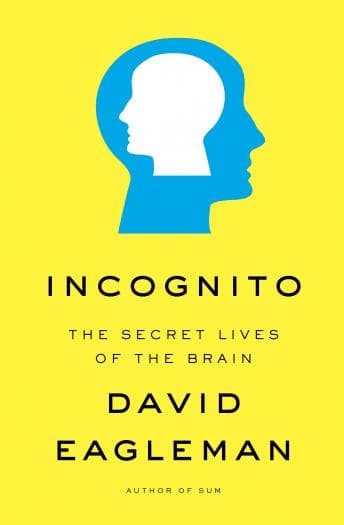

"Who, exactly, is mad at whom?" That question hit me somewhere around hour three, while I was chopping onions for a chana masala that was way too ambitious for a Tuesday night. Eagleman drops it almost casually - this idea that when you get angry at yourself, there's an implicit admission that your brain contains multiple competing agents. And I just... stood there. Knife in hand, onion half-forgotten, genuinely reconsidering every time I've told myself to get it together. Who is telling whom?
This is the kind of book that makes you feel like you've been walking around with a stranger piloting your body. Which, according to Eagleman, you basically have been.
Your Conscious Mind Is Basically an Intern
The central thesis of Incognito is one I teach in my intro psych seminars, but Eagleman articulates it with a precision that made me rethink my own lecture notes. The conscious mind - the "you" reading this review - is not the CEO of your brain. It's more like a small newspaper reporter, learning about decisions after they've already been made by vast unconscious machinery. Your foot hits the brake before you consciously register danger. You recognize your name in a noisy room before your attention system officially "notices" it. The research actually shows that conscious awareness is late to almost every party your brain throws.
What makes Eagleman compelling here isn't just the science - it's how he structures the argument as accumulating evidence. He doesn't front-load theory. He starts with perception, moves to decision-making, then pivots to criminal law and moral responsibility. By the time he's asking whether a pedophile with a brain tumor should be held to the same legal standard as someone without one, you realize he's been building a case this entire time. It's less pop science and more closing argument.
The Thomas Edison electrocuting an elephant example? I expected it to be a throwaway anecdote about eccentric genius. Instead, Eagleman uses it to illustrate how competing neural systems within a culture mirror competing systems within a single brain - rival factions vying for dominance, using whatever propaganda tools they can find. The protagonist of this book exhibits classic dissociative architecture, except the protagonist is all of us.
When the Scientist Is Also the Storyteller (And It Actually Works)
So here's the thing about author-narrated nonfiction: it's a gamble. Brilliant researchers are not automatically brilliant performers. But Eagleman reads his own work with this casual, energetic clarity that honestly reminded me of a really good TED talk - the kind where the speaker trusts their material enough not to oversell it. His voice has a conversational warmth that keeps the neuroscience from feeling like a textbook. He explains visual illusions - which you obviously can't see in audio format - by substituting clear verbal descriptions, and it works surprisingly well. He adapted the material for your ears, not just photocopied the book into someone's mouth.
That said, the pacing is consistent to a fault. Eagleman maintains roughly the same energetic register throughout all eight-plus hours. No dramatic dips, no quieter reflective passages. It's like listening to someone who's perpetually fascinated - which, fine, that's genuine, but around hour six my brain wanted some tonal variation. A moment to breathe. The enthusiasm is contagious, but even contagious things can exhaust you (my therapist would have thoughts about that metaphor).
The Criminal Law Chapter Changed How I Think About Blame
I found myself asking: why does Eagleman really care so much about the legal system? And then it clicked. The entire book builds toward a single uncomfortable question - if most of what we do is driven by unconscious processes we can't access or control, what does "responsibility" even mean? He presents the case of a man whose sudden pedophilic urges turned out to be caused by a brain tumor. Remove the tumor, remove the urges. Tumor grows back, urges return.
Psychologically, this tracks in ways that should terrify anyone who believes in simple moral categories. Eagleman isn't arguing for nihilism or letting criminals walk free - he's arguing for a legal system that accounts for what neuroscience actually tells us about human agency. It's a fascinating case study in how science and ethics collide when the data gets uncomfortable. Nietzsche was doing something structurally similar - dismantling comfortable moral categories with the confidence of someone who'd already decided the foundations were rotten - and Der Antichrist lands with that same unsettling clarity, even if the philosophical tradition it's attacking is different from Eagleman's legal one.
This chapter alone is worth the listen. I've already assigned it to my graduate students. (They will not thank me.)
Who Gets the Most Out of This
If you want a rigorous but accessible tour of why your brain lies to you constantly - and you're okay sitting with the philosophical vertigo that produces - this is your book. Psych students, true crime obsessives who want to understand why people do what they do, anyone who's ever said "I don't know why I did that" and meant it literally. Skip it if you want actionable self-help tips. Eagleman is a scientist, not a life coach. He'll show you the machinery; he won't hand you the manual.
Also excellent for long drives. The kind where you're alone on a highway at night and already feeling slightly dissociated from reality. Eagleman will lean into that feeling.
The Diagnosis
I started this book expecting a decent pop-neuroscience survey. What I got was a quietly radical argument about selfhood, agency, and whether the person you think you are actually exists. At 8 hours and 50 minutes, it earns its runtime. Eagleman trusts his audience to handle complexity without dumbing it down, and his narration carries the authority of someone who's spent decades inside the research. Not perfect - the relentless enthusiasm could use some dynamic range, and a few of the early chapters cover ground that Malcolm Gladwell fans will find familiar. But the payoff in the final third is worth the patience.
I finished it, put down my earbuds, and immediately texted my dissertation advisor: "Are we just along for the ride?" She hasn't responded. Probably her unconscious decided not to.