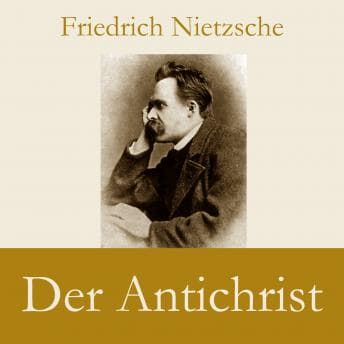

Look, I'll be honest - I started this audiobook during a morning jog through Cambridge and within fifteen minutes I had stopped running entirely. Not because I was tired. Because Nietzsche demands your full attention, and Karsten Renner's delivery made sure I couldn't multitask even if I wanted to.
The protagonist exhibits classic philosophical rage - and I mean that as a compliment. Nietzsche isn't writing a measured academic critique here. He's burning down the house. And as someone who analyzes character motivations for a living, I found myself asking: why does Nietzsche really hate Christianity this much? The answer, of course, is complicated. The man was raised deeply religious, and this book reads like someone processing a breakup with their entire worldview. My therapist would have thoughts about this character.
When Philosophy Gets Personal
Here's the thing about Der Antichrist - it's not actually about the biblical Antichrist. It's Nietzsche positioning himself as the anti-Christian, the one who sees through what he considers millennia of moral manipulation. He's rejecting pity as weakness, celebrating strength, and basically writing a manifesto against everything his upbringing taught him.
Psychologically, this tracks perfectly. The research actually shows that the most vehement critics of any ideology are often former believers. Nietzsche isn't attacking Christianity from the outside - he's attacking it from the inside, with the intimate knowledge of someone who once lived there. Du Bois does something similar in Souls of Black Folk, where Du Bois writes from within the American experience he's dissecting. That's what makes this a fascinating case study in philosophical rebellion.
But - and this is important - you have to be prepared for the intensity. Nietzsche doesn't hedge. He doesn't say "some aspects of Christian morality might be problematic." He goes full scorched earth. If you're religious and easily offended, this isn't the audiobook for you. (Don't say I didn't warn you.)
If you want something that challenges conventional thinking without the religious demolition, Beyond Good and Evil shows Nietzsche in a slightly less incendiary mode—though he's still throwing plenty of intellectual punches.
The Voice That Carries the Fire
Karsten Renner's narration is... divisive. I'll say that upfront. Some listeners found it harsh, even painful. One person literally said it hurt their ears. Another suggested Sheldon Cooper should narrate it instead, which - okay, I actually laughed at that because they're not wrong that Nietzsche has zero filter.
But here's my take: Renner's dramatic style actually works for this material. Nietzsche wasn't writing gentle philosophy. He was throwing intellectual grenades. A soft, measured narrator would've felt wrong. The dramatic intensity matches the content. When Nietzsche rails against the church for destroying classical antiquity's intellectual heritage, you need a voice that conveys that fury.
At two hours and forty-seven minutes, though, the relentless intensity can be exhausting. I found myself needing breaks - not because the content was boring, but because it's dense and demanding. This isn't background listening. This is sit-down-and-engage listening.
Who Should Listen (And Who Should Skip)
Let's be real for a second. This audiobook is not for everyone, and pretending otherwise would be dishonest.
Best for: Philosophy nerds who want to hear one of history's most controversial thinkers in his own (translated) words. People interested in the psychology of moral rebellion. Anyone studying Nietzsche academically who wants the text in their ears while they read along. Listeners who appreciate that sometimes uncomfortable ideas are worth wrestling with.
Skip if: You want something relaxing. You're deeply religious and don't enjoy having your beliefs attacked (which, fair). You need variety in vocal performance to stay engaged. You're looking for nuanced, balanced critique - Nietzsche doesn't do balance.
What makes this character compelling is his absolute commitment to his position. Nietzsche isn't trying to be liked. He's not hedging for academic approval. He's saying what he thinks, consequences be damned. As a behavioral psychologist, I find that kind of intellectual honesty refreshing, even when I disagree with the conclusions.
The production quality is clean - no weird background noise or volume issues. It's a faithful, unabridged presentation of the text. You're getting the real thing, for better or worse.
Would I listen again? Probably not cover to cover. But I'll definitely revisit specific sections when I'm writing about moral psychology or the formation of value systems. It's the kind of text that rewards returning to with fresh eyes - or ears.
Just maybe not during a jog. Lesson learned.