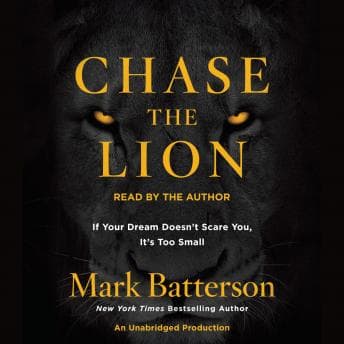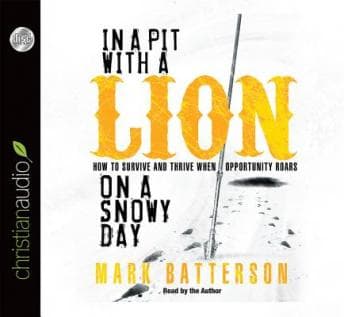

"Normal people don't chase lions." That's the hook. And frankly, after twenty years of teaching high schoolers, I usually agree with the normal people. I listened to this while battling a Chicago winter wind off Lake Michigan—my own personal snowy day—trying to find a reason not to freeze to death while walking the dog.
Mark Batterson starts with an obscure footnote from 2 Samuel 23:20. It's about a guy named Benaiah who chased a lion into a pit on a snowy day and killed it. As a literature guy, I love when someone takes three lines of ancient text and unpacks an entire philosophy from it. Most of my students wouldn't even read the footnote. Batterson builds a whole worldview around it.
The Footnote That Roared
This isn't your standard "believe in yourself" fluff. It's about reframing fear. Batterson argues that the very things we run from are often the opportunities we should be chasing. The metaphor of the lion is potent. In Chapter 1, he talks about the imagination required to see a lion not as death, but as destiny. It reminds me of the way Melville treats the whale—not just as an animal, but as a mirror for the soul.
Be warned, though: this is explicitly religious. If you're allergic to "God's plan" talk, you might find yourself rolling your eyes. But even if you approach it strictly as a text analysis of an ancient warrior's mindset, there's meat on the bone. Chapter 8 ties the concept of "unlearning fear" together in a way that actually made me pause the track and stare at the frozen lake for a minute.
When the Pastor Picks Up the Mic
Usually, I get nervous when authors narrate their own books. Writing and performing are different skill sets. But Batterson is a pastor, which means he's a professional public speaker. He understands cadence. He knows that a pause is as important as a word. He's not reading; he's communicating.
The delivery is conversational but authoritative. He doesn't do the "preacher shout," thank goodness. It feels more like a mentorship session. Since he wrote the words, the emphasis hits exactly where it's supposed to. You don't get that disconnect where a hired actor misinterprets the emotional weight of a sentence.
Five Hours and Change
Here's the rub: it's barely over five hours long. For a credit, that's a steep ask when I can get 40 hours of Dickens for the same price. It feels a bit like an extended sermon series polished into a book. The content is high quality—no filler—but it moves fast. You can finish it in a week of commutes easily.
Who's this for? Christians looking for a fresh take on courage and calling will eat this up. Own Your Everyday works that same corner of the classroom, the one where vocation and anxiety keep passing notes. Skeptics who can appreciate religious texts as literature might find value too. Skip it if faith-based motivation makes you itch, or if short audiobooks feel like a rip-off.
The Bell's About to Ring
Would I assign this to my AP English class? No. But did it make me look at the pile of grading on my desk with slightly less dread? Yeah. It did. Sometimes you have to jump in the pit.