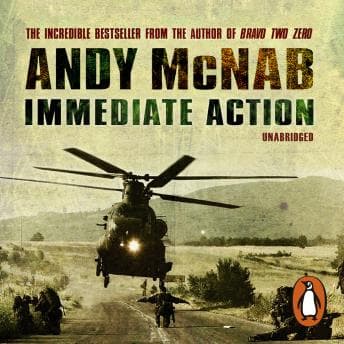

What makes a soldier? Not the uniform, not the training—though God knows McNab describes enough of both to make your muscles ache in sympathy. It's something else. Something I kept turning over during sixteen hours of this memoir, grading papers forgotten on my lap while Thornley's steady voice walked me through South Armagh firefights and jungle operations.
I'll be honest: military memoirs aren't my usual territory. Give me Hemingway's war, filtered through prose. Give me Tim O'Brien's fractured memories in The Things They Carried. But my colleague in the history department—former Marine, won't let you forget it—kept insisting I needed to hear this one. He also pushed Churchill's Band of Brothers on me last semester—different war, same unflinching clarity about what combat actually costs. "It's not what you think," he said. He was right.
The Carrier Bag and the Regiment
McNab opens not with combat but with abandonment. Found as an infant on the steps of Guy's Hospital, raised in foster care, running with gangs, nicking cars. This is where Thornley's narration earns its keep—he doesn't sentimentalize the rough edges. The young McNab is no Oliver Twist waiting for redemption. He's feral, pragmatic, surviving. And when he finally finds his way into the Army and eventually 22 SAS, you understand it wasn't patriotism that got him there. It was a particular kind of hunger.
The selection section—which listeners consistently flag as a highlight—is genuinely brutal to experience. Not because of gore, but because of the relentless psychological grinding. Thornley reads it with the flatness of someone recounting a marathon they barely survived. No drama. Just facts. Which makes it worse, somehow. My wife Denise walked past during one of these sections, paused, listened for thirty seconds, and said, "Why do you do this to yourself?" Fair question.
Grim Humor as Survival Mechanism
Here's what surprised me: McNab is funny. Dark funny. The kind of humor that emerges when you've seen too much and laughing is the only alternative to something worse. There's a passage about a surveillance operation gone sideways—I won't spoil it—where the absurdity of the situation becomes almost comic. Thornley catches this tone perfectly. He's not performing comedy; he's delivering observations from someone who's learned to find the ridiculous in the horrific.
This reminds me of what Hemingway said about writing true sentences. McNab writes true sentences. They're not beautiful—they're not trying to be—but they have the weight of lived experience. When he describes casualties, when he notes that "the best men are so often the first to be killed, because they are in front," there's no flourish. Just the terrible mathematics of combat.
Thornley as Interpreter
Paul Thornley was clearly the right choice here. His voice has a working-class practicality that matches McNab's prose—no posh affectations, no theatrical heroism. When the text calls for matter-of-fact descriptions of violence, he delivers them matter-of-factly. When McNab's dry wit surfaces, Thornley lets it land without overselling. It's restrained work, and restraint is exactly what this material needs.
At sixteen and a half hours, this is a commitment. I spread it across two weeks of lakefront walks and late-night grading sessions. The pacing is uneven—some operational chapters blur together, while the early biographical material and the selection process grab you by the throat. But that unevenness feels honest. War isn't a three-act structure. Neither is a life.
Who Should Listen—And Who Should Skip
If you loved Bravo Two Zero—McNab's account of the Gulf War patrol that went catastrophically wrong—this is the prequel your brain didn't know it needed. It explains how that man became that soldier. Fans of military memoirs generally, Chris Ryan's work, that whole genre—this is McNab at his most personal and possibly his best.
But if you need your war narratives aestheticized, if you want the violence processed through literary distance, skip this one. McNab doesn't apologize for what he did or who he was. He doesn't moralize. Some listeners will find that refreshing; others will find it troubling. Both responses are probably correct.
My students would hate this. Too long, too brutal, no romance subplot. I loved it. Not because I agree with everything McNab represents, but because the prose deserves to be heard at the pace it was written. Thornley understands that pause is punctuation. He lets the silences between operations breathe.
Red Pen Down, Essays Still Ungraded
This is what memoir can do when it's not trying to be therapy or apology. It's witness testimony. McNab was there, in places most of us will never go, doing things most of us can't imagine. Whether that makes him hero or something more complicated—that's for you to decide. The audiobook just presents the evidence.
I finished it last night, around midnight, red pen still in hand, essays still ungraded. Sat there for a while thinking about the distance between my classroom and South Armagh. About what we ask young men to become. About carrier bags and hospitals and the strange paths that lead people to their lives.
Principal Martinez, if you're reading this: I was definitely paying attention in today's meeting. (I wasn't. I was thinking about selection.)







![Steve Jobs [unabridged audiobook] audiobook cover](/_next/image?url=https%3A%2F%2Fcovers.audiobooks.com%2Fimages%2Fcovers%2Ffull%2F9788499923406.jpg&w=1920&q=75)