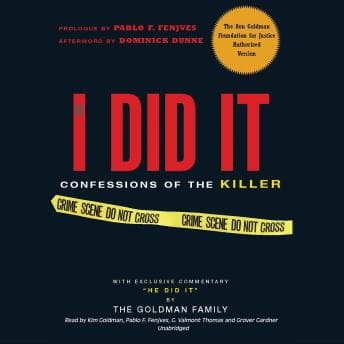

I finished this one on my drive home at 5 AM after a particularly brutal shift, and I had to sit in my driveway for ten minutes just... processing. Not because of anything I'd seen at work. Because of what I'd just heard.
Look, I remember exactly where I was during the trial. I was fifteen, eating pancit at my Tita's house, watching the verdict with my whole extended family crammed into her living room. The collective gasp. The arguments that followed. It's one of those moments that's seared into my brain. So when I saw this audiobook, I figured I knew what I was getting into.
I was wrong.
The Voice That Made Me Pull Over
G. Valmont Thomas does something deeply unsettling here. He doesn't just read Simpson's words—he becomes him. The cadence, the speech patterns, the way the voice shifts when describing the violence. During one particular passage, I actually had to pull into a gas station parking lot because I couldn't focus on the road. My hands were shaking.
And here's the thing—as someone who's spent fifteen years watching people in crisis, watching people lie about how injuries happened, watching people construct narratives that don't match the evidence in front of me... I know what deflection sounds like. I know what rationalization sounds like. This audiobook is a clinic in both.
The "hypothetical" framing is so thin it's almost laughable. Except nothing about this is funny.
Kim Goldman's Grief Is The Real Story
The multi-narrator format threw me at first. But Kim Goldman's commentary? That's where this audiobook earns its existence. Her voice carries something I recognize from work—that particular quality grief takes on when it's been lived with for years. It's not raw anymore. It's weathered. But it's still there, underneath every word.
She provides context that reframes Simpson's narrative in real time. When he's spinning his version, she's right there with the receipts. It's brutal. It's necessary.
Grover Gardner handles the additional commentary sections with the kind of steady professionalism you need as a palate cleanser between the more intense portions. Pablo Fenjves adds the ghostwriter perspective—which, honestly, is its own kind of disturbing. Imagine being the person who had to sit across from Simpson and get this story out of him.
The "Woe Is Me" Problem
I'm not gonna pretend this is an easy listen. Simpson's narrative is exactly what you'd expect—a carefully constructed version of events where he's always the victim, always provoked, always justified. The self-pity is thick enough to choke on.
But that's also why it's valuable? (And I can't believe I'm saying this.) Because you hear the machinery of denial working in real time. The way he builds to the violence. The way he describes Nicole. The possessiveness that drips off every word. That same toxic dynamic—the obsession masked as love—is what makes Wife Between Us: A Novel so unsettling.
Carlos asked why I was so quiet when I came in that morning. I blamed being tired. But really, I was thinking about all the patients I've seen over the years—the ones with injuries that didn't match the story, the ones whose partners spoke about them the way Simpson speaks about Nicole.
This audiobook isn't entertainment. It's evidence. It's a document of how a certain kind of person thinks.
Who This Is (And Isn't) For
If you're a true crime person who wants something that goes beyond the podcast-style recap, this delivers. If you followed the case and want to understand what the civil trial revealed, this is essential. But if you're looking for something to zone out to on your commute? Absolutely not. This requires your full attention and probably some processing time afterward.
The production is clean—no audio issues, good balance between narrators. At just under seven hours, it's manageable in a few sessions. I did it over three night shifts worth of drives, and honestly, that pacing worked. I needed the breaks.
Clocking Out On This One
My mom called me the day after I finished it. She wanted to talk about some drama with my cousin's wedding. And I found myself thinking about Kim Goldman, about how she's had to carry her brother's death for thirty years while the man who killed him wrote a book about how he "would have" done it.
Some things you can't unhear. This is one of them. And maybe that's the point.