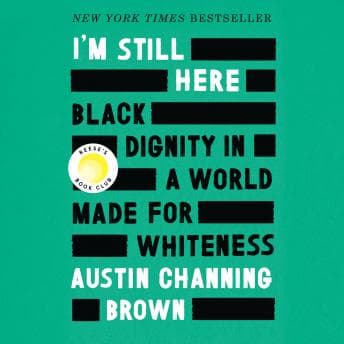

What happens when you realize your own name was a survival strategy?
I was on my morning jog through Cambridge when Austin Channing Brown dropped that bomb in the first chapter. Her parents named her Austin so future employers would assume she was a white man. Age seven. She was seven when she learned this. I actually stopped running for a second. Just stood there on the path like an idiot, processing.
As someone who studies how stories shape identity, I've read countless memoirs about navigating racial identity in America. Souls of Black Folk laid the theoretical groundwork for understanding double consciousness over a century ago, but Brown brings that concept into the present with lived specificity. This one functions less like a memoir and more like a case study in psychological survival. Brown isn't just telling her story—she's dissecting the mental gymnastics required to maintain dignity in spaces that were never designed to acknowledge it.
The Psychology of Belonging (and Not)
What makes this book fascinating from a research perspective is how Brown articulates the cognitive dissonance of being the "diversity hire" in white evangelical spaces. Tokenism creates a specific kind of psychological burden—you're simultaneously hypervisible and invisible. Brown doesn't use academic language, but she's describing this phenomenon with surgical precision.
She talks about sitting in meetings where white colleagues discuss "reaching" Black communities like they're exotic destinations. The way she describes the internal calculation—do I speak up and become the Angry Black Woman, or do I stay silent and hate myself for it?—that's textbook minority stress response. My therapist would have thoughts about the long-term effects of that kind of constant vigilance.
And here's what gets me: Brown isn't bitter. She's tired, yes. Frustrated, absolutely. But there's this underlying warmth that keeps breaking through, even when she's describing genuinely enraging situations. She exhibits classic resilience patterns, but not the toxic "rise above it" kind. Real resilience. The kind that includes anger as a valid response.
Why Hearing Her Voice Changes Everything
Look, I've listened to plenty of author-narrated audiobooks that made me wish they'd hired a professional. This is not one of those. Brown reading her own words adds a layer of authenticity that a hired narrator simply couldn't replicate. When she describes the exhaustion of explaining racism to well-meaning white people for the thousandth time, you can hear it. Not performed exhaustion. Real exhaustion.
There's this moment—I was cooking dal when I heard it—where she's talking about a white colleague crying after being called out for a racial microaggression. And Brown, who was the one harmed, ends up comforting the person who harmed her. Her voice when she describes this? It's not angry. It's just... knowing. Like she's seen this movie before and already knows how it ends.
The narration is clear and assertive without being preachy. She's not lecturing. She's witnessing. There's a difference, and it matters.
The Uncomfortable Mirror
Here's where I have to be honest about who this book is for. If you're looking for a comfortable diversity read that makes you feel good about your allyship, this isn't it. Brown is direct about the ways white people—even progressive, well-meaning white people—participate in systems of racial harm. Some listeners find this accusatory. I found it refreshingly honest.
But I also think there's something here for anyone who's ever felt like they had to perform a version of themselves to be accepted. The specific experience is about Blackness in white spaces, but the psychological mechanisms—code-switching, hypervigilance, the exhaustion of constant translation—those patterns show up in different forms across many marginalized experiences. (Don't tell my students I'm drawing parallels in a memoir review. Very unprofessional.)
At just under four hours, it's a short listen. I finished it in two jogs and one cooking session. But it's dense in the best way. I found myself pausing frequently, not because it was slow, but because I needed to sit with what she'd said.
The Prescription
If I were a therapist (I'm not, I just play one in my research), I'd recommend this to anyone trying to understand why diversity initiatives so often fail. Brown explains the gap between stated values and actual behavior with the clarity of someone who's lived inside that gap her whole life.
Who should listen: Anyone genuinely curious about the psychological cost of navigating white spaces, leaders wondering why their DEI efforts keep falling flat, or readers who want a memoir that refuses to perform either rage or forgiveness for their comfort. Skip it if: you're looking for solutions-focused optimism or a comfortable pat on the back for your good intentions.
What makes Brown compelling as a memoirist is her refusal to perform for the audience's comfort. She's just... still here. Existing. Demanding dignity not as a favor but as a baseline. This one's going to stick with me for a while.