
Jenny handed me this audiobook with the kind of look that means 'you will listen to this and you will not complain about it.' So I listened. All 13 hours and 48 minutes of it. At 2.0x, obviously - I'm not a monk.
Here's the thing nobody tells you about reviewing a women's health book when you're a 41-year-old Korean-American man whose primary hormone expertise is 'cortisol from client deadlines': you end up learning a lot. Fast.
What Harvard Actually Sounds Like When It's Useful
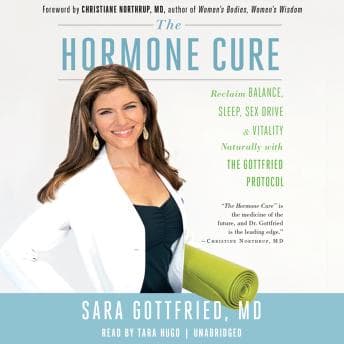
Dr. Sara Gottfried is the real deal, and I say that as someone who's sat across from enough credentialed people who can't explain their own frameworks to a room full of MBAs. She's a Harvard-trained gynecologist who apparently got tired of handing women prescriptions and sending them home. The Gottfried Protocol is her three-step answer: start with lifestyle and supplements, escalate to herbal therapies, only then consider bioidentical hormones. It's a decision tree, not a manifesto. I respect decision trees.
What actually impressed me - and this is specific - is how she handles cortisol dysregulation as the upstream cause of everything else going wrong. Low progesterone, tanked estrogen, thyroid sluggishness - she keeps tracing it back to chronic stress and adrenal load before jumping to hormone replacement. That's not how most doctors practice. That's also exactly what my mother's body went through after thirty years of 14-hour days in a dry cleaning shop, and not a single physician ever connected those dots for her. They just gave her sleeping pills. This book would have given her a framework. I'm not going to pretend that didn't hit me somewhere. The closest I've come to that same feeling of 'someone finally connected the dots on work and the body' was in Every Good Endeavor, which takes a completely different angle on why sustained labor costs us something — though Gottfried is the one who actually tells you what to do about it.
The quiz-based structure is genuinely functional. Each hormone system gets its own self-assessment - you answer questions, you identify your pattern, you get targeted protocols. It's modular. You can skip to the cortisol chapter if that's your issue, or the estrogen section, without losing the thread. For a 13-hour audiobook, that's not a small thing. Most health books make you eat the whole meal before you get to the part you actually needed.
13 Hours Is a Commitment. Here's What You're Actually Buying.
I'll be honest: this is not a tight book. Gottfried is thorough in the way that academic physicians are thorough - she cites studies, she explains mechanisms, she gives you the 'why' before the 'what.' For some listeners, that's the value. For me, running at 2.0x, it still felt padded in the middle sections where she covers the same supplement recommendations from three different angles.
Tara Hugo's narration is competent and clear - she handles the medical terminology without stumbling, which matters more than people realize when you're listening to words like 'hypothalamic-pituitary-adrenal axis' at double speed. She's not doing anything flashy, but she's not getting in the way either. For a dense health book, 'not getting in the way' is actually the job. She does the job.
The real audience here is women in their 30s and 40s who've been told their symptoms are 'just stress' or 'just aging' and have started to suspect their doctor is wrong. Gottfried validates that suspicion with data, then gives you something to do about it. That's worth something. My parents never had a doctor who did that for them - they just worked harder and hoped the symptoms would sort themselves out. They didn't.
Bottom Line: Borrow It First, Buy It If You Need the Reference
This is what I'd tell Jenny, and what I'll tell you: The Hormone Cure has a real, useful core - the quiz framework, the cortisol-first approach, the tiered protocol logic. The key takeaway is worth the listen. The other 10 hours? Useful if you're in the thick of it, slow if you're not.
If you or someone you care about is cycling through fatigue, sleep problems, mood swings, and getting shrugged at by conventional medicine, this book is a legitimate starting point. Stream it, use the quizzes, flag the sections that apply. You don't need to own it - you need to use it. There's a difference.
Jenny says I'm being harsh. Jenny is right. But she also said it was one of the more useful health books she's encountered in years. We're both correct.