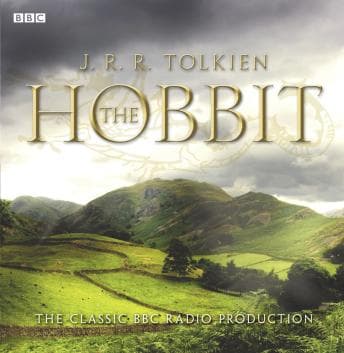

Look, I need to rant about something before we get into this. The 1968 BBC Radio 4 dramatization of The Hobbit pronounces "Gandalf" as "Gan-DALF." Like, emphasis on the second syllable. Gandálf. And Thorin becomes To-REEN. And Gollum - I kid you not - becomes Gol-LOOM. It's like someone read the appendices of The Lord of the Rings, threw them in a shredder, and said "we'll figure it out live." I was standing in my kitchen at 11PM making overnight oats for the next morning's commute, and I actually stopped mid-scoop because I thought I'd misheard.
I hadn't.
The 1968 Bug That Never Got Patched
Here's the thing about this production: it's a 1968 BBC radio drama, and it shows - in both good and bad ways. At 3 hours 42 minutes, this is basically a compressed diff of the full novel. They've adapted and dramatized it with a full cast, David Cain's original music score, and the kind of BBC sound design that feels like a very committed stage play happening inside your skull.
Paul Daneman as Bilbo is genuinely great casting. He nails the fussy, reluctant hobbit energy - you can hear the "I should be home having second breakfast" in every line delivery. Heron Carvic's Gandalf has this gravelly authority that actually makes the wizard feel more dangerous and unpredictable than most film adaptations managed. When Gandalf gets terse with the dwarves, Carvic delivers it with this cold edge that reminded me of dealing with a particularly terrifying senior engineer during incident response. You do NOT push back.
But the name pronunciations. They're everywhere. And once you hear them, you can't unhear them. It's like a typo in production code that somehow passed every review - technically the system still works, but it bugs you every single time you see it.
A Dramatization That Actually Earns the Word
What surprised me is how well the adaptation restructures things for audio drama. The Roast Mutton scene - where the trolls argue about how to cook the dwarves - has been tweaked to flow better as pure dialogue, and it works. You get the humor without Tolkien's more meandering narrative prose. For a 55-year-old production, the pacing holds up during the first two-thirds. Mirkwood feels genuinely claustrophobic with just sound design and voice acting.
Where it falls apart is the Battle of Five Armies. After building tension through Smaug's conversations with Bilbo (which are legitimately good - the dragon sounds menacing without being cartoonish), the climactic battle feels rushed and flat. It's like they ran out of budget or tape or both. You go from this slow-burn adventure to "and then there was a battle and it was over" in about four minutes. Compared to the investment you've made getting there, it's a letdown.
The David Cain music score is interesting - it's got this eerie, almost experimental quality that's very BBC Radiophonic Workshop. Not the sweeping Howard Shore orchestral stuff you might expect. It makes Middle-earth feel stranger and older, which honestly fits the book's tone better than the films did.
Who's This Actually For?
If you're comparing this to a modern full-cast production - like, say, the Graphic Audio treatment of a Sanderson book - you'll find it sparse. The production isn't dynamic by 2024 standards. But if you appreciate it as a historical artifact, as the way an entire generation first experienced Tolkien outside of reading, there's real charm here. The dramatized format itself is worth appreciating on its own terms — Court of Thorns and Roses (Dramatized Adaptation) is a much shinier modern example of what full-cast audio drama can do when it has the budget to match its ambitions.
Perfect for: road trips with kids (it's short and accessible), or a nostalgia listen if you grew up with BBC radio drama. Skip for: anyone who's going to be driven insane by "Gol-LOOM" on repeat. I nearly was.
At 3 hours 42 minutes, I finished this in two commutes with time to spare. The ROI on this audiobook is... complicated. It's free on many library apps, and at that price point it's absolutely worth the curiosity listen. But I wouldn't spend a credit on it when you could get the Andy Serkis unabridged narration instead - that's the version of this book that was clearly made for people who actually care about pronunciation.
I listened at 1.25x, which is slower than my usual 1.5x, because the old BBC recording quality gets a bit muddy if you push it faster. The audio is clearly digitized from analog tape, and it shows.
Ship It With a Known Issues Doc
This is a 1968 radio drama that does some things brilliantly - Daneman's Bilbo, Carvic's Gandalf, the claustrophobic Mirkwood sequence - and faceplants on others. The pronunciation issues are real and pervasive. The battle climax is underwhelming. But there's a scrappy, theater-kid energy to the whole production that modern polish sometimes loses. It's not the best way to experience The Hobbit in audio. But it might be the most historically interesting one.