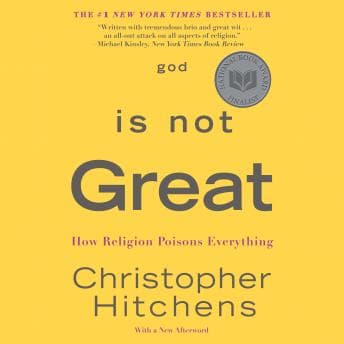

Okay, so here's my complaint: Christopher Hitchens was maybe the greatest conversationalist of his generation, a man who could verbally dismantle anyone across a debate stage, who could hold court at a dinner party until 3 AM with a glass of Johnnie Walker Black in one hand and a cigarette in the other — and he reads his own memoir like he's trying to find his car keys in a dark parking lot.
I need to get that out of the way because it's the elephant in the room. And also because I spent 17 hours with this man's voice in my ear and I have feelings about it.
The Scotch-and-Cigarettes Factor
Here's what saved this for me. I was two nights into a brutal stretch — four twelves in a row, the kind where you stop remembering what day it is. I'd gotten home, made eggs for the kids, crawled into bed at 8 AM, and couldn't sleep. Brain wouldn't shut off. So I put in the earbuds and started this, expecting to drift off in twenty minutes.
I was still awake at noon.
Not because the narration is electric — it's not. Hitchens reads with this halting, mumbling delivery where commas sound like periods and paragraph breaks just... don't exist. He gulps whole sentences sometimes, swallowing the ends of words like a man who's been talking too long at a party and forgot he's being recorded. But there's something about hearing him tell his own story that feels like sitting in a dim bar with someone brilliant who's had exactly enough to drink to be honest. Deadpan sincerity. That's the phrase that kept coming to mind. He's not performing. He's just... telling you.
And what he's telling you is extraordinary.
A Life That Doesn't Sit Still
The man was a walking contradiction and he knew it. Socialist turned Iraq War supporter. Christian-raised fervent atheist. British citizen who became American. Son of a mother whose Jewish heritage he didn't know about until after her suicide — and he drops that detail with the kind of quiet weight that made me pull over in a hospital parking lot because I couldn't see the road clearly. (Carlos asked why my eyes were red when I got home. I blamed allergies.)
What got me — really got me — is that Hitchens doesn't try to make any of it make sense in a neat, packaged way. He lived in the contradiction. He was a foreign correspondent in genuinely dangerous places and also a legendary drunk who treated literature like oxygen. He doesn't apologize for any of it, doesn't wrap it in a bow. As someone who works in a trauma center where nothing is ever neat and everything is always both terrible and somehow funny at 4 AM, I respect the hell out of that.
The political and intellectual content is dense. I mean DENSE. This is not background listening. I tried putting it on while charting during a quiet stretch (knock on wood) and realized after twenty minutes I'd absorbed exactly nothing. This book demands your full brain. He's referencing writers and political figures and historical moments with the assumption that you're keeping up, and if you're not, well, that's your problem. I had a similarly humbling experience with Heroines of History, which also assumes you're arriving with context you may not actually have. It's 17 hours of a deeply well-read man expecting you to be deeply well-read too.
I wasn't always. And I didn't always care. Some of the Oxford intellectual name-dropping went past me like an overhead page I didn't need to answer. But when he gets personal — his mother, his friendships, his drinking, the moments where ideology met actual human life — it's riveting.
The Narration Problem (And Why It Might Not Be a Problem)
Look, if you're used to polished audiobook narrators who hit every beat and differentiate characters with distinct voices, this will drive you nuts. Hitchens reads in one register: his own. There's no vocal acting. The pacing is uneven. Sometimes he speeds through a section like he's bored with his own material, and other times he slows to a crawl on a phrase that clearly meant something to him in a way he's not going to explain.
But here's what I kept coming back to: would I trade this for a professional narrator? No. Absolutely not. Because the imperfections ARE the point. You're hearing a dying man — he was diagnosed with esophageal cancer shortly after recording — read the story of his own life. The halting quality, the mumble, the way he sometimes sounds like he's arguing with himself mid-sentence? That IS Christopher Hitchens. What he misses in technique he makes up in the fact that this is HIS life and HIS voice and no actor could replicate what that means.
Speed recommendation: 1.0x or even slower. I tried 1.25x and his already-compressed consonants turned to mush.
My Shift Report
This audiobook is not for everyone. It's long, it's intellectually demanding, the narration is objectively rough, and if you don't care about 20th-century politics and literary feuds, whole hours will feel like homework. But if you want to hear one of the sharpest minds of his generation tell you who he actually was — not the debate-stage persona, not the contrarian brand, but the complicated, contradictory, brilliant, deeply human person underneath — this is it.
My mom would love this. (She still thinks I should've been a doctor, but she also reads more political biography than anyone I know, and Hitchens would've charmed her completely while also making her furious.)
Night shift approved — but only for the drive home, not the charting. Your brain needs to be fully online for this one.