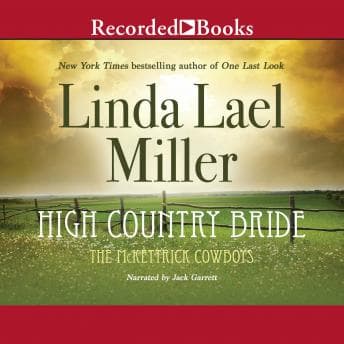

I'll admit it—I expected to be a snob about this one. Mail-order brides, inheritance competitions, a fake nun with a "wild, passionate nature." My grad school self would have been mortified. But there I was, 11 PM, red pen in hand, supposedly grading sophomore essays on The Great Gatsby, and instead completely absorbed in whether Kade McKettrick was going to figure out that Sister Mandy was about as holy as I am athletic.
The thing is, Linda Lael Miller knows exactly what she's doing. This is not Edith Wharton. It's not trying to be. And that's fine. Sometimes you want a seven-course meal, and sometimes you want a really good cheeseburger. Paris Rose gave me that same unapologetic comfort-food feeling. High Country Bride is a cheeseburger—satisfying, unpretentious, and exactly what it promises to be.
The McKettrick Boys and Their Daddy Issues
The premise—three brothers competing to marry and reproduce first in order to inherit the family ranch—is gloriously absurd. Old Angus McKettrick is basically running a reality dating show in 1880s Arizona, and his sons are alternately annoyed and determined to win. It's the kind of setup that Faulkner would have turned into a meditation on Southern decay and generational trauma. Miller turns it into romantic comedy with dusty boots.
Kade is our hero here, and he's... fine? He's handsome, he's the town marshal, he's got five potential brides waiting at the hotel. The man has options. But he can't stop thinking about the mysterious nun who clearly knows more about outlaws than she should. Mandy, for her part, is hiding from her criminal stepfather in a habit she probably shouldn't be wearing. The sexual tension between a lawman and a fake nun is—okay, look, my students would absolutely roast me for listening to this during faculty meetings. But Principal Martinez was talking about budget allocations, and Mandy was revealing her true identity, and I made my choice.
Some readers complain that the characters are "thick-headed," and... yeah. Kade takes a while to connect obvious dots. Mandy makes decisions that had me muttering "just TELL him" at my phone. But this is romance novel logic. If everyone communicated clearly, we'd have a pamphlet, not a 13-hour audiobook.
Jack Garrett Earns His Keep
Here's where I have to give credit where it's due. Jack Garrett's narration elevates this material considerably. He doesn't just read the words—he understands that pause is punctuation, that the rhythm of Western dialogue requires a certain unhurried quality. His Kade has a dry edge that prevents the marshal from becoming a cardboard cutout. His Mandy walks the line between vulnerable and fierce without tipping into melodrama.
The McKettrick family scenes work particularly well in audio. Garrett differentiates the three brothers clearly enough that you're never confused about who's speaking, and his Angus—the scheming patriarch—has this gravelly authority that makes you understand why these grown men are jumping through hoops for his approval. It's not revolutionary voice work, but it's solid, professional, and genuinely enhances the story.
(Denise walked in during a particularly steamy scene and just looked at me. "Research," I said. She did not believe me.)
Where the Dust Settles Slowly
At 13 hours, this is not a quick listen. The pacing meanders in the middle—there are stretches where the outlaw subplot feels like it's treading water, and the romance hits a few repetitive beats. If you're expecting constant drama, you'll get restless. This is more slow-burn than fast-paced, more character-driven than plot-driven.
But Miller writes the Arizona territory with genuine affection. The Triple M ranch feels like a real place, with its own rhythms and traditions. The family dynamics—the competition, the loyalty, the exasperation—ring true even when the plot gets a little convenient. And there's something comforting about knowing exactly where this is headed. Mandy will be unmasked. Kade will choose her anyway. Love will triumph over outlaws and inheritance schemes alike.
My students would hate this. I kind of loved it.
Who Should Saddle Up (And Who Should Ride On)
If you're a Western romance fan, this is Linda Lael Miller doing what she does best. If you loved Jude Deveraux's historical romances or Diana Palmer's Western series, this is your people. I had similar thoughts about Matilda—sometimes the best stories are the ones that don't try to be profound. If you need your fiction to be "important" with a capital I, this isn't the book for you—and that's okay.
I listened during late-night grading sessions, and it was perfect for that. Engaging enough to keep me awake, predictable enough that I could pause for a particularly egregious comma splice without losing the thread.
Class Dismissed
High Country Bride isn't going to change your life. It's not going to appear on any syllabi I write. But it's a well-crafted, well-narrated piece of genre fiction that knows its audience and delivers exactly what it promises. Sometimes that's enough. Sometimes that's exactly what you need at 11 PM with a stack of ungraded essays and a glass of wine.
The author chose those words. Jack Garrett reads them properly. And I'm already eyeing the next book in the series.