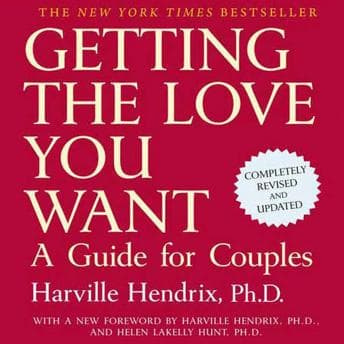

Kevin and I had one of those fights. You know the kind - started about whose turn it was to empty the dishwasher and somehow ended with me sleeping on the couch questioning my entire relationship. At 2AM, unable to sleep and doom-scrolling through audiobooks, I downloaded this. Partly out of spite, partly out of genuine "okay maybe we need help."
Bottom Line: Worth your commute. Actually, worth dedicated listening time - this isn't background noise material.
Your Childhood Is Running Your Relationship (And That's Not Woo-Woo)
Here's the thing about self-help relationship books: 90% could be blog posts. "Communicate better!" "Listen more!" Thanks, revolutionary. But Hendrix actually has a framework here - Imago Therapy - and it's basically debugging your relationship by understanding the legacy code you're both running from childhood.
The core insight hit me somewhere around hour 3: we unconsciously choose partners who have both the positive AND negative traits of our primary caregivers. Not because we're masochists, but because our brains are trying to finish unfinished business. Your partner triggers you specifically because they're touching old wounds - and that's actually the point.
I'm a systems engineer. I like frameworks. And Imago is essentially a protocol for conflict resolution that forces you to actually hear your partner before responding. There's this exercise called the "Intentional Dialogue" where you mirror back what your partner says, validate their perspective, and empathize - before you get to respond with your own stuff. The framework feels deceptively straightforward until you're in it - similar to how The Danish Way of Parenting makes empathy sound easy on paper but requires genuine rewiring in practice. It sounds simple. It is devastatingly hard.
12 Hours Is A Lot. Is It Padded?
Honestly? Some parts drag. The theoretical foundation in the early chapters - all the depth psychology and Gestalt therapy background - could've been tighter. Hendrix is thorough, which is great for credibility but occasionally feels like reading the full academic paper when you wanted the executive summary.
But here's why the length works: the exercises. This isn't a book you just absorb. It's a workbook in audio form. He walks through specific dialogues, gives examples of couples working through issues, breaks down exactly how to structure conversations. The ROI on this audiobook is high if you actually do the exercises. If you're looking for passive entertainment, skip it.
I listened at 1.5x for the theory sections, dropped to 1.0x for the practical exercises. That's my recommendation.
Jack Garrett Keeps It Clinical Without Being Cold
The narrator has this calm, measured delivery that works perfectly for self-help. He's not trying to be your therapist friend - he's presenting material clearly. His voice is pleasant enough that 12 hours doesn't feel punishing, and he handles the prescriptive "now try this exercise" sections without sounding condescending.
No dramatic flourishes, no weird emphasis. Just clean, professional narration. For a book like this, that's exactly what you want. You're not here for performance - you're here for information.
The Zero Negativity Thing
The 2008 edition added this whole section about eliminating negativity from daily interactions. And look, I'm skeptical of anything that sounds like "just be positive!" But Hendrix is more specific than that. He's talking about removing criticism, contempt, defensiveness - the stuff that corrodes relationships over time.
The practical takeaway: before you say something negative, ask yourself if it's necessary, if it's kind, and if this is the right moment. Sounds basic. Try doing it for a week. I failed approximately 47 times in the first three days.
Who Should Listen (And Who Should Skip)
Perfect for: Couples who fight about the same things repeatedly and don't understand why. People who want a framework, not just platitudes. Anyone whose therapist has mentioned "attachment styles" and wants to go deeper.
Skip if: You want quick fixes. You're not willing to do exercises with your partner. You're in crisis mode - this is preventive maintenance and growth work, not emergency intervention.
Also skip if: You're single and curious. This is specifically for couples actively working on their relationship. There's probably value in understanding the concepts, but most of the practical content requires a partner to practice with.
The Debug Report
Did it fix my dishwasher fight? Not immediately. But Kevin and I tried the Intentional Dialogue exercise last weekend, and something shifted. Instead of defending myself while he was still talking (my default), I actually heard what he was saying. Turns out the dishwasher was never about the dishwasher. (It never is.)
This is basically couples therapy in audiobook form - minus the $200/hour and the awkward silences in someone's office. The science holds up, the exercises are practical, and Hendrix clearly knows his stuff after decades of clinical work.
I finished this in about 8 commutes, plus some dedicated weekend listening for the exercise sections. Not a casual listen, but a valuable one. If your relationship needs a systems upgrade, this is solid documentation.