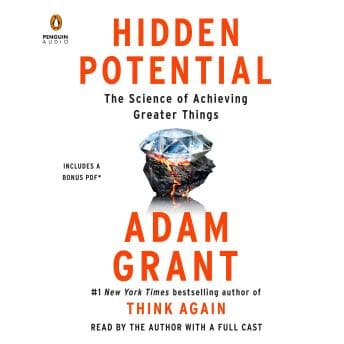

I was halfway through prepping aloo gobi at 10 PM on a Tuesday—because apparently that's when my brain decides I need complex carbs and existential reflection—when Adam Grant said something that made me set down my knife. He was talking about how we confuse comfort with growth, and I realized I'd been avoiding a research methodology I find intimidating for exactly that reason.
This is what Grant does well. He catches you off guard with something that feels personally calibrated.
The Psychology Professor Who Actually Reads the Research
Look, I review psychology-adjacent books with a certain... let's call it professional skepticism. Most self-help authors cherry-pick studies like they're building a case for court rather than seeking truth. Grant, to his credit, doesn't do that. His framework here—that character skills like proactivity, determination, and discipline matter more than raw talent—is actually well-supported by developmental psychology research. The data shows that deliberate practice and what he calls "scaffolding" (building support structures around your weaknesses) predict success better than initial ability.
What makes this compelling is Grant's willingness to complicate his own thesis. He doesn't just say "work harder." He distinguishes between productive struggle and pointless suffering. He talks about how seeking discomfort strategically differs from masochism. My therapist would have thoughts about this—the overachiever who learns to embrace being bad at things.
The book's structure moves from individual development to team dynamics to systemic change. Classic organizational psychology progression. Each section builds logically, though I found myself asking: why does Grant really think systems can change when he's spent chapters showing how much individual grit matters? The tension between personal agency and structural barriers never fully resolves. Maybe that's honest. Maybe it's a gap. Dare to Lead wrestles with similar questions about individual versus systemic change, though Brené Brown leans harder into the organizational side.
When Your Audiobook Becomes a Podcast (For Better and Worse)
Here's where things get complicated. This isn't a traditional audiobook. It's more like... a documentary with chapters? You've got Grant narrating the core content, but then Evelyn Glennie—the deaf percussionist—actually plays drums. R.A. Dickey talks about learning the knuckleball. Maurice Ashley discusses becoming a chess grandmaster. There are clips from TED podcasts, Stephen Colbert's White House Correspondents' Dinner, even Leonard Cohen's "Anthem."
When it works, it's genuinely immersive. Hearing Glennie's improvisation while Grant explains how she learned to "hear" through vibration—that's not something print can replicate. The Golden 13 interviews (first Black naval officers commissioned in WWII) add historical weight that Grant's summary alone couldn't carry.
But. And this is a significant but. The constant switching between voices can feel like channel surfing. One minute you're in Grant's measured academic cadence, the next you're hearing Brandon Payne (Steph Curry's trainer) with completely different energy. Some chapters lack clear cohesion, jumping from one story to another without the narrative glue that makes it feel intentional rather than scattered.
Also—and I say this with the affection of someone who's sat through many academic conference presentations—Grant laughing at his own jokes is... a choice. It happens enough that other listeners have noticed. Not a dealbreaker, but definitely noticeable. The narrator choices in Journey of Crazy Horse felt more intentional—less about variety for its own sake, more about honoring the story being told.
A Fascinating Case Study in Production Ambition
The production team clearly wanted to create something that transcended the typical "author reads their book" format. They mostly succeeded? The audio clips and multiple voices create variety that keeps 7+ hours from feeling monotonous. But variety isn't automatically better than consistency. If you're someone who uses audiobooks to zone out while running or doing dishes, the constant tonal shifts might pull you out of flow rather than into it.
This requires focused listening. Background listening won't work—you'll miss the connections Grant's building between stories, and the audio clips will just feel random.
Who Should Press Play (And Who Should Walk Away)
If you're interested in the psychology of skill development and you enjoy podcast-style production, this is genuinely worth your time. Grant's framework is solid, the examples are diverse (though yes, heavy on sports—fair warning), and hearing the actual subjects tell their stories adds authenticity.
Skip it if: you want a straightforward narrative, you find multiple narrators distracting, or you're allergic to motivational content dressed in academic clothing. Also skip if you're hoping for genuinely novel insights—this is synthesis and application of existing research, not groundbreaking new findings. Nothing wrong with that, but set expectations accordingly.
Final Grade
Grant understands human nature better than most pop psychology authors. He exhibits classic growth mindset patterns in his analysis, but with enough self-awareness to avoid the toxic positivity trap. The audiobook production is ambitious—sometimes to its detriment, sometimes brilliantly.
I finished it while eating cold aloo gobi at midnight, which speaks to either its engaging quality or my poor time management. Probably both. The research is sound, the stories are well-chosen, and if you can tolerate the occasional production chaos, there's genuine value here.
Just maybe don't listen while cooking anything that requires knife skills.