So here's the thing - I expected this to be one of those dusty, sanitized, "and then she bravely persevered" collections that makes every woman's life sound like a Hallmark movie. I was wrong. Partly.
I picked this up on a night when I couldn't sleep after a particularly rough shift. Carlos and the kids were out cold, and I was sitting on the back patio at 9 AM with coffee that was doing absolutely nothing for me, just needing something to fill the quiet that wasn't my own brain replaying the night. A book about women who served seemed... appropriate. Like maybe someone else's grit could put mine in perspective.
These Women Would've Run My Trauma Unit
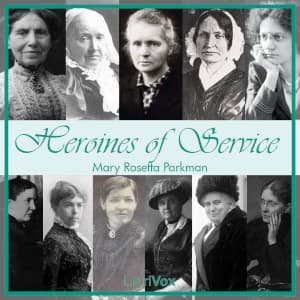
Mary Rosetta Parkman wrote this in the early twentieth century, and you can feel the era in every sentence - the prose is formal, sometimes overly reverent, and occasionally uses language about race and colonialism that made me wince hard. (The chapter on Mary Slessor being called 'The White Mother of Darkest Africa' - yeah, that title has not aged well, and the content doesn't entirely escape that framing either.) But underneath the dated packaging, the actual stories hit different when you work in healthcare.
Clara Barton didn't just found the Red Cross. She fought bureaucracy for decades. She was told no by government officials, military brass, and pretty much every man with a desk and an opinion. Parkman captures this - the sheer, grinding persistence of a woman who kept showing up. As someone who's actually worked a code, who's fought with insurance companies at 4 AM to get a patient transferred, I felt that in my bones. The system doesn't want you to succeed. You succeed anyway. That same grinding-against-the-machine persistence shows up in political biography too - I kept thinking of it while listening to Cicero, another portrait of someone who spent a lifetime being right while the people in charge did everything possible to make sure it didn't matter.
Anna Howard Shaw's chapter was the one that got me. A minister and a physician who became a suffrage leader - and Parkman describes how Shaw would travel alone to frontier towns to preach, sometimes arriving to hostile crowds. The details about her early poverty, studying medicine while barely eating, that's not dramatized. It's just... stated. Matter of fact. Which somehow makes it worse. And better.
The LibriVox Question
Let me be straight: this is a LibriVox recording, which means volunteer narrators, which means you're getting a range of quality. The audio is clean enough - no weird background noise or recording artifacts that pulled me out. But the narration style varies chapter to chapter since different volunteers take different sections. Some read with genuine warmth and pacing that works. Others read like they're presenting a book report. No one is bad, exactly, but no one disappears into the material either.
At 5 hours and 18 minutes, it's a short commitment. I bumped it to 1.25x during a couple of the slower biographical chapters where the prose gets dense with dates and committee names, and that helped. The chapter structure - each woman gets her own section - actually works great for this format. You can listen to one life on a drive, sit with it, come back for the next.
What Parkman Gets Right (and What She Can't Help Getting Wrong)
The strength here is scope. Eleven women across nursing, education, social work, ministry, activism. Parkman clearly did her research for the time, and she includes operational details - how Barton organized supply chains, how Dorothea Dix restructured asylum care - that go beyond "she was inspiring." The medical details are accurate. Finally. Or at least accurate for early 1900s medicine, which is its own kind of fascinating.
But Parkman was writing in an era, and the book carries that era's blind spots. The framing of missionary work in Africa is deeply colonial. The assumption that these women were exceptional despite being women runs through every chapter. And some lives get more depth than others - a few chapters feel more like encyclopedia entries than portraits.
My mom would love this. She still thinks I should've been a doctor, but she'd see herself in these women - the immigrant drive, the "you will do more" energy that fueled every one of them. I might actually send her the link. It's free, after all.
Who This Is Actually For
If you want polished, produced audiobook perfection - this isn't it. If you want fast-paced narrative nonfiction with modern sensibilities - also not it. But if you're someone who appreciates primary-source-adjacent history, who can hold the dated language in one hand and the genuine stories in the other, and who maybe needs to be reminded at 9 AM on a Tuesday that women have been fighting impossible systems and winning for a very long time? Yeah. Pick this up.
Perfect for that post-shift decompression when you need something quiet and grounding. Just know what you're getting into with the era it was written in.
The Chart Note
A flawed but sincere collection that reminded me why I do what I do. The women are real, the service is real, and even through century-old prose and volunteer narration, that comes through. Free on LibriVox. Worth the five hours. Not life-changing, but life-affirming in a quiet, no-frills kind of way.








![Steve Jobs [unabridged audiobook] audiobook cover](/_next/image?url=https%3A%2F%2Fcovers.audiobooks.com%2Fimages%2Fcovers%2Ffull%2F9788499923406.jpg&w=1920&q=75)